(708) 775-3648

The short answer: Luxury vinyl plank (LVP) with a rigid SPC core is the best waterproof flooring for most basements – it is 100% waterproof, warm underfoot with the right underlayment, and installs over minor slab imperfections. Porcelain tile is the call when flooding is a real risk. Solid hardwood, laminate, and carpet should never go in a basement.
Ready to install? Get a free in-home moisture assessment from Matt Pehr in Mokena. See our waterproof basement flooring installation options for wet Illinois basements.
At The Floor 4U in Mokena, IL, we install waterproof basement flooring across Will County – including Frankfort, Tinley Park, Orland Park, and New Lenox. Get a free in-home estimate.
The best basement flooring, in short
The best flooring for a basement is waterproof luxury vinyl plank or porcelain tile installed over a prepped, moisture-controlled concrete slab, and you should avoid solid hardwood and standard laminate below grade. Basements deal with moisture that rises through concrete, so the floor has to tolerate humidity and the occasional spill or seep. In most Mokena, IL and Will County basements, Matt Pehr recommends waterproof LVP for comfort and value, or tile when you want the most durable, fully waterproof surface. Ready to install? See waterproof basement flooring installation in Mokena.
Why basements are the hardest room to floor
Basements sit below grade against soil that holds moisture year-round, facing three threats at once: condensation (humid air meets a cool slab), groundwater seepage (you may see white efflorescence), and flooding or sump-pump failure after heavy rain. Flooring that absorbs water – solid hardwood, laminate, traditional carpet – buckles, swells, or grows mold.
Before you choose, do the plastic-sheet test. Tape a 12×12-inch plastic square to the bare slab, seal all edges, and wait 24-48 hours. Moisture under the plastic means groundwater seepage (fix the source first); moisture on top means condensation (manageable with underlayment and a dehumidifier).
The best waterproof flooring options for basements
1. Luxury vinyl plank (LVP) – best overall
Look for a rigid SPC core (more dimensionally stable than WPC under temperature swings), a 12-mil wear layer minimum, and an attached moisture-barrier underlayment for warmth on cold concrete. We carry COREtec (which invented the rigid-core category, rated for below-grade use) plus Shaw, Provenza, Happy Feet, and more. LVP material runs about $3.50-$6.00/sq ft, and installed LVP runs about $4.50-$13.50/sq ft; prices reflect Mokena, IL area rates as of 2026; actual quote depends on your project.
Related guide: Is LVP waterproof for basements? (Mokena & Frankfort, IL).
2. Porcelain or ceramic tile – best for flood-prone basements
Genuinely 100% waterproof at the surface; mold cannot grow on it; easy to clean after a flood. Trade-offs: cold and hard underfoot (no R-value), grout can crack if the slab shifts, and professional installation is recommended. Priced per project – get a free quote.
3. Vinyl sheet – best budget option
Seamless (no joints for water), inexpensive, and softer underfoot than tile. Confirm the product is rated for below-grade installation. Best for laundry and utility areas. Priced per project.
4. Other surfaces some homeowners compare (not offered by The Floor 4U)
Epoxy coatings and sealed/polished concrete turn the slab itself into a waterproof surface – popular for workshops and gyms. We do not install these, but homeowners often weigh them against waterproof LVP or tile. For a finished, comfortable living space, a floating waterproof floor (LVP/tile) is usually the better fit – and what we install.
What NOT to install in a basement
| Flooring | Why it fails below grade |
|---|---|
| Solid hardwood | Absorbs moisture and swells; below-grade voids most warranties |
| Engineered hardwood | Plywood core delaminates over wet/dry cycles; not rated below grade by most brands |
| Laminate | HDF core swells irreversibly on water contact; below-grade voids all warranties |
| Carpet | Traps moisture against the slab – mold, mildew, dust mites (a health risk) |
Comparison: waterproof basement flooring
| Flooring | 100% waterproof? | Warmth | Installed $/sq ft | Best for |
|---|---|---|---|---|
| LVP / SPC | Yes | Moderate (warm w/ underlayment) | ~$4.50-$13.50* | Most finished basements |
| COREtec (SPC + cork) | Yes | Good (cork underlayment) | ~$4.50-$13.50* | Comfort-focused finished basements |
| Porcelain tile | Yes | Cold | by quote | Flood-prone basements, wet rooms |
| Vinyl sheet | Yes | Moderate | by quote | Budget, utility, laundry |
| Hardwood / laminate / carpet | No | – | – | Never below grade |
* LVP installed price is an approximation; prices reflect Mokena, IL area rates as of 2026; actual quote depends on your project, including product, square footage, removal, subfloor prep, trim, stairs, and transitions. Other types are quoted per project.
Basement flooring over a concrete slab
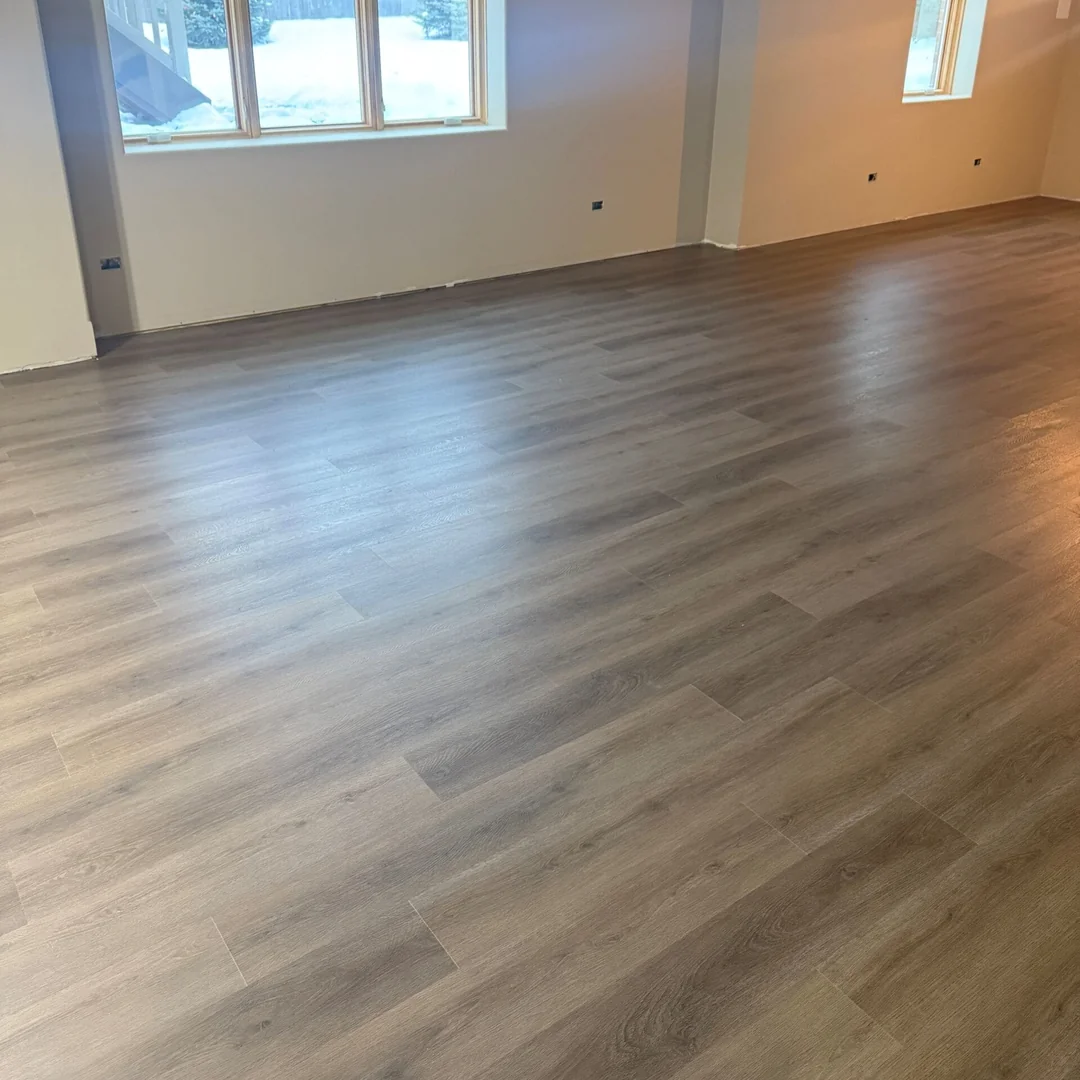
Most basement floors are a concrete slab, and concrete lets moisture through, so the flooring and the prep both have to account for it. The safest options are waterproof LVP or tile, both installed over a clean, level, moisture-tested slab, sometimes with a vapor barrier or underlayment. Getting the slab prep right is what keeps a basement floor from failing later.
What is the best flooring to lay over concrete?
Waterproof luxury vinyl plank and porcelain tile are the best floors to lay over concrete, because both tolerate the moisture that moves through a slab, while hardwood and laminate can swell or cup below grade.
Can you put vinyl flooring directly on a concrete basement floor?
Yes, waterproof vinyl plank can go directly on a concrete basement floor once the slab is clean, level, dry, and moisture-tested, and many rigid-core products include or pair with an underlayment. A moisture test first is the step people skip and regret.
What is the cheapest way to cover a concrete basement floor?
The cheapest durable way to cover a concrete basement floor is an entry-level waterproof vinyl plank, which installs faster than tile while still handling basement moisture. Installed LVP runs about $4.50 to $13.50 per sq ft (prices reflect Mokena, IL area rates as of 2026; actual quote depends on your project). Paint or an area rug is cheaper up front but does not give you a finished, lasting floor.
What is the safest flooring for a basement?
The safest basement flooring is a waterproof material like LVP or tile over a properly prepped slab, because it resists the moisture that can grow mold under the wrong floor. Controlling the slab moisture first is as important as the flooring you choose. Want the LVP details? See is LVP waterproof for a basement.
Subfloor & vapor barrier: the step most people skip
Concrete releases moisture vapor continuously. A 6-mil polyethylene vapor barrier (seams overlapped 12 inches and taped) blocks it – unless your LVP already includes a built-in moisture barrier (check the spec sheet; do not double up under a floating floor). For basements with condensation or minor seepage, a raised subfloor panel system like DriCore creates an air gap that lets moisture evaporate and adds warmth (a homeowner prep option). Target 30-50% relative humidity year-round – a properly sized dehumidifier in an Illinois basement is non-negotiable.
Basement flooring installation in Mokena & Will County, IL
Much of Mokena, Frankfort, and Tinley Park sits on clay-heavy glacial soil that resists drainage, and our wet springs and heavy summer rains put real pressure on basements. We start every job with a moisture assessment before recommending a product. As four-time Lincoln-Way Readers’ Choice winners, Best Flooring and Carpet Store, 2025, we install waterproof basement flooring across Mokena, New Lenox, Frankfort, Tinley Park, and Orland Park. Schedule a free in-home estimate.
Frequently asked questions
Reviewed by Matt Pehr, owner of The Floor 4U.
Is waterproof basement flooring actually waterproof, or just a marketing claim?
Genuinely waterproof, if you pick the right product. Rigid-core LVP (SPC or WPC) with a click-lock system is 100 percent waterproof at the plank itself, meaning it will not swell or warp from standing water. The real vulnerability is the seams between planks, not the material, which is why porcelain tile is the safer call in basements with a real flood risk.
What is the best waterproof flooring for a basement?
Rigid-core luxury vinyl plank (LVP) is the best all-around choice for most basements: it is fully waterproof, warm underfoot with its attached underlayment, and forgiving of minor slab imperfections. Waterproof laminate is a distant second, since its wood-fiber core can still swell at the seams under prolonged moisture. Porcelain tile beats both when the basement has flooded before.
Can you put flooring directly on a concrete basement floor?
Yes, but test for moisture first. Tape a 12 by 12 inch plastic square to the bare slab for 24 to 48 hours: moisture underneath means seepage that needs fixing at the source, moisture on top just means condensation. Rigid-core LVP with an attached cork or foam underlayment installs over a vapor barrier and is also the warmest hard-surface option for a cold slab.
Will LVP scratch from dog nails in a basement rec room?
Some scratching is normal with any flooring, but a rigid SPC core with a 20-mil or thicker wear layer resists dog nails far better than thin, budget vinyl. Basement rec rooms and playrooms see heavy paw and toy traffic, so a matte or textured finish, which hides fine surface scratches better than a glossy one, is worth prioritizing over price alone.
Does LVP devalue your home?
No, quality LVP does not devalue a home, and its waterproof, low-maintenance appeal often helps a basement show well to buyers. It does not add resale value the way solid hardwood does on main living floors, since appraisers weight real wood higher, but in a below-grade space waterproof LVP is generally seen as the practical, expected choice, not a downgrade.
Will waterproof flooring survive a flooded basement?
Yes, both survive an actual flood; the real risk is what’s underneath. Floating click-lock LVP can be lifted, dried for 72 or more hours with fans and dehumidifiers, and reinstalled once any compromised underlayment is replaced, which is why floating LVP is generally preferred over glue-down in a basement. Real-world flood reports do show seam failures on planks that were never lifted and dried properly.
What’s the most regretted basement flooring choice?
Carpet is the most commonly regretted basement flooring choice, since it traps moisture, grows mold after even minor dampness, and often has to be torn out after a single flood. The next most common regret is glue-down LVP on a slab with hidden moisture, since trapped water under the seams can cause the same problem a floating floor would have avoided.
How much does waterproof basement flooring cost in Mokena, IL?
Rigid-core LVP for a basement typically runs $4.50 to $13.50 per square foot installed; prices reflect Mokena, IL area rates as of 2026; actual quote depends on your project. A 700 square foot basement lands around $3,150 to $9,450 before subfloor prep, old-floor removal, trim, stairs, and transitions, so final pricing depends on an in-person look at the subfloor and room layout.
Basements in Will County: get a free moisture check first
Many Will County basements sit on older slabs, and our clay-heavy soil holds water, so a free moisture assessment before you choose a floor prevents an expensive mistake. Matt Pehr comes out, checks the slab and the moisture, and recommends a floor that will still be there after the next heavy spring. The Floor 4U is owner-operated and rated 4.9 stars from 350+ Google reviews across our Mokena and Frankfort showrooms (Google Business Profile, September 2026). Call Matt Pehr at (708) 775-3648 or request a free in-home estimate, and see waterproof basement flooring installation in Mokena when you are ready to move forward.
Which is better, waterproof laminate or vinyl plank?
For wet areas, vinyl plank generally beats water-resistant laminate.
- Vinyl plank (LVP): fully waterproof PVC/SPC core; safe for bathrooms, kitchens, and basements; unaffected by standing water on the surface.
- Waterproof laminate: wood-fiber core with a sealed top; handles spills wiped up quickly, but prolonged water at the seams can still swell the core.
For basements and baths, LVP is the safer moisture choice.
Share
Recent Posts
October 22, 2026
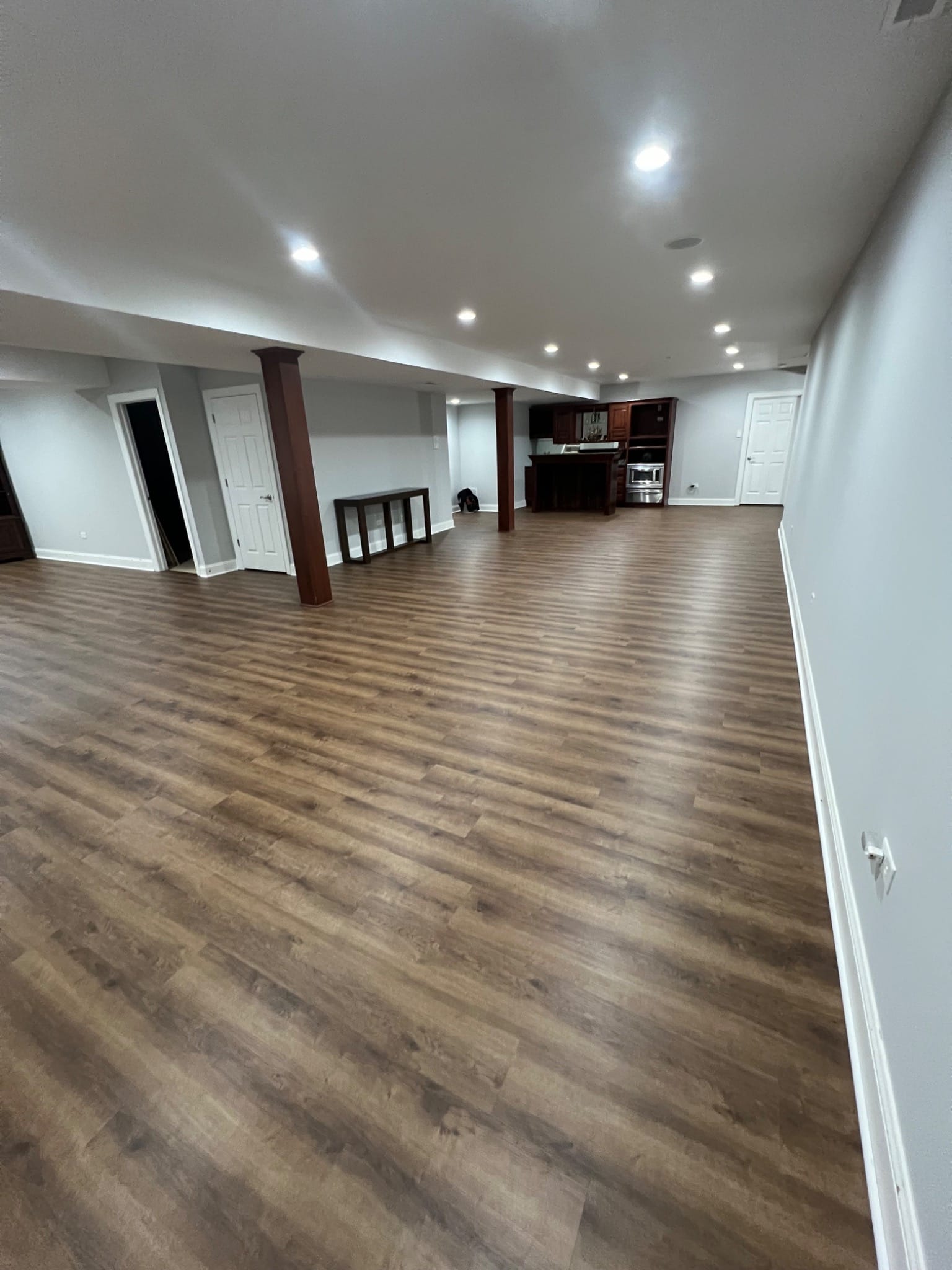
How to Choose Light Vinyl Plank Flooring for a Basement
Compare light vinyl plank samples under basement lighting, then check color, transitions, subfloor conditions, and the selected product’s installation guide....
October 22, 2026
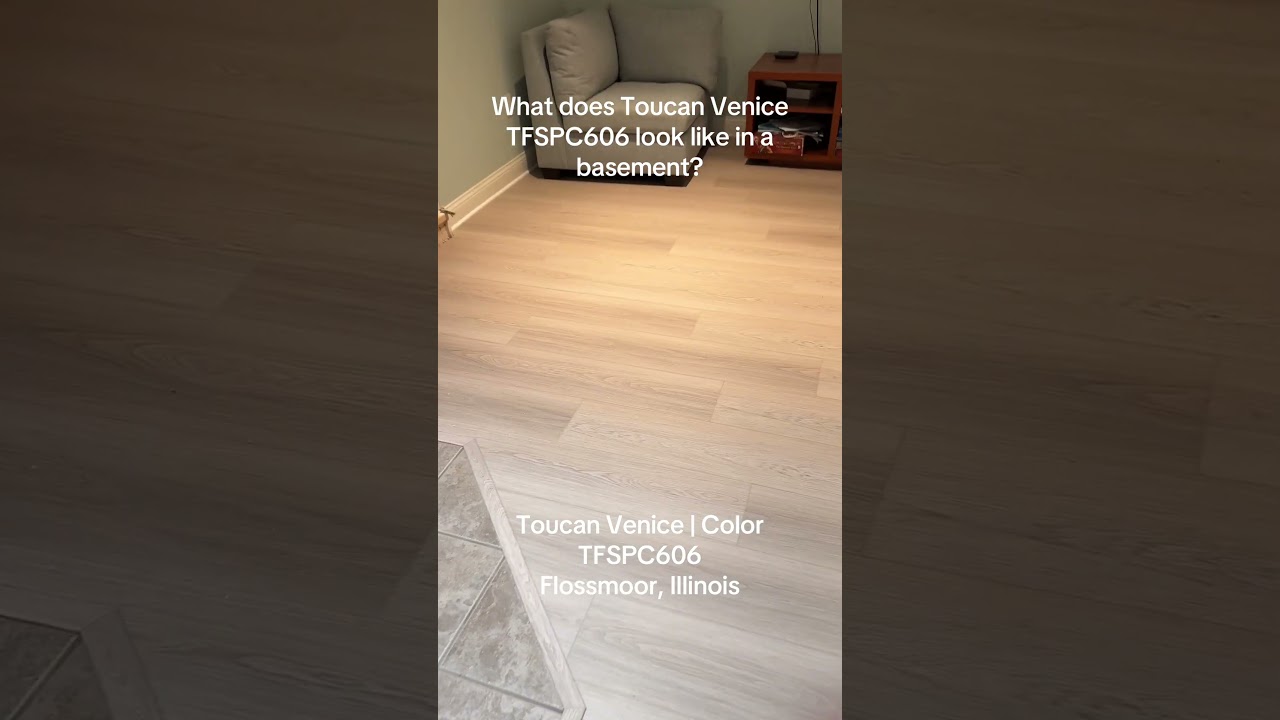
Toucan Venice TFSPC606 Basement Flooring in Flossmoor
Watch a finished Flossmoor basement floor featuring Toucan Venice color TFSPC606, installed by The Floor 4U....
October 22, 2026
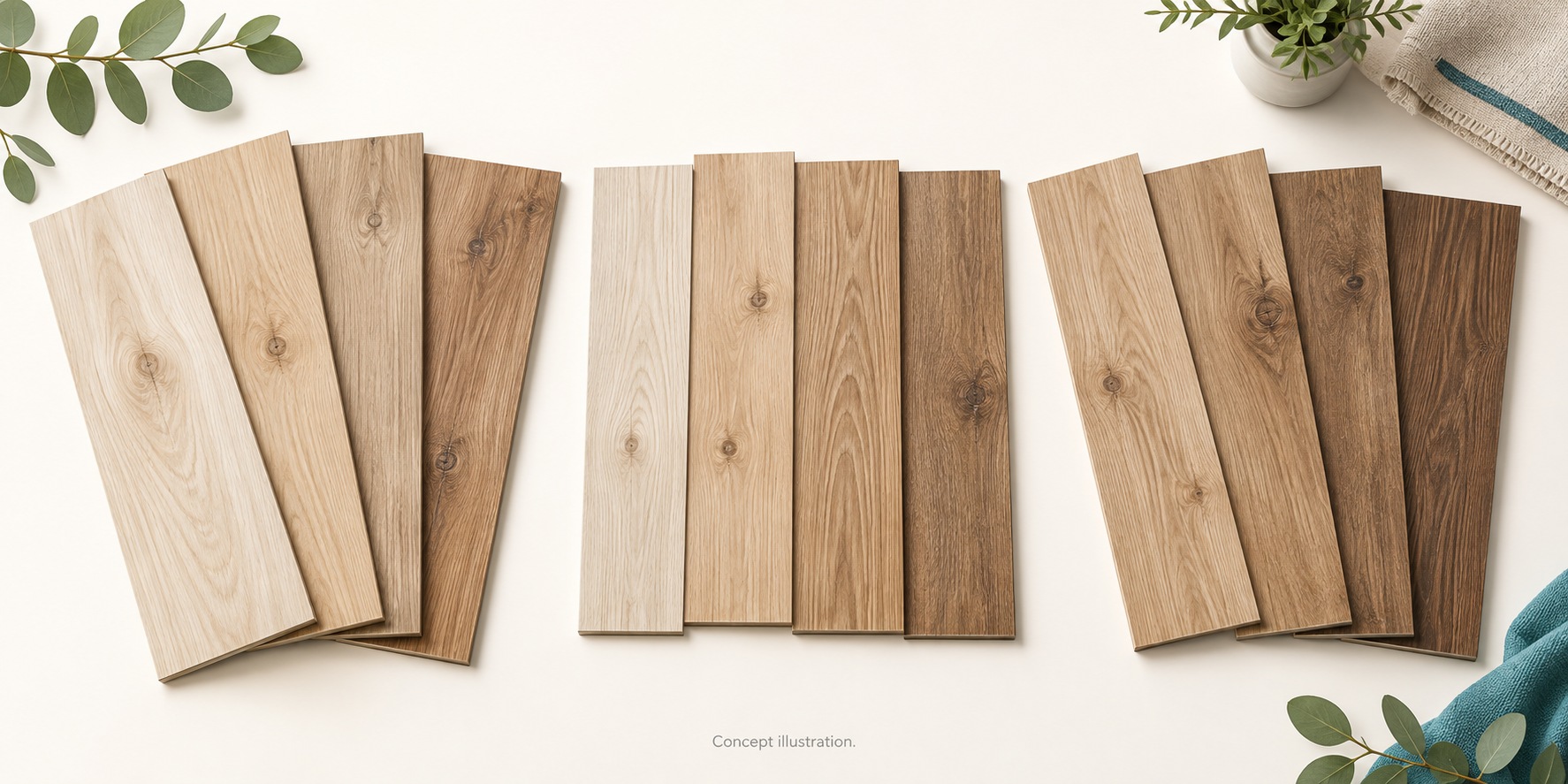
Pine-Look Vinyl Plank Flooring: How to Choose the Right Look
Compare pine-look vinyl plank samples, grain variation, room finishes, and installation details using a completed Homewood project as a reference....