(708) 775-3648

Can You Put LVP Flooring Over Radiant Heat? A Local Installer’s Honest Answer
Matt Pehr
June 20, 2026
Request An Estimate
Yes, you can install luxury vinyl plank over radiant heated floors. The catch is that the installation details matter more than the plank you pick. At The Floor 4U, we install LVP over both hydronic and electric radiant systems in homes across Mokena, Frankfort, New Lenox, and the rest of Will County, IL. The jobs that go wrong almost always trace back to temperature control or the wrong underlayment, not the product itself. Here is what to know before you buy anything.
Have radiant heat and want LVP? Call Matt Pehr at (708) 775-3648 or request a free in-home estimate. We check your system, recommend a radiant-rated product, and quote it with no pressure.
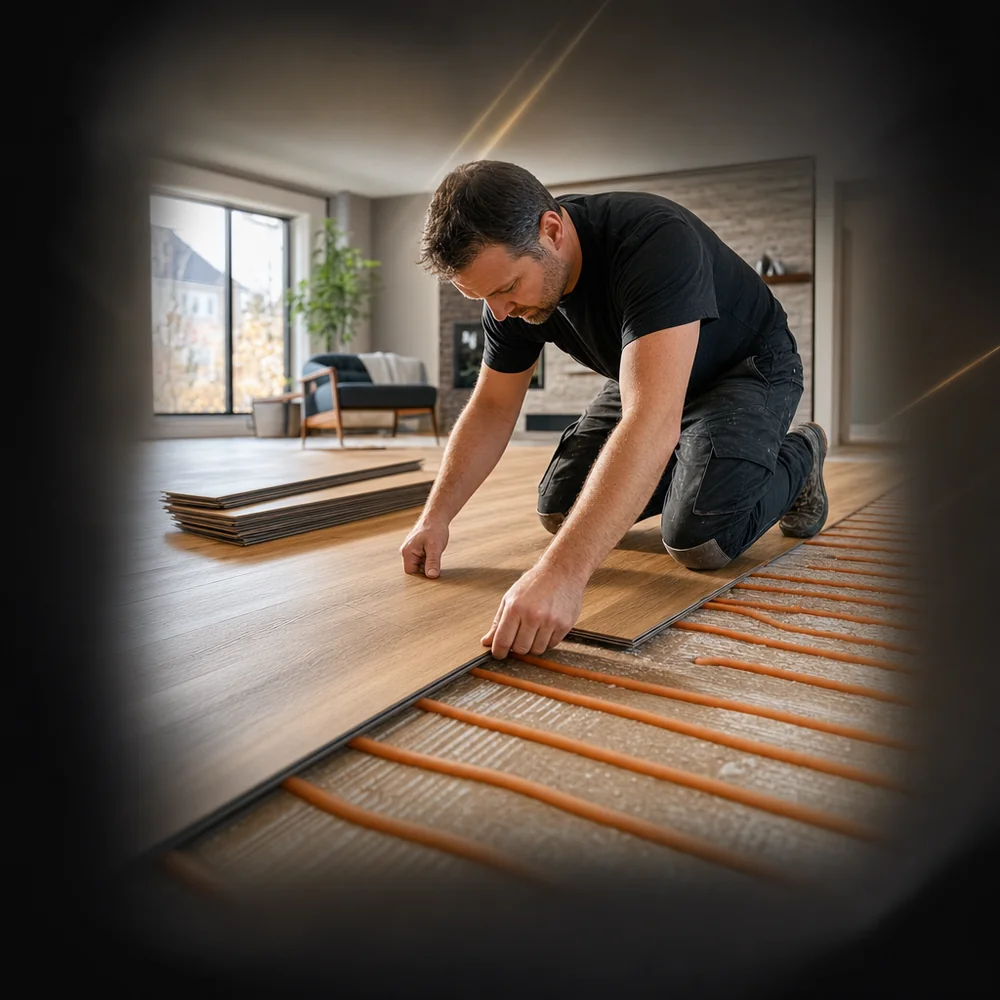
What Radiant Heat Does to LVP (and Why Most LVP Handles It Fine)
Luxury vinyl plank is a plastic-based product, so it expands and contracts as the floor warms and cools. Keeping the surface temperature inside the manufacturer’s rated range is the whole game. Stay within the limit and LVP performs beautifully over radiant heat. Push past it and you risk gapping, cupping, or a voided warranty.
The temperature ceiling varies by brand and product line. Shaw’s published installation guidance sets the limit at 85 degrees Fahrenheit (29 degrees Celsius) at the floor surface. Karndean specifies no more than 27 degrees Celsius (81 degrees Fahrenheit) at the point where the plank backing meets the subfloor. There is no single number that applies to every LVP, so always pull the spec sheet for the exact product before you commit to a radiant heat install.
Core type matters too. An SPC (stone-plastic composite) core is more dimensionally stable than a WPC (wood-plastic composite) core, which means it shifts less as the radiant system cycles. For most radiant heat rooms, an SPC product is the safer choice. We match the floor to your heating system, not the other way around.
Hydronic vs. Electric Radiant Heat: Which Works Better With LVP?
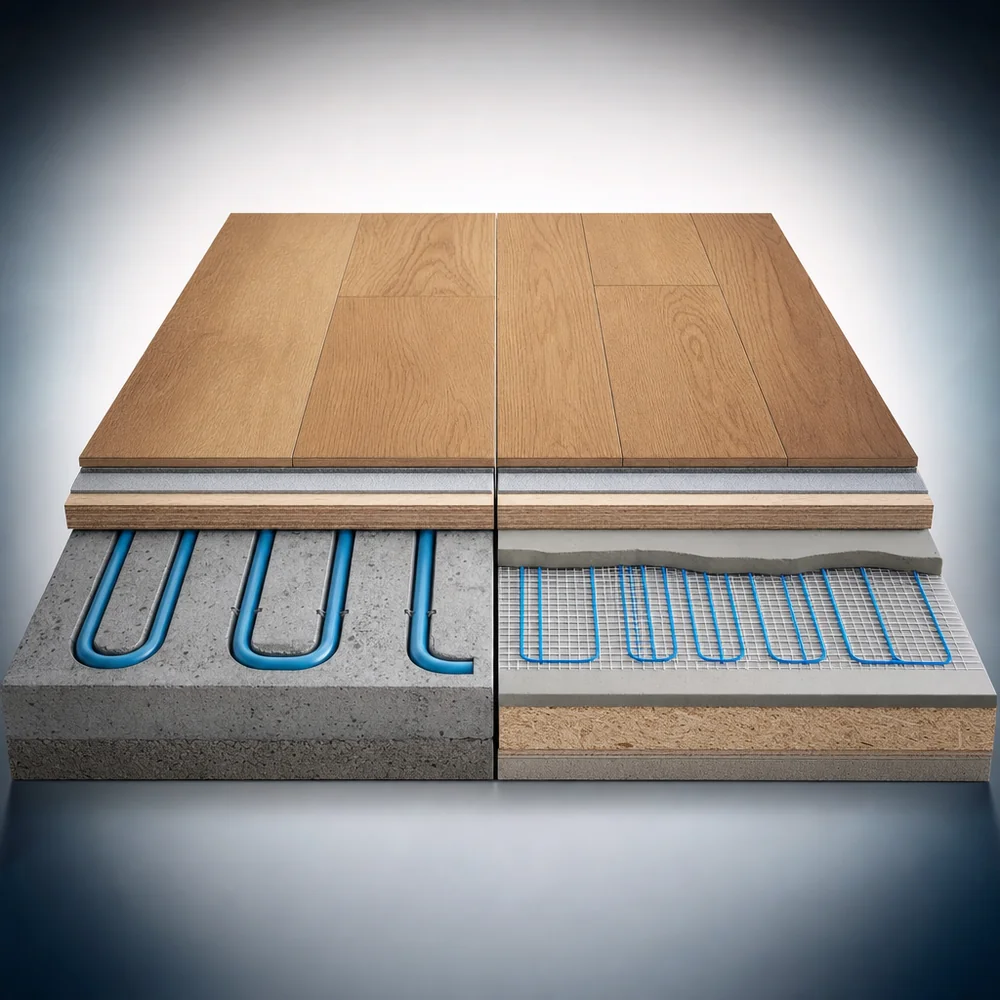
Hydronic (water-based) systems pair more easily with LVP. They heat up and cool down slowly and evenly, so the floor temperature stays stable and predictable. The LVP installs over the finished slab or subfloor with the hydronic system already embedded below.
Electric mat or mesh systems are common in bathrooms and smaller spaces because they cost less to install in a tight footprint. They work with LVP, but there is one non-negotiable step: the heating element must be fully embedded in a layer of reinforced self-leveling compound, then covered with a second coat of primer and compound, before any LVP goes down. The plank never sits directly on top of exposed wires or mesh. Skipping that buried-element step is the most common radiant heat installation mistake we see.
This matters in Will County because a lot of bathroom and kitchen remodels here use electric mats (hydronic is expensive to retrofit into an existing home). If you have an electric system, we verify that the leveling layer is in place before we schedule your LVP install.
Glue-Down vs. Floating: Which Installation Method Over Radiant Heat?
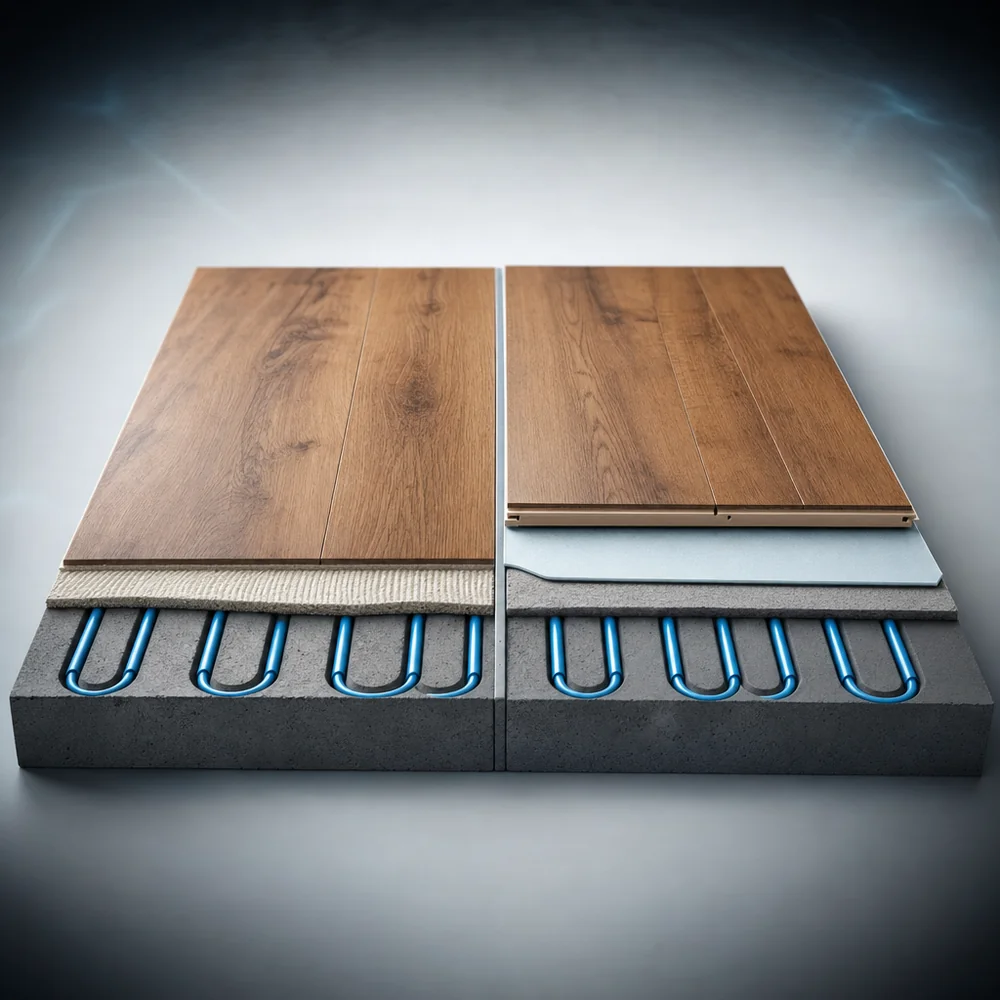
This is a key installation decision on a radiant heat job. Glue-down is the most stable method. The adhesive bonds each plank directly to the subfloor, so there is no movement as the floor cycles through temperature changes. It is the safer choice when the radiant system runs often or runs warm.
Floating (click-lock) installs are also compatible with radiant heat, but they need the right underlayment. Use a thin, low-thermal-resistance pad that is specifically rated for use over in-floor heating. Avoid thick foam underlayment: it acts as insulation, blocks heat from reaching the room, and forces the system to run hotter to compensate.
When Matt Pehr walks into a Mokena home with radiant heat, the first thing he checks is how hot the system actually runs. If it tops out around 75 degrees, a floating install with the correct underlayment is usually fine. If it runs closer to 80, he leans toward glue-down for the extra stability.
The Temperature Rules You Actually Need to Follow
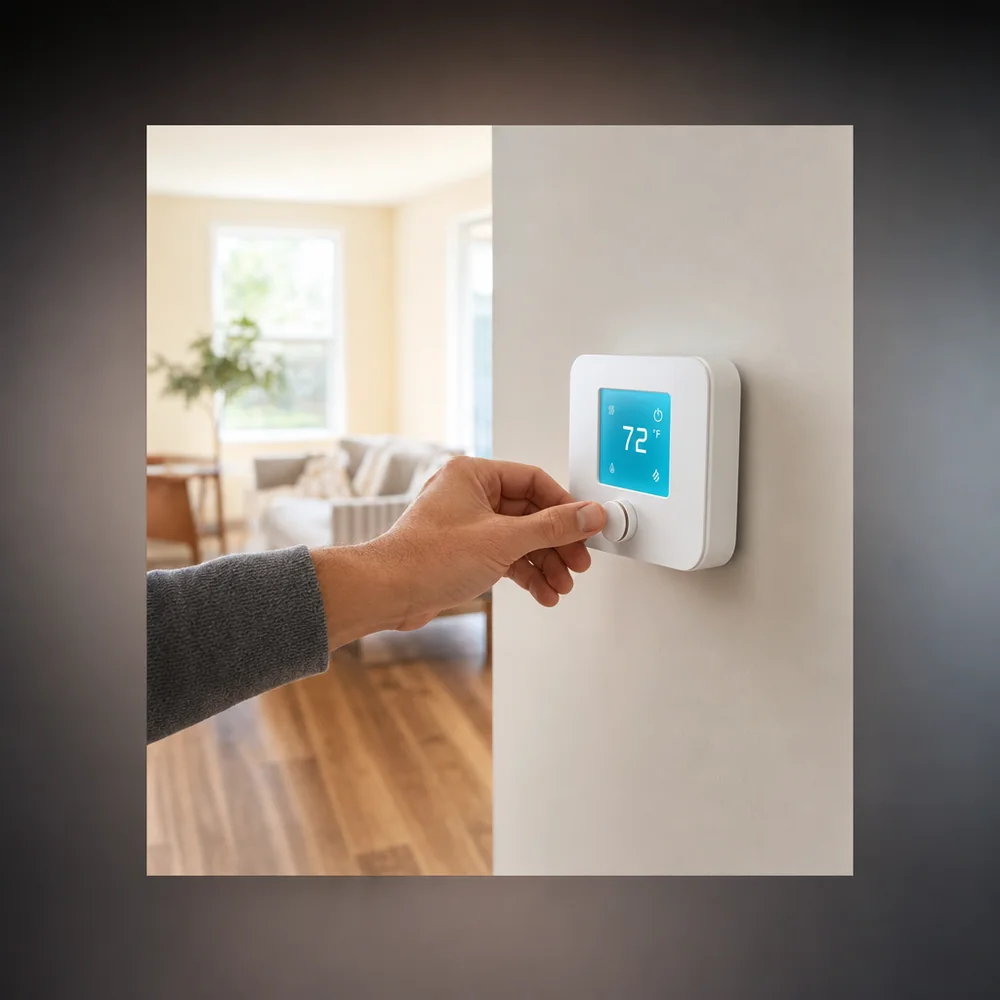
- Maximum surface temperature: check your product’s spec sheet. The commonly cited ceiling runs from 81 degrees Fahrenheit (Karndean) to 85 degrees Fahrenheit (Shaw). The exact limit depends on the brand and product line.
- Ramp-up for new systems. A new hydronic system should run for several weeks first so the slab fully dries before flooring goes down. An existing system should be running at a minimum of 64 degrees for several days before the LVP is delivered and acclimated.
- Ramp-down after install. Do not change the radiant settings for at least 48 hours after installation. After that, raise or lower the temperature no more than 4 to 5 degrees per day so the LVP adjusts gradually.
- Use a floor sensor and thermostat. The system needs a surface-temperature probe so you can confirm the floor stays within the product’s limit. Judging the temperature by how warm it feels underfoot is not good enough.
- Watch for heat traps. Large area rugs and heavy furniture trap heat underneath and create localized hot spots that can exceed the LVP’s limit even when the thermostat reads a safe number. Keep rugs smaller, skip rubber-backed mats, and use a pad that lets air circulate.
Acclimation: The Step Most People Skip
For a radiant heat install, the standard practice is to lay the planks flat in the room for 48 hours before installation, with the room at its normal operating temperature. If the radiant system was switched off during prep, bring it back to its usual setting before the acclimation period starts. You want the LVP to acclimate at the temperature it will actually live at. Acclimation requirements vary by brand, so we follow the specific product’s installation guide on every job.
What to Ask Before You Call a Flooring Installer (If You Have Radiant Heat)
Before you schedule an estimate, it helps to gather a few details about your system:
- What type of radiant heat do you have, hydronic (water pipes) or electric (mat or mesh)?
- About how warm does the floor surface get when the system is fully on?
- Is the electric heating element buried in a leveling compound, or is it sitting near the surface of the subfloor?
- How old is the system? New systems need cure and dry time before flooring goes in.
- Do you have the manufacturer documentation for the radiant system?
When Matt Pehr comes out for a free in-home estimate in Mokena, New Lenox, or anywhere in Will County, these are the questions he asks in the first five minutes. Having the answers ready speeds everything up.
Which LVP Products Work Well Over Radiant Heat?
Product choice for radiant heat depends on your specific system, so think in categories rather than a single SKU. Look for an SPC (stone-plastic composite) core rated for use over underfloor heating, and avoid products with thick attached foam, which reduces heat transfer and can trap heat at the heating elements. A thin cork backing or a no-attached-pad product is often the better fit over radiant.
At The Floor 4U we carry several lines that fit these jobs well. COREtec Pro uses a rigid SPC core that handles temperature swings; we confirm radiant approval on the specific product spec sheet before recommending it. Karndean is not currently stocked, though we can walk through how it compares, and it publishes a clear maximum interface temperature of 27 degrees Celsius (81 degrees Fahrenheit) for its rigid core line. We carry Shaw, Provenza, and DreamWeaver as well. Whatever your system, we match you to a product that is rated for it. You can browse our full luxury vinyl plank options or see them in person at our Mokena showroom.
Quick Reference: Radiant Heat Types and Installation Methods
| Radiant heat type | How it works | LVP compatibility | Key requirement |
|---|---|---|---|
| Hydronic (water pipes) | Hot water circulates through pipes in or under the slab | Excellent | Run several weeks before install on new systems; a few days minimum on existing |
| Electric mat / mesh | Heating elements set in or near the subfloor | Good, with prep | Element must be fully embedded in self-leveling compound before LVP is laid |
| Electric film / foil | Thin heating film under the floor | Check product spec | Some LVP lines prohibit this setup; verify before buying |
| Reference point | Temperature | Source |
|---|---|---|
| Shaw installation maximum | 85°F (29°C) | Shaw installation guide |
| Karndean rigid core maximum (interface) | 27°C (81°F) | Karndean installation guidelines |
| Comfortable barefoot floor temperature | 75 to 80°F | Industry standard for radiant comfort |
| Minimum operating temp before install | 64°F (18°C) | Karndean; Shaw |
| Post-install daily adjustment limit | 4 to 5°F per day | Shaw installation guide |
The Bottom Line: LVP and Radiant Heat Are a Good Match When Installed Right
The compatibility is real. The risk lives in the installation details, not in the product category. The failures we get called to fix almost always come from the same short list: surface temperatures pushed too high, the wrong underlayment under a floating floor, no floor sensor on the thermostat, an electric mat that was never embedded in leveling compound, or planks installed in the wrong temperature conditions.
We install LVP over radiant heat in homes throughout Mokena, Frankfort, Tinley Park, New Lenox, Orland Park, Homer Glen, Plainfield, and all of Will County, IL. The homeowners who are happiest are the ones who called before they bought the floor, because we helped them choose the right product for their exact setup. If you want the same, our LVP installation team in Mokena is ready to take a look.
Get a free in-home estimate. Matt Pehr measures your room, checks your radiant system, and recommends a radiant-rated product. No pressure, no fee. Call (708) 775-3648 or request your free estimate online. The Floor 4U is an owner-operated Mokena flooring company rated 4.9 stars from 350+ Google reviews across our Mokena and Frankfort showrooms (Google Business Profile, September 2026).
Frequently Asked Questions
Reviewed by Matt Pehr, owner of The Floor 4U.
Can you install LVP over radiant heat?
Yes, LVP installs well over radiant heat when the floor surface temperature stays within the manufacturer’s limit, typically 81 to 85 degrees Fahrenheit depending on the product. Keep the surface temperature within the product’s spec, use the right underlayment for a floating install, and the combination works reliably for years.
What is the maximum floor temperature for LVP over radiant heat?
The maximum surface temperature for LVP over radiant heat varies by product. Shaw’s installation guidance cites 85 degrees Fahrenheit (29 degrees Celsius). Karndean specifies no more than 27 degrees Celsius (81 degrees Fahrenheit) at the subfloor interface. Always check the specific product’s specification sheet, because the limit is not the same across every brand and line.
Will radiant heat damage LVP flooring?
Radiant heat will not damage LVP as long as the surface temperature stays within the product’s rated limit and the system uses a floor-sensing thermostat. Problems happen when temperatures spike above the ceiling, when rugs or heavy furniture trap heat in one spot, or when an electric mat was not properly embedded in self-leveling compound before the LVP went down.
Is hydronic or electric radiant heat better with LVP?
Hydronic systems pair more easily with LVP because they heat up and cool down slowly and evenly. Electric mat or mesh systems work too, but the heating elements must be fully embedded in a reinforced self-leveling compound layer before the LVP is installed. Skipping that step is the most common radiant heat installation mistake.
Do I need a special underlayment for LVP over radiant heat?
For a floating LVP install over radiant heat, use a thin underlayment with low thermal resistance that is rated for in-floor heating. A thick foam underlayment blocks heat transfer and forces the system to run hotter than intended. For a glue-down install, no separate underlayment is used, because the adhesive bonds the plank directly to the prepared subfloor.
Does LVP need to acclimate before installing over radiant heat?
The standard practice is to leave the LVP planks flat in the room for 48 hours before installation, with the room at its normal operating temperature. If the radiant system was turned off during prep, bring it back to its usual setting before the acclimation period begins. Requirements vary by brand, so verify the specific product’s installation guide.
Can you put a rug over LVP on radiant heat?
Use rugs carefully over LVP on radiant heated floors. Large area rugs trap heat underneath and create a hot spot that can exceed the LVP’s temperature limit even when the thermostat reads a safe number. If you use rugs, keep them small, avoid rubber-backed mats, and choose a pad that lets air circulate.
Share
Recent Posts
October 22, 2026
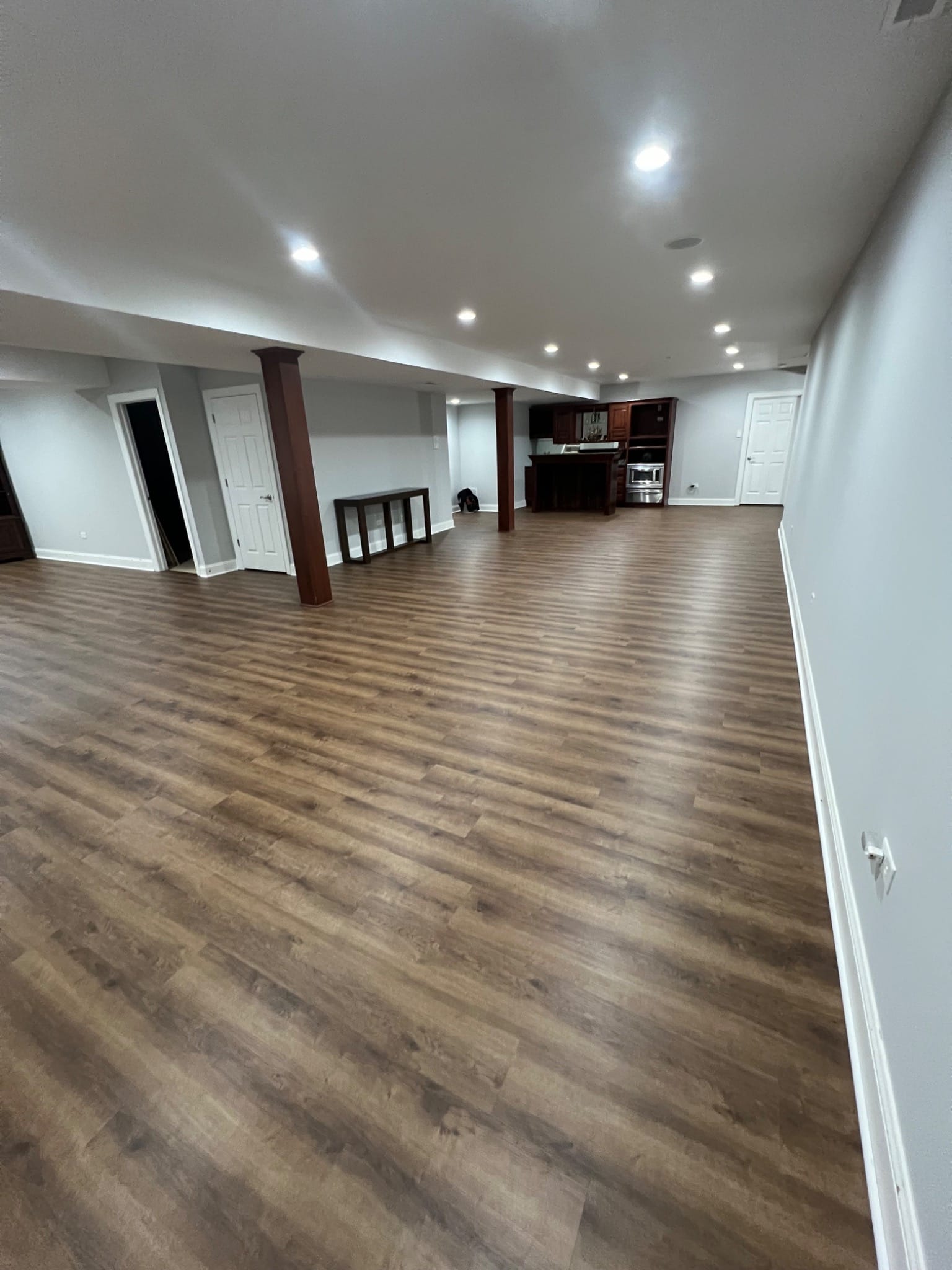
How to Choose Light Vinyl Plank Flooring for a Basement
Compare light vinyl plank samples under basement lighting, then check color, transitions, subfloor conditions, and the selected product’s installation guide....
October 22, 2026
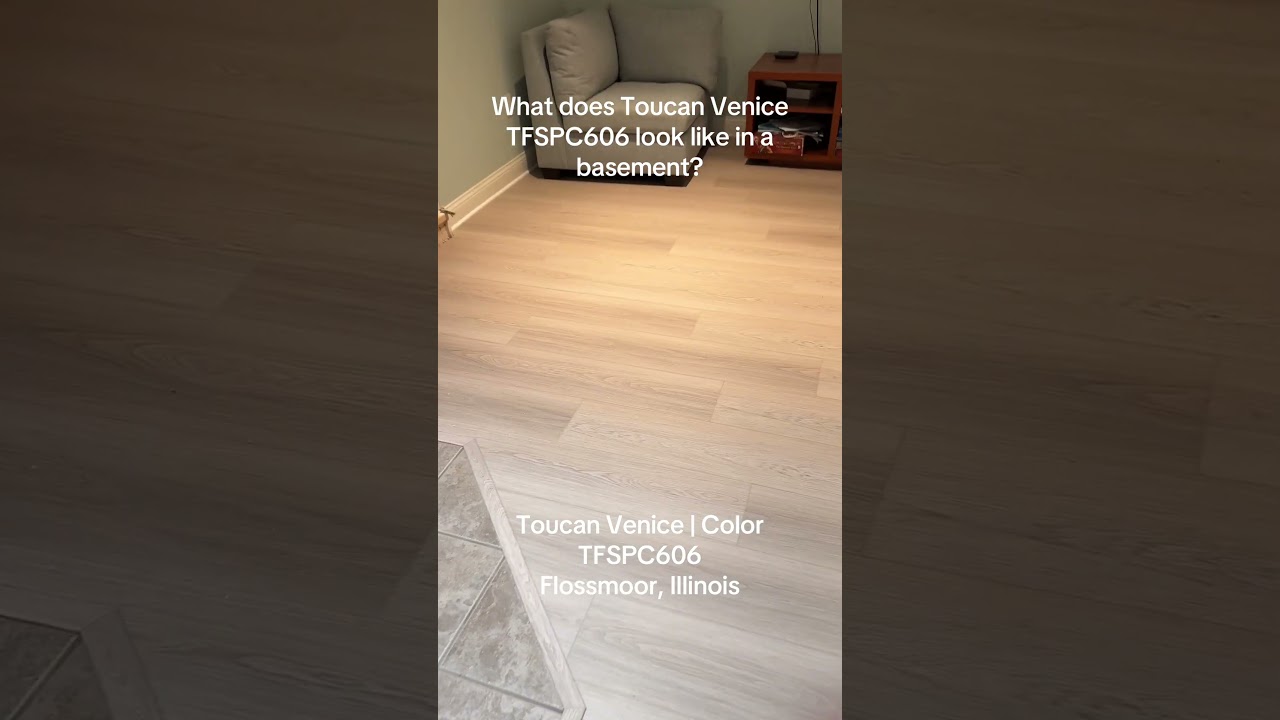
Toucan Venice TFSPC606 Basement Flooring in Flossmoor
Watch a finished Flossmoor basement floor featuring Toucan Venice color TFSPC606, installed by The Floor 4U....
October 22, 2026
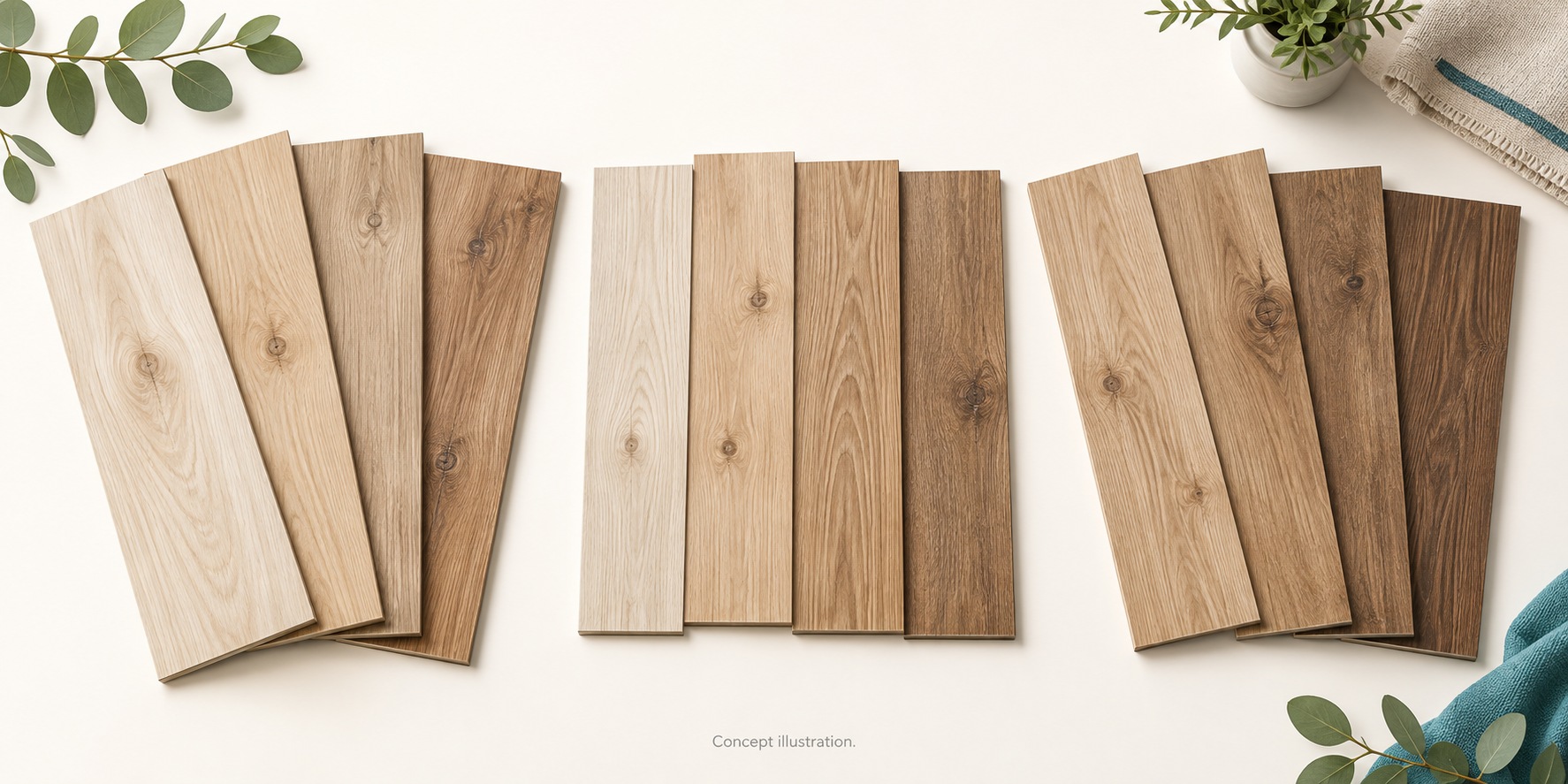
Pine-Look Vinyl Plank Flooring: How to Choose the Right Look
Compare pine-look vinyl plank samples, grain variation, room finishes, and installation details using a completed Homewood project as a reference....