(708) 775-3648

Hardwood vs Laminate Flooring: A Mokena Installer’s Honest Comparison
Matt Pehr
July 10, 2026
Request An Estimate
Hardwood and laminate can look almost identical on the showroom floor, but they are fundamentally different products. Hardwood is real wood you can sand and refinish for decades. Laminate is a photographic wood-look layer fused over a fiberboard core, which makes it cheaper and tougher against scratches but impossible to refinish. That difference decides the cost, the lifespan, how each one handles water, and what it does to your home’s resale value. At The Floor 4U in Mokena, IL we sell and install both, so here is the honest comparison we give homeowners across Will County.
Deciding between hardwood and laminate? Call Matt Pehr at (708) 775-3648 or request a free in-home estimate. We bring samples to your home, check your subfloor, and help you match the floor to your budget and your rooms, with no pressure.
The Core Difference: Real Wood vs Wood-Look
Every other difference between these two floors comes back to what they are made of.
- Hardwood: real milled wood, in either solid planks or engineered planks (a real-wood veneer over a plywood core). It can be sanded and refinished, ages into a natural patina, and is the material buyers picture when they hear “wood floors.”
- Laminate: a high-resolution photo of wood printed on paper, sealed under a tough clear wear layer, and pressed onto a high-density fiberboard core. It mimics wood convincingly, resists scratches and fading, and clicks together as a floating floor.
Neither is a bad floor. They solve different problems. Hardwood is the long-term, add-value choice. Laminate is the budget-friendly, high-durability choice. The rest of this guide is about which problem you are actually solving.
Cost: Laminate Wins on Price
Laminate is the clear budget winner, both for materials and for installation. Nationally in 2025, laminate runs roughly 3 to 8 dollars per square foot installed, while hardwood runs roughly 6 to 22 dollars per square foot installed depending on the wood species and whether it is solid or engineered. Those are public national ranges (Angi and HomeGuide, 2025), not The Floor 4U pricing. Your installed number depends on your subfloor, the product you choose, and your room, so call for a free in-home quote.
Laminate also installs faster because it floats and clicks together, which keeps labor lower. Hardwood, especially solid nail-down hardwood, takes more time and skill to install and finish.
Durability and Lifespan
This one is a split decision, because the two floors are durable in opposite ways.
- Hardwood: lasts for generations because it can be refinished. A solid wood floor can be sanded and recoated many times over its life, so a hardwood floor from decades ago can look new again. Left unrefinished, it will show scratches, dents, and sun fading over time.
- Laminate: resists surface damage better day to day. Its tough wear layer shrugs off scratches, scuffs, and fading better than a raw wood surface, which is why it is popular in busy households with kids and pets. Quality laminate lasts about 15 to 25 years, but once the wear layer is damaged, the plank has to be replaced rather than repaired.
If you want a floor you refinish and keep for 40 years, hardwood wins. If you want a floor that laughs off dog nails and dropped toys for 20 years, laminate wins.
Water and Moisture
Neither product loves standing water, but they fail differently.
- Hardwood: real wood expands and contracts with humidity and can cup or warp if it gets soaked. Solid hardwood is not recommended for bathrooms or below-grade basements. Engineered hardwood is more stable and tolerates concrete, basements, and radiant heat better than solid wood.
- Laminate: the fiberboard core can swell at the seams if water sits on it, which is the top cause of early laminate failure. Standard laminate handles quick spills that are wiped up, but it is not a true wet-room floor. For bathrooms, laundry rooms, and wet basements, a waterproof luxury vinyl plank is usually the better call, and we can show you those options too.
In Will County, wet basements are the most common reason this question comes up, and the honest answer is usually a waterproof luxury vinyl plank rather than either wood product. We check the moisture situation on site before recommending anything.
Refinishing, Repairs, and Home Value
Here is where hardwood pulls ahead for anyone thinking about the long game or resale.
Solid hardwood can be refinished many times, and engineered hardwood can usually be refinished at least once or twice depending on veneer thickness. Laminate cannot be refinished at all: a worn or damaged plank is swapped out, not sanded. On resale, real hardwood is one of the few flooring types that reliably adds value, and many buyers and appraisers specifically look for it. Laminate rarely adds measurable resale value, though a clean, modern laminate still shows better than worn carpet or dated flooring.
Which Should You Choose?
Choose hardwood when you want a lifetime floor that adds resale value and can be refinished, and you are furnishing main living areas, dining rooms, or bedrooms on a stable subfloor. Choose laminate when budget and scratch resistance matter most, for playrooms, rentals, busy family spaces, or a whole-house refresh where cost per square foot drives the decision. If moisture is the real concern, a waterproof luxury vinyl plank often beats both.
The Floor 4U carries and installs both. You can explore our hardwood flooring in Mokena and compare species and finishes, see our picks for the best hardwood flooring, or browse laminate flooring at our Mokena store. Matt will help you weigh the tradeoffs against your budget, your subfloor, and how each room gets used.
Quick Reference: Hardwood vs Laminate
| Feature | Hardwood | Laminate |
|---|---|---|
| What it is | Real wood (solid or engineered) | Photo wood-look layer over fiberboard |
| Installed cost (2025 national) | Roughly 6 to 22 dollars per sq ft | Roughly 3 to 8 dollars per sq ft |
| Refinishing | Yes (many times for solid) | No, replace planks |
| Scratch and fade resistance | Good, but shows wear over time | Excellent day to day |
| Water resistance | Low (engineered tolerates more) | Low, core swells at seams if soaked |
| Lifespan | Decades (refinishable) | About 15 to 25 years |
| Adds resale value | Yes, reliably | Little to none |
| Best for | Main living areas, long-term value | Budget refreshes, busy or high-traffic rooms |
Frequently Asked Questions
Reviewed by Matt Pehr, owner of The Floor 4U.
Is hardwood or laminate flooring better?
Hardwood wins for longevity and resale value; laminate wins for budget and scratch resistance. Solid hardwood can be refinished for decades and lifts home value, but costs more and dislikes standing water. Laminate, a printed wood-look layer over fiberboard, costs less, resists scratches and fading, and installs DIY-friendly, but cannot be refinished.
What is the downside of laminate flooring?
Laminate’s biggest downsides: it cannot be refinished, so deep scratches or worn spots mean replacing planks, and it is vulnerable to standing water, which can swell the fiberboard core at the seams. It also feels harder and hollower underfoot than wood and, unlike real hardwood, adds little resale value.
Do high-end homes use laminate flooring?
Sometimes. High-end builders increasingly use premium laminate or rigid luxury vinyl in playrooms, basements, and rentals for their scratch- and water-resistance. For primary living areas, luxury homes still favor solid or engineered hardwood, which buyers expect and appraisers reward, though today’s high-AC-rated laminate looks convincingly like real wood.
Which is healthier for indoor air, hardwood or laminate?
Hardwood, in most cases. Solid hardwood is a natural material sealed with a low-VOC finish, and it does not trap allergens the way carpet does. Laminate’s fiberboard core is bonded with resins that can off-gas formaldehyde, so look for CARB Phase 2 or TSCA Title VI compliance and a FloorScore or GREENGUARD label if indoor air quality is the deciding factor.
Does hardwood flooring add home value?
Yes. Real hardwood is one of the few flooring types that reliably boosts resale value, and many buyers look for it specifically. The National Association of Realtors’ Remodeling Impact Report consistently ranks wood flooring as a high-return upgrade, and because solid hardwood can be refinished for decades, it holds that value long-term.
How long does laminate flooring last?
Quality laminate lasts 15 to 25 years with proper care, though high-traffic areas can show wear sooner. Longevity depends on the AC (abrasion class) rating: AC3 suits most homes, while AC4 to AC5 handle heavy traffic. Keeping it dry matters most, since water damage is the top cause of early laminate failure.
The Bottom Line
Hardwood and laminate both have a place. Hardwood is the lifetime, add-value floor you refinish and keep. Laminate is the budget-smart, scratch-tough floor that looks like wood for a fraction of the cost. The right answer depends on your budget, your rooms, and how long you plan to keep the floor. For a moisture-heavy space, ask us about waterproof luxury vinyl as a third option.
Get a free in-home estimate. Matt Pehr brings samples to your home, checks your subfloor, and helps you choose between hardwood, laminate, and vinyl for how you live. No pressure, no fee. Call (708) 775-3648 or request your free estimate online. The Floor 4U is an owner-operated Mokena flooring company rated 4.9 stars with more than 300 five-star Google reviews, serving Mokena, Frankfort, Tinley Park, New Lenox, Orland Park, Homer Glen, Plainfield, and all of Will County, IL.
Share
Recent Posts
September 6, 2026
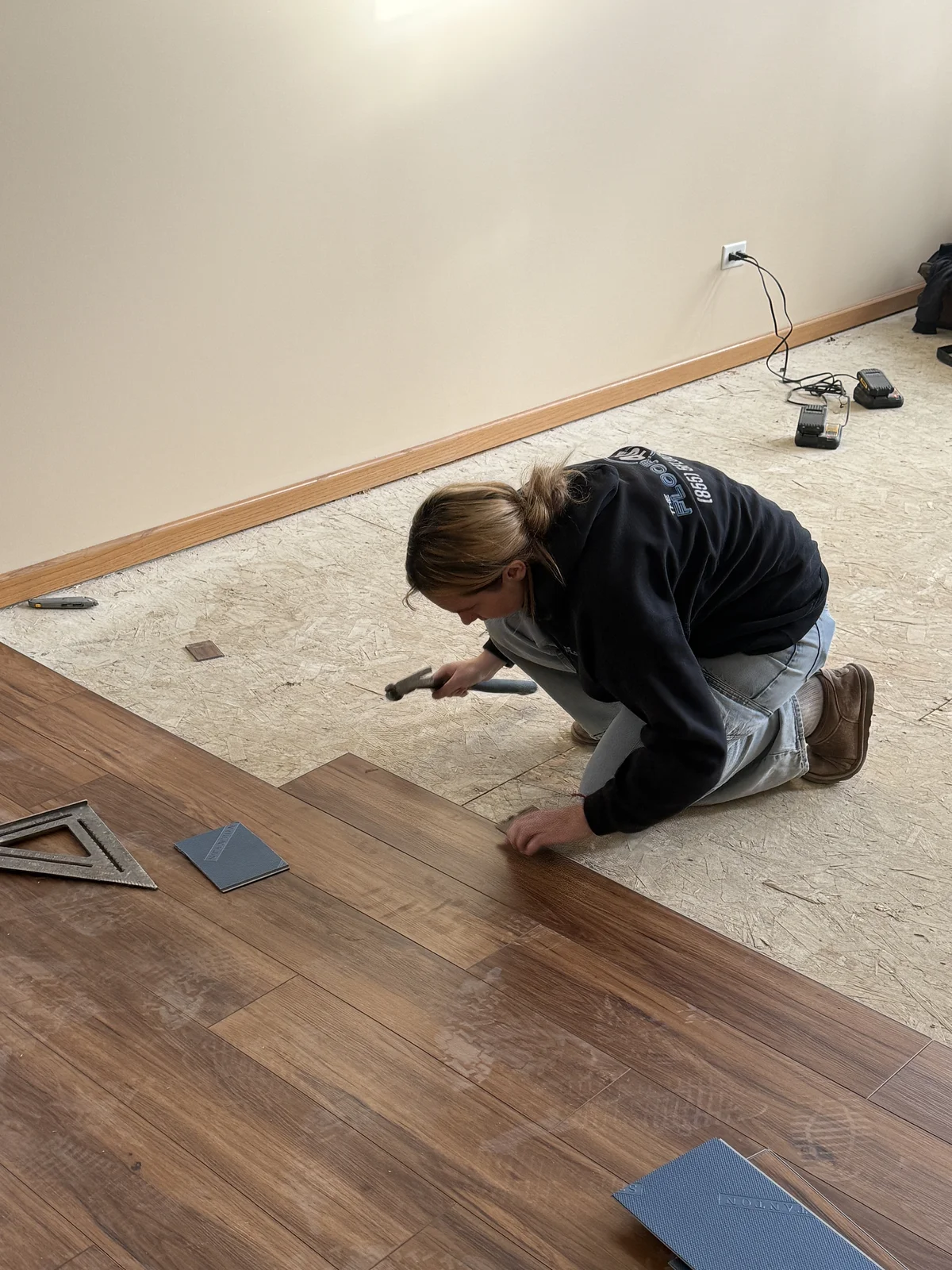
Who Installs Luxury Vinyl Plank Flooring in Plainfield, IL?
Written by Matt Pehr, owner of The Floor 4U. Yes. The Floor 4U installs luxury vinyl plank flooring in Plainfield, IL, working out...
September 5, 2026
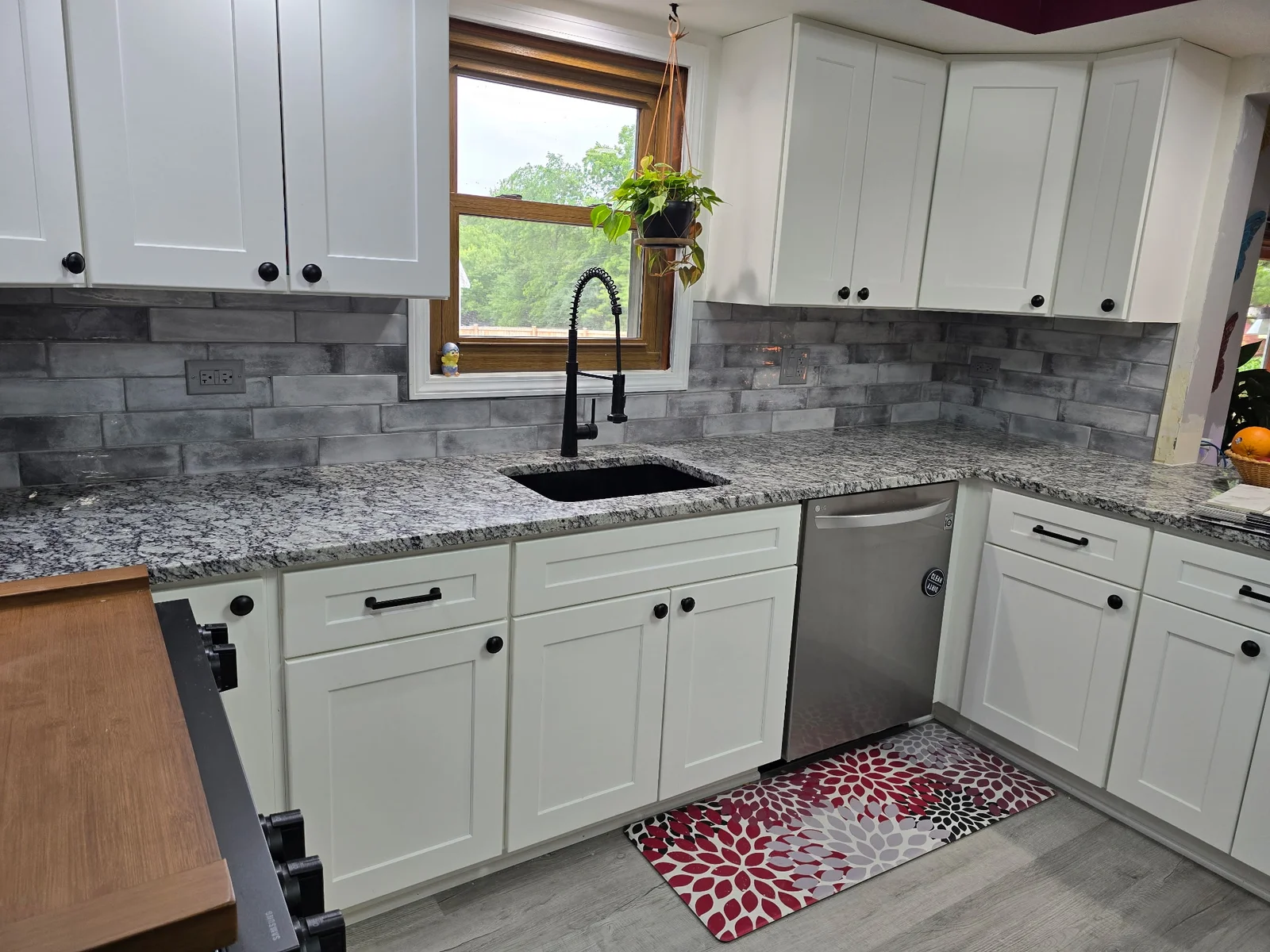
Can You Install a Kitchen Backsplash in Orland Park, IL?
Written by Matt Pehr, owner of The Floor 4U. Yes. The Floor 4U installs kitchen and bathroom backsplashes in Orland Park, IL. Backsplash...
September 5, 2026
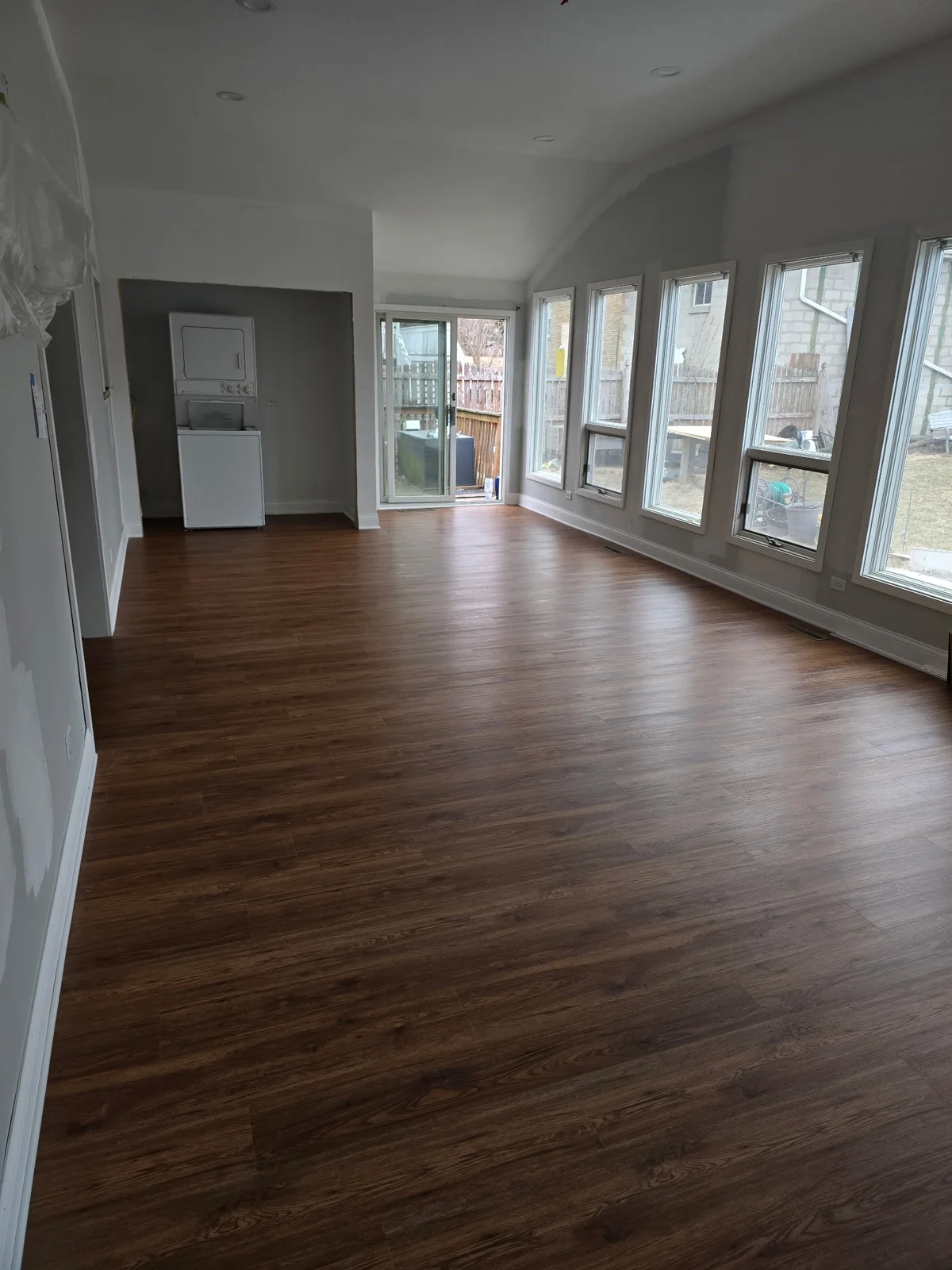
Who Installs Laminate Flooring in Homer Glen, IL?
Written by Matt Pehr, owner of The Floor 4U. Yes. The Floor 4U installs laminate flooring in Homer Glen, IL, working from the...