(708) 775-3648

What to Expect From Professional Carpet Installation in Tinley Park, IL
Matt Pehr
August 18, 2026
Request An Estimate
Two houses on the same street can order the same carpet, off the same roll, in the same color, and end up with two different floors. One stays flat and tight for as long as the carpet is meant to last. The other grows a ripple across the family room by the second humid summer, has a seam you can find with your eyes shut, and shows a tired stair nose while the bedrooms still look new. The carpet was identical. The installation was not.
That is the part of a carpet job that is hardest to shop for, because none of it is printed on a sample board. Here is what professional carpet installation in Tinley Park actually involves: matching carpet to the room, what the cushion underneath has to do, where the seams land, what power stretching is, and the checks you can run yourself before the installer packs up.
Planning new carpet? Call (708) 775-3648 or request a free in home carpet measure. We measure the rooms, look at what is under the old floor, and plan the seams before anything is ordered.
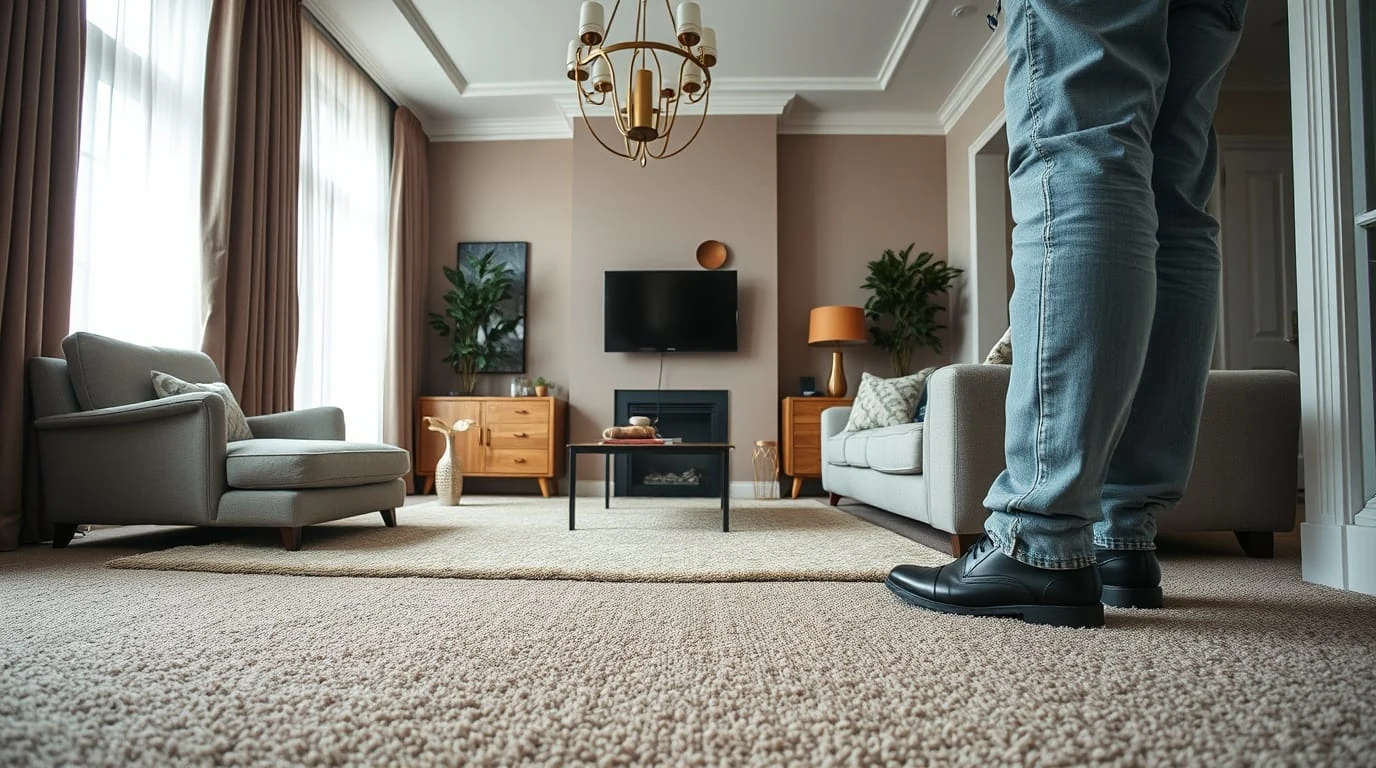
Why the Same Carpet Can Look Different in Two Homes
Carpet arrives soft, unfinished, and wider than most rooms. Hardwood and vinyl come out of the box already formed; carpet gets its final shape on your floor. Every dimension of the finished result is set by a decision somebody makes on the day, and most of them are invisible an hour later.
There are five of them, and they account for nearly every complaint a homeowner has about a carpet a year later.
- Which carpet went into which room. Construction and pile height matter more than color once the furniture is back.
- What cushion went under it. The cushion is a structural part of the floor, and the carpet manufacturer’s specification for it is not a suggestion.
- Where the seams landed. Seam placement is a layout decision made against light, traffic, and doorways, before a knife comes out.
- Whether the carpet was power stretched. This is the single biggest predictor of whether a floor stays flat.
- What happened to the subfloor first. Squeaks, high spots, loose fasteners, and slab moisture do not fix themselves under carpet.
Choosing Carpet by Room, Not by Sample Board
The question most people ask is which carpet is good. The more useful question is which carpet suits the room it is going into, because a construction that performs beautifully in a guest bedroom can look worn out in a stairway inside a year. Fiber matters, but twist, density, and pile height matter more.
Bedrooms and Quiet Upstairs Rooms
Bedrooms take the least traffic and the most bare feet, so this is where a softer, deeper pile earns its keep. A plush or saxony cut pile is comfortable underfoot and is not fighting a traffic lane. The tradeoff is that it shows footprints and vacuum tracks, which some people like and some cannot live with. Look at a full sample in the room’s own light first.
Hallways, Stairs, and Landings
Traffic runs in lanes, and the lanes concentrate at the top and bottom of a stairway, in the hall outside bedrooms, and across the landing of a split level. Those areas want a denser, tighter, lower construction: a textured cut pile with a hard twist, or a dense loop. Density is what to ask about, because a dense carpet has more yarn in the same square inch to share the load, so it recovers instead of matting.
Basements and Rooms on a Slab
Below grade there is concrete underneath, and concrete moves moisture. Synthetic fiber belongs here, and the cushion becomes a moisture decision rather than a comfort decision. This is also where a glue down installation sometimes beats a stretch in, since a glued floor has no cushion layer holding humidity against the slab. Either way, the slab gets tested first.
Family Rooms, Pets, and Daylight
Family rooms take the widest range of abuse, so the useful filters are cleanability and how the carpet handles a spill. Solution dyed fiber holds color through cleaning far better than fiber dyed after the fact, a difference that shows after the third cleaning rather than the first. Loop pile and pet claws are a known conflict, so a textured cut pile is safer in a house with animals.
Cushion Is Part of the Floor, Not an Add On
Cushion is the one component nobody ever sees again, and mechanically it is half of how a stretched in carpet works. It absorbs the impact of every footstep so the carpet backing does not have to. Too soft or too thick, and the backing flexes farther than it was built to flex on every step. That is what wears a carpet out from underneath.
The specification comes from the carpet, not the cushion aisle. Every carpet manufacturer publishes a cushion specification per product, and the Carpet and Rug Institute residential installation standard, CRI 105, points the installer back to it. The general residential guidance is worth knowing before you shop:
- Thickness. For residential cut pile, cut loop, and high level loop carpet, a firm cushion no thicker than 7/16 inch and no thinner than 1/4 inch is the usual range.
- Density. Around 6 pounds per cubic foot or better for cut pile. Density, not thickness, is what makes a cushion feel supportive rather than mushy.
- Firmness beats plushness. A thick, soft cushion feels luxurious when you squeeze it in a store and works against the carpet once it is underneath one.
- Below grade. On a basement slab the cushion has to account for moisture, which usually points to a synthetic cushion rather than a fiber one.
Old cushion does not get reused under new carpet. It has already been compressed in the exact pattern of the old traffic lanes, so it hands the new carpet a floor already worn where it matters. Warranty coverage varies by product and manufacturer; your written proposal will identify the coverage that applies.
Seam Placement Is Decided Before Anything Is Cut
Carpet comes off a roll narrower than most rooms, so unless a room is small there will be at least one seam in it. Anyone promising no seams in a wide family room has not measured yet. The honest promise is not that a seam disappears; it is that it goes where it is least visible and least stressed, and that it is made properly.
CRI 105 sets the placement rules, and they are the same rules a careful installer follows by instinct:
- Seams run the length of the room rather than across it.
- Main traffic runs parallel to a seam, not across it, so footfall does not work the joint open.
- Natural light does not rake across the seam. A seam running toward the window disappears; one running across the light casts a shadow line.
- No seam sits perpendicular to a doorway, where everyone entering the room steps directly onto the joint.
- Seams stay out of pivot areas, the spots where people turn rather than walk straight through.
How the seam is made matters as much as where it goes. Pile direction has to run the same way on both sides, or the two pieces read as two different colors under the same light. Cut edges are seam sealed so the backing cannot fray or delaminate at the joint. Patterned carpet has to be matched at the repeat, which changes how much material the room needs. And the carpet itself hides seams to different degrees: a dense or textured cut pile absorbs a joint far better than a low, flat, uniform loop, where the seam has nothing to hide behind.
Ask to see the seam layout before the order goes in. It is a drawing of your rooms with lines on it, and it is the clearest early signal of whether the person quoting the job thought about your house or about square footage.
Power Stretching, and Why Buckles Show Up Later
A stretch in carpet is held by tackless strip around the perimeter, thin wood strips with angled pins that grip the backing. For that to work, the carpet has to be pulled to real tension across the room before it is hooked on, then trimmed and tucked into the gap between strip and wall. Tension is the whole mechanism. Without it the carpet is just lying on the floor with its edges caught.
CRI 105 calls for a power stretcher on residential stretch in installations and treats devices used as a substitute for one as unacceptable, because they cannot deliver an adequate amount of stretch and can damage the carpet or the subfloor trying. A knee kicker is a positioning tool. It sets carpet on the strip and works corners; it was never designed to tension a room.
That is why this is the step most worth asking about. An understretched carpet does not fail on installation day. It fails the first time the house goes warm and humid, when the backing relaxes and the slack that was always there finds somewhere to go. It shows up as a ridge or wave across the widest span, and the only real fix is to pull the carpet off the strip and stretch it properly, furniture out a second time.
Two details separate a careful stretch in from a fast one. The tackless strip is set at roughly two thirds the carpet thickness from the wall with its pins angled toward the wall, so the carpet has a gap to tuck into and the pins pull with the tension. And the carpet is trimmed and tucked down into that gap rather than left riding over the strip, which is what you feel underfoot along a baseboard on a rushed job.
What Happens to the Subfloor Before the Carpet Goes Down
The window between the old floor coming out and the new carpet going in is the only time anyone will see your subfloor for as long as the carpet lasts. It is worth using.
- Squeaks. A fastener that has lost its grip, or a panel moving against a joist. A few screws with the floor open; a demolition project afterward.
- Loose or proud fasteners. A staple or nail standing above the deck telegraphs through cushion and carpet and wears a hole in the backing from below.
- High spots and ridges. A subfloor panel seam or a proud patch reads as a line through the finished carpet, especially in a low pile.
- Debris and old staples. Every staple from the previous cushion has to come out. Any one that stays becomes a lump.
- Slab moisture, below grade. Concrete gets tested rather than assumed.
On moisture there are two recognized test methods, both of which exist because eyeballing a slab does not work. ASTM F2170 sets relative humidity probes into holes drilled in the slab and reads the humidity inside the concrete. ASTM F1869, the anhydrous calcium chloride test, seals a dish of desiccant to the surface and measures the vapor coming out over 24 hours. A high reading does not necessarily stop the job, but it changes the cushion and can change whether the floor is stretched in or glued down.
Transitions, Doorways, and Where Two Floors Meet
Most carpet complaints that are not about ripples or seams are about doorways, where the carpet has to stop, get anchored, and meet something else. Each junction is a small piece of carpentry, and a floor can be beautifully stretched and still look unfinished if the transitions were an afterthought.
- Carpet to hard surface. Where carpet meets hardwood, luxury vinyl plank, or tile, the carpet edge is anchored and covered, commonly with a metal Z bar or a similar edge profile that holds the backing down and hides the cut.
- Carpet to carpet. Two different carpets meeting in a doorway need a seam or a binder bar, and the pile direction question does not go away just because it is a doorway.
- Height differences. New carpet and cushion are rarely the same total height as what came out, which affects how doors swing and whether the threshold sits flush.
- Under the door, not in front of it. A transition belongs under the closed door so neither room shows the edge of the other room’s floor.
The same care applies to closet openings, floor vents, and the base of a stairway, the three places a fast job leaves a ragged cut.
Jobsite Conditions That Change the Result
Carpet and cushion are both affected by the air they go in at. CRI guidance is to hold the space at normal living temperature and humidity before, during, and after the installation, with the heating or cooling system running rather than shut off for the project. Installing into a cold, closed up room and warming the house afterward is a quiet cause of a carpet that goes loose later, because it was tensioned at a size it will not stay at.
So do not shut the furnace or air conditioning off to save on an open door; ask the installer how they want the house set. And plan to ventilate afterward, since new carpet and cushion both give off some odor at first.
The Walkthrough: Checks You Can Run Yourself
Do this before the installer leaves, not the next morning. Everything here is easy to correct while the tools are still in the house.
- Walk every room in socks and feel for anything soft, loose, or moving underfoot.
- Push a hand flat across the widest span and feel for slack. A properly stretched carpet feels tight, not springy.
- Find every seam and look down it twice, once with the light behind you and once with the light in front. Check that the pile leans the same way on both sides.
- Run a finger along the baseboard. The carpet should be tucked down into the gap, not riding over the top of the strip.
- Check every doorway transition: fastened, flush, and sitting under the closed door.
- Open and close each door that swings over new carpet.
- Check stair noses for tightness and look at the sides of each tread where the carpet turns.
- Look at floor vents, closet openings, and the base of the stairway for clean cuts.
- Confirm the old carpet, old cushion, and old staples are gone and the rooms were vacuumed after trimming.
If something is not right, say so while the installer is standing there. Nearly everything on that list is a same visit fix.
Where Carpet Installations Go Wrong
Almost every carpet problem a homeowner describes traces back to a step earlier in this article.
- Ripples and buckles across a room. Not enough tension at installation. Stretching.
- A visible line where two pieces meet. Seam placed against the light or across traffic, or pile direction reversed. Layout.
- A seam that opens or frays. Edges not seam sealed. Seam construction.
- Carpet that mats in lanes. Pile too soft for that traffic, or cushion too thick and soft. Selection.
- A ridge or lump you can feel. Subfloor high spot, an old staple, or debris under the cushion. Preparation.
- Odor or dampness in a basement. Slab moisture never tested, or the wrong cushion below grade. Moisture testing.
- Worn stair noses while the rest looks new. Carpet chosen for comfort rather than for a tread. Selection.
Carpet Installation in Tinley Park Homes
Tinley Park housing hands an installer a particular set of these problems. Much of the village is split level, tri level, and two story construction, so stairways and landings carry traffic in a way a ranch never does, and the carpet on those runs has to be chosen for the tread. Finished lower levels and rooms on slab put the moisture question on the table. Newer subdivisions tend to have the wide open family rooms that force a seam decision, because the room is wider than the roll.
So the measure appointment is where the real work happens: which rooms get which construction, where the seams have to fall given the windows and doorways, what the cushion has to be on each level, and whether anything under the old floor needs attention while it is open. You can see the Tinley Park neighborhoods and landmarks we work around on our local page, and the scope of the work itself is set out on our carpet replacement service page.
Frequently Asked Questions
Reviewed by Matt Pehr, owner of The Floor 4U.
Does professional carpet installation in Tinley Park IL include power stretching?
It should. CRI 105, the residential carpet installation standard, calls for a power stretcher on stretch in installations and treats substitutes as unacceptable, because they cannot deliver enough stretch and can damage the carpet or the subfloor. A knee kicker positions carpet on the strip and works corners; it is not a tensioning tool. Ask up front, because an understretched carpet looks fine on installation day and ripples months later, when the only real fix is pulling the floor back up.
How do I know the carpet cushion matches the carpet I picked?
The specification comes from the carpet manufacturer, and CRI 105 points the installer back to it, so ask which cushion your carpet calls for and confirm that is what is going in. The general residential range for cut pile, cut loop, and high level loop is a firm cushion no thicker than 7/16 inch and no thinner than 1/4 inch, with density around 6 pounds per cubic foot or better. Thicker and softer is not better: extra flex under the backing wears the carpet out from underneath.
Will the seams show in my new carpet?
Some will be findable if you look, because carpet comes off a roll narrower than most rooms. The goal is placement and construction, not invisibility. CRI 105 puts seams along the length of the room, parallel to traffic, out of raking natural light, never perpendicular to a doorway, and out of pivot areas. Pile direction has to match on both sides, cut edges are seam sealed, and patterned carpet is matched at the repeat.
Is a moisture test needed before carpet goes over a basement slab?
It is the right call any time carpet goes down on concrete, and it matters most below grade. The two recognized methods are ASTM F2170, which measures relative humidity with probes set into the slab, and ASTM F1869, the anhydrous calcium chloride test that measures moisture vapor coming off the surface over 24 hours. A slab that reads wet does not automatically stop the job, but it changes which cushion is appropriate and can change whether the floor is glued down rather than stretched in.
What is the right carpet construction for a stairway in a split level home?
Stairs take the most concentrated traffic in a split level, and nearly every step lands on the narrow nose of the tread, so choose for the tread rather than for the bedroom the stairs lead to. A denser, tighter, shorter pile holds up where a deep plush crushes within a year. The other decision is the wrap: a waterfall runs straight over the nose and down, while a cap and band is upholstered to the shape of each step and looks better on an open stairway.
What should I look for during the final walkthrough?
Walk every room in socks and feel for anything soft or loose. Look down each seam twice, once with the light behind you and once with it in front. Run a finger along the baseboard: the carpet should be tucked into the gap, not riding over the tackless strip. Check that transitions sit flush and under the closed door, that stair noses are tight, and that vents and closet openings are cut cleanly. Speak up while the installer is still in the house.
Book a Free In Home Carpet Measure in Tinley Park
We come to the house, measure every room, look at the subfloor, plan where the seams have to land, and go through the cushion specification for the carpet you are considering. You get the plan before anything is ordered. Call (708) 775-3648 or set up your free in home carpet measure. The Floor 4U works throughout Tinley Park, Mokena, Frankfort, New Lenox, Homer Glen, Orland Park, Lockport, and Joliet, from our Mokena location.
Share
Recent Posts
October 22, 2026
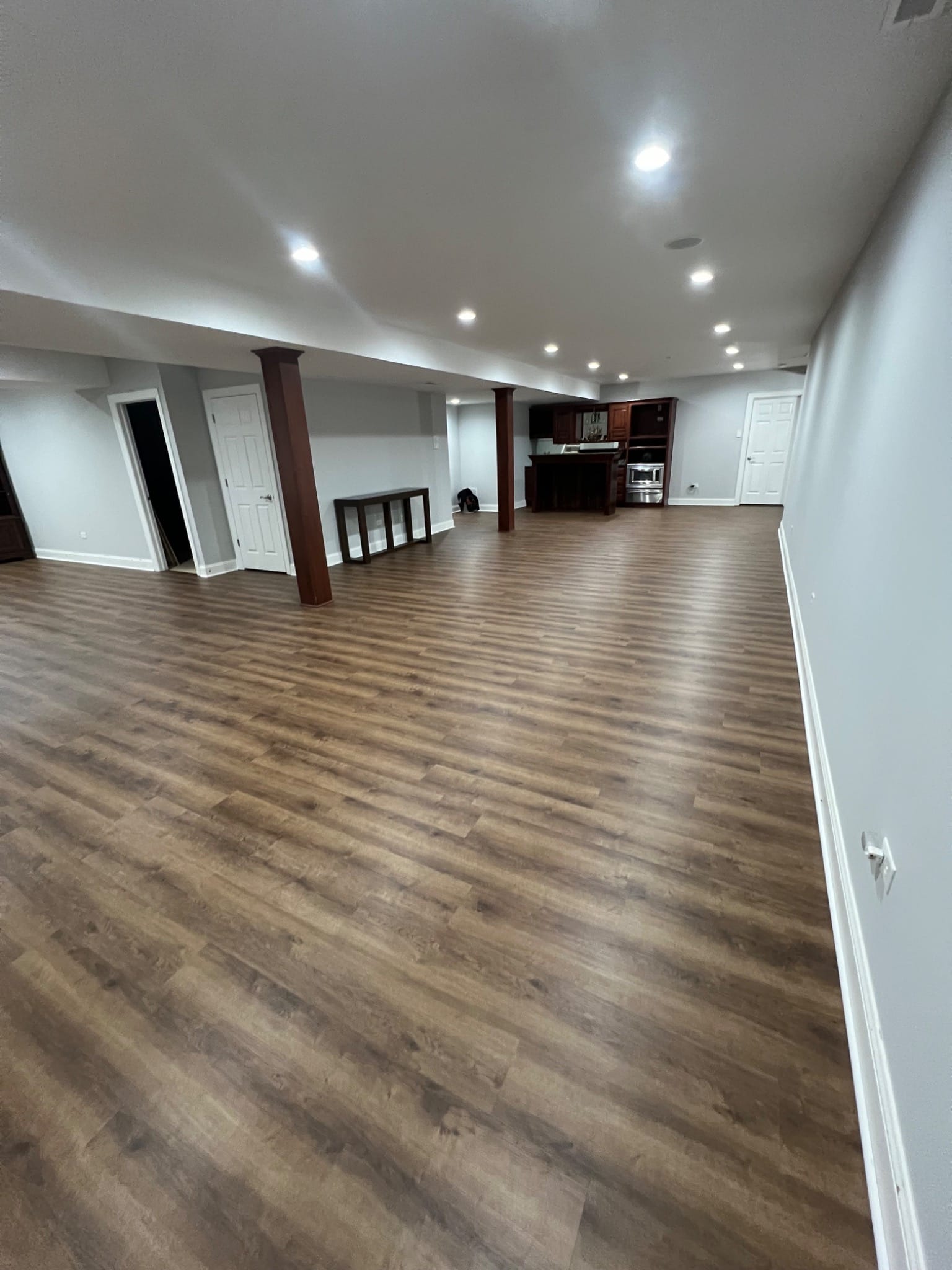
How to Choose Light Vinyl Plank Flooring for a Basement
Compare light vinyl plank samples under basement lighting, then check color, transitions, subfloor conditions, and the selected product’s installation guide....
October 22, 2026
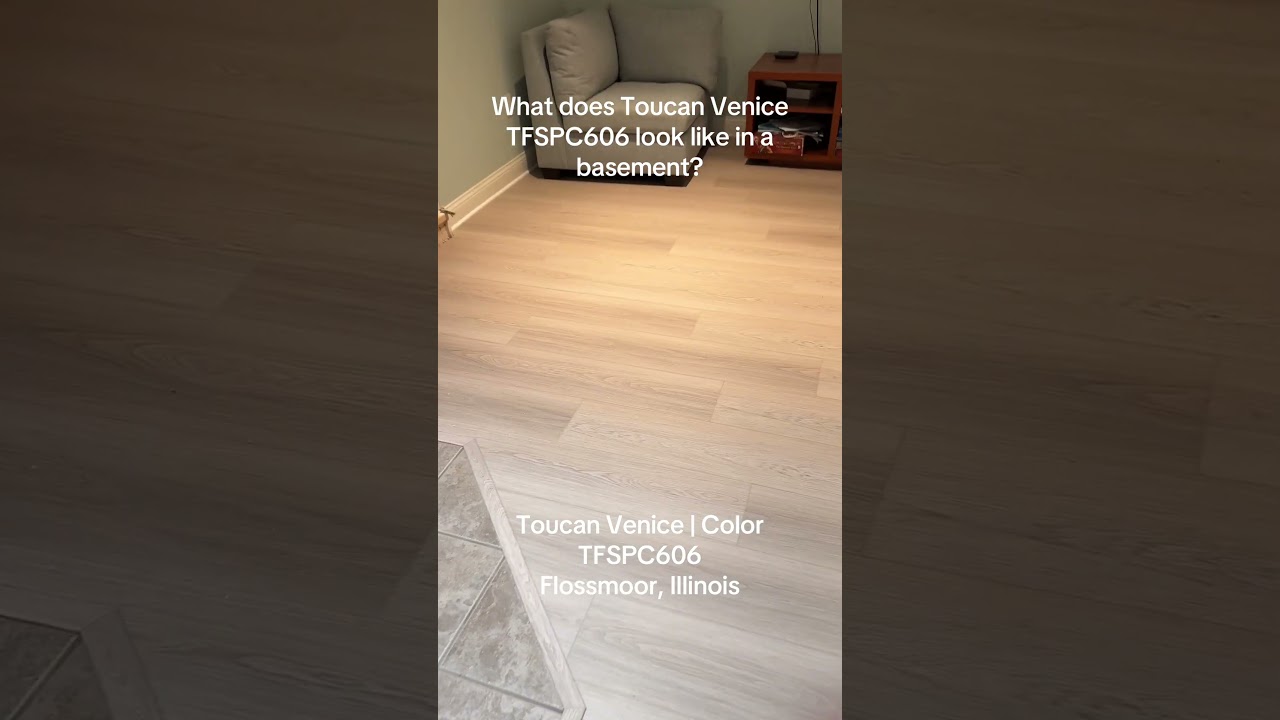
Toucan Venice TFSPC606 Basement Flooring in Flossmoor
Watch a finished Flossmoor basement floor featuring Toucan Venice color TFSPC606, installed by The Floor 4U....
October 22, 2026
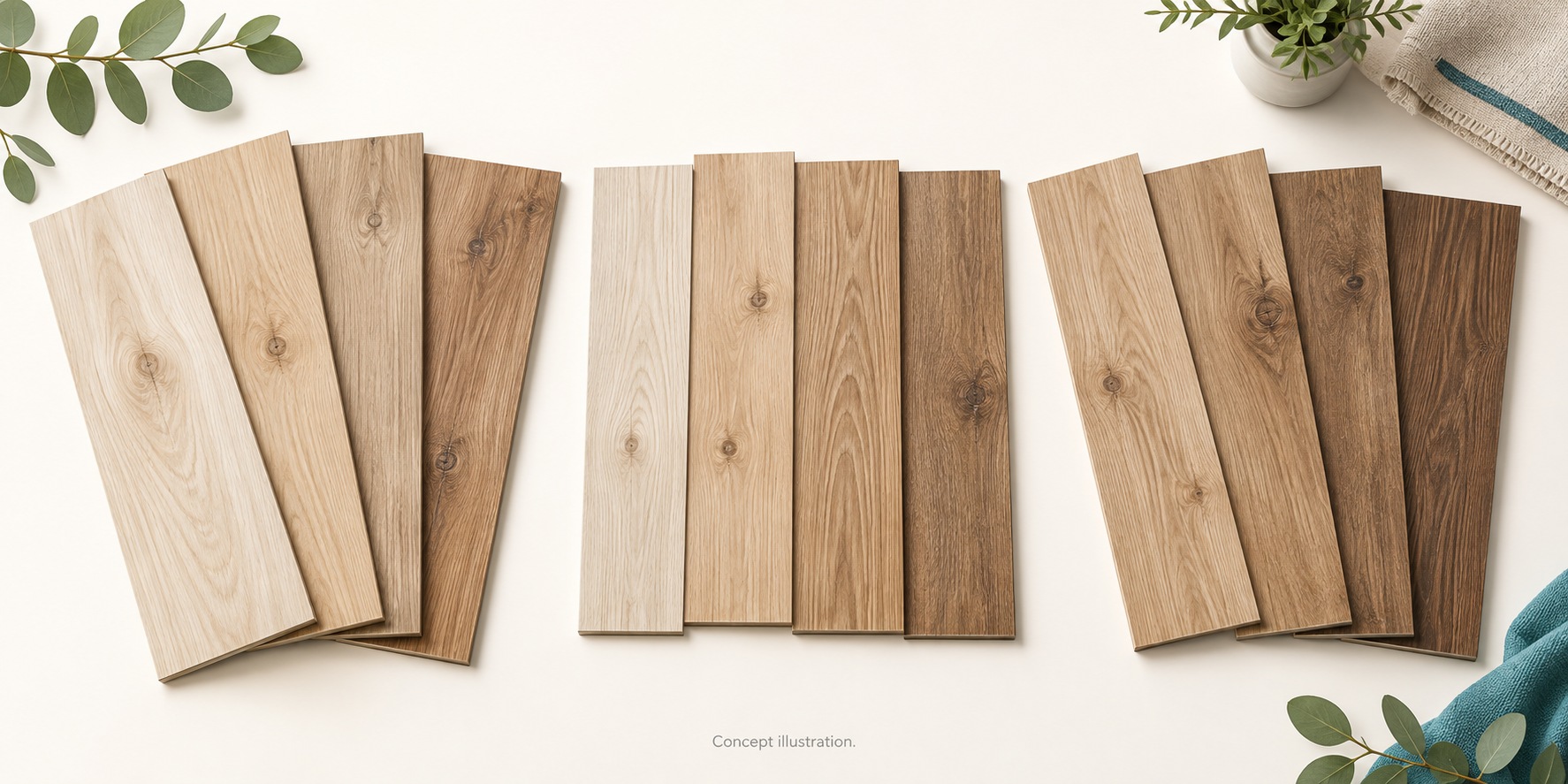
Pine-Look Vinyl Plank Flooring: How to Choose the Right Look
Compare pine-look vinyl plank samples, grain variation, room finishes, and installation details using a completed Homewood project as a reference....