(708) 775-3648

Pine-Look Vinyl Plank Flooring: How to Choose the Right Look
Matt Pehr
October 22, 2026
Request An Estimate
Choose pine-look vinyl plank flooring by comparing full-size samples, the amount of grain variation, and the color beside your existing finishes. Then confirm the exact product and installation requirements. A finished-room video helps you judge the overall look, but it cannot establish the floor’s hidden construction or suitability for another home.
A Homewood project by The Floor 4U shows Titan Boardwalk Pine after installation. Its wood-look pattern creates a useful reference for homeowners comparing pine-style planks. This guide explains how to evaluate that appearance for a home in Homewood, Mokena, or Will County. Matt Pehr is the owner of The Floor 4U.
Watch the finished Titan Boardwalk Pine project in Homewood.
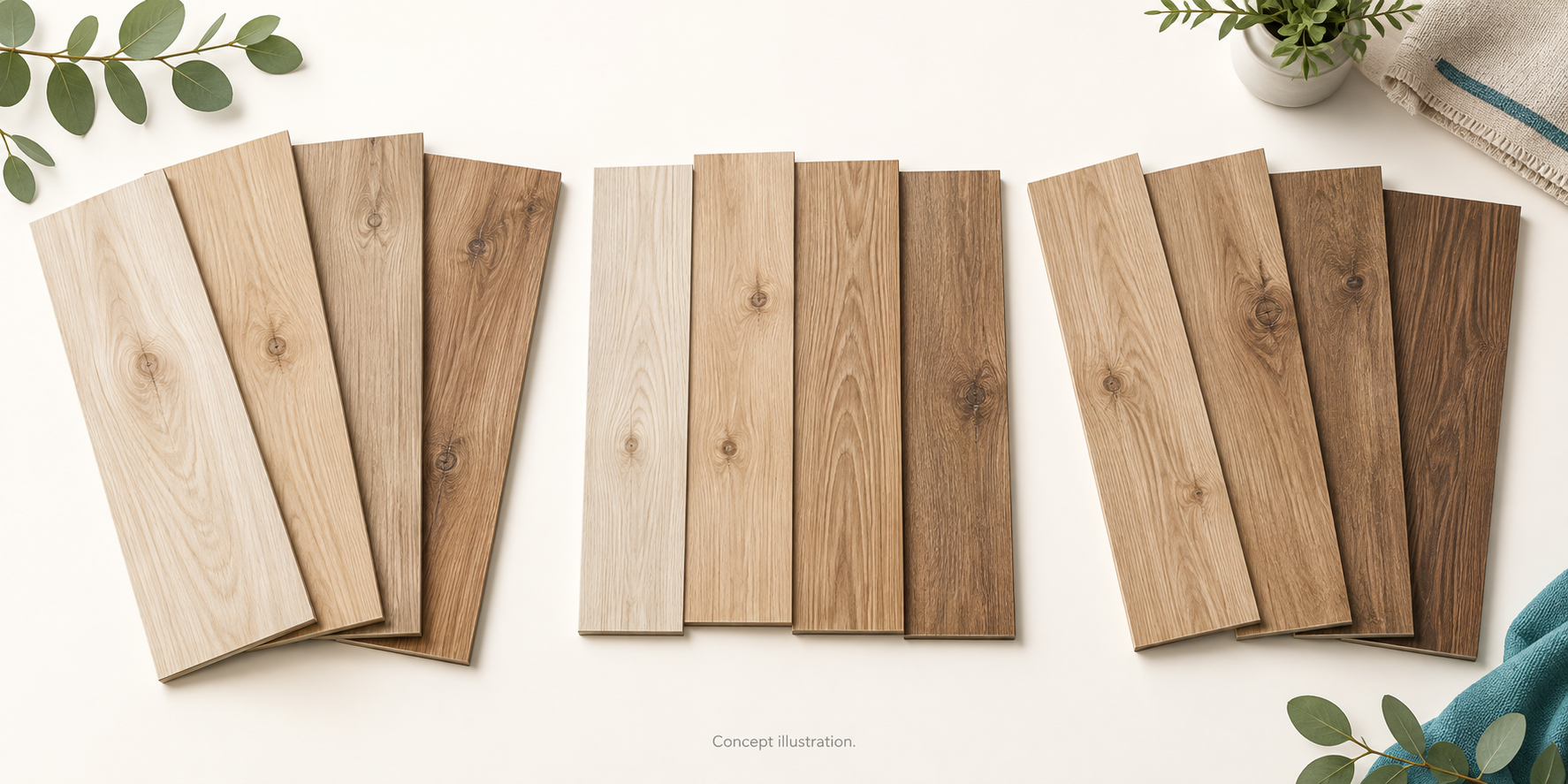
Featured image: AI-generated editorial illustration comparing groups of generic pine-look plank samples in light and medium brown tones. This conceptual image does not depict an actual project or an exact manufacturer product.
Use the Homewood installation as a room-scale reference
The project description identifies Titan Boardwalk Pine as the finished flooring. The footage shows wood-look planks beside white trim and interior doorways. You can see how the pattern reads across a larger area than a sample board.
The same description connects this finished project with an earlier Homewood preparation video. That earlier clip explains why plywood was added after tile removal changed the exposed floor height. The two clips show different stages of one project.
Keep those observations separate from specifications. The finished video does not establish the wear layer, panel thickness, exact installation assembly, or warranty terms. It also does not prove that another home needs the same floor or preparation.
Start your comparison with the full product name. Ask The Floor 4U to show you the current sample and identify the product being quoted. That gives you a reliable link between the look in the video and the material you are considering.
Pine-look vinyl flooring is a design choice, not a wood-species claim
When you search for pine vinyl plank flooring, you are usually describing an appearance. A pine-look design is different from solid pine boards. The word in a color name does not mean the product has the construction or refinishing options of real wood.
That distinction matters when comparing products online. Some search results concern solid wood, others laminate, and others vinyl. Confirm the material before comparing installation methods, maintenance, or long-term expectations.
Titan’s Traditions style sheet is a manufacturer reference for the collection and Boardwalk design. Ask for the current sheet and exact product identification with your estimate. Use that documentation to confirm construction rather than relying on the color name alone.
If you are considering luxury vinyl plank flooring, spell out what you want from it. You may be choosing a pine-style pattern, a particular color, or a floor that works with the room’s daily use. Those are separate decisions, and they deserve separate answers.
Compare color and grain across several planks
A small sample can help you judge a color family. Several full-size planks give a better view of the variation you will see across the room. Ask how much variation to expect within the exact style you are considering.
Look for the details that attract your eye. These may include darker grain, lighter streaks, knots in the design, or a weathered appearance. Decide whether you want those details to become a strong feature or a quieter background.
A rustic vinyl plank pattern can look different once it covers an entire room. A feature you enjoy on one board may repeat throughout the installation. Lay out several samples together so you can judge that effect before ordering.
View the samples beside a plain surface as well as beside your furniture. Busy upholstery, patterned rugs, or strongly grained cabinets may compete with an active floor pattern. A simpler surrounding finish can give a characterful floor more room to stand out.
Do not judge the exact color from the Homewood video. Camera exposure, compression, and the room’s lighting can shift the image. Use the clip for the overall pattern and scale, then use a physical sample for the color decision.
Match the floor to the finishes that will stay
Start with permanent or expensive-to-change finishes. These might include kitchen cabinets, a staircase, interior doors, or built-in shelving. Bring photographs and available finish samples to the flooring discussion.
You do not have to make every wood-look surface identical. The useful question is whether the colors and patterns look intentional together. Compare them directly instead of judging each sample in a separate room or on a different screen.
White baseboards give the Homewood floor a clear boundary. In your home, existing stained trim may produce a different effect. Decide whether the trim will remain before treating the project’s appearance as a close preview of your own room.
Check the sample in the lighting you use most. Look at it during the day and under the room’s normal evening lights. Include nearby rooms in that check if the new floor will be visible through an open doorway.
Ask about luxury vinyl plank installation while you compare finishes. Direction, transitions, and the edges around fixed features affect how the room reads once the floor is installed. Settle those details with the product selection.
Confirm performance from the exact product documents
A floor’s appearance does not establish its performance. Before ordering, ask for the product identification, current technical information, installation instructions, and warranty. Match those documents to the material on the estimate.
Discuss where the floor will be installed and how the room is used. Tell the team about pets, rolling furniture, outside doors, or other conditions that matter in your home. Ask which instructions apply to those uses.
Check the cleaning and care guidance before you choose. A preferred cleaning product or tool may not be approved for every flooring system. Knowing the required care helps you compare the ownership experience as well as the appearance.
Also ask about coordinating transitions and the treatment of stairs. Do not assume every matching accessory is available for every style. Confirm what will be supplied and how it will meet adjoining surfaces.
The Homewood project verifies that The Floor 4U installed the named style on that job. It does not establish present stock, current pricing, or an authorized-retailer designation. Ask the team to confirm current availability and the exact ordering details.
The finished appearance follows a preparation plan
The earlier Homewood clip gives this finished floor useful context. Its description says tile removal left the door jambs approximately 3/4 inch above the exposed floor. Plywood was then used to help rebuild the height before the finished flooring went in.
That sequence explains why a flooring decision should include the whole assembly. The material you see is only the finish. The exposed substrate and connections at doors and adjoining rooms still need to be planned.
For the details of that decision, read why plywood may be needed after removing tile. That guide explains the difference between a visible jamb gap and a specification for panel thickness. It does not recommend copying the Homewood assembly in every home.
Your installer should assess the actual floor under your existing covering. If the project needs repairs, additional preparation, or a different transition detail, the written scope should explain them. Use the flooring removal and disposal process to discuss what happens before the new floor arrives.
What to bring to a sample review and estimate
Bring enough information to compare the look and the installation scope together. A sample review works best when it includes the room’s existing finishes and a clear idea of what will stay. An in-home review can then address details the photos do not show.
- The exact product or video reference you like.
- Photos of the whole room and its doorways.
- Cabinet, wall-paint, and trim samples when available.
- Notes about adjoining floors and nearby stairs.
- Questions about grain variation, color, and coordinating trim.
- Any history of moisture, movement, or problems with the current floor.
- A request to separate removal, preparation, installation, and finish details in the estimate.
Compare more than the material price when reviewing proposals. One may include removal, preparation, and transitions while another lists only the flooring and basic installation. Ask for the scope to be made comparable before choosing.
Common questions about pine-look vinyl plank flooring
Is pine-look vinyl flooring made from pine boards?
The appearance name does not establish the material. Confirm whether the product is vinyl, laminate, or real wood. Then use the documents for that exact product to compare installation, care, and refinishing options.
What flooring is shown in the Homewood video?
The Floor 4U identifies it as Titan Boardwalk Pine. Ask for the current sample and full product identification before ordering. The video gives a finished-room reference, not a complete technical specification.
Will Boardwalk Pine look the same in my room?
Your lighting, paint, trim, and furniture affect its appearance. Review several physical samples in the room. A video is useful for scale and overall character, while the sample helps you judge the color.
Does choosing the same floor mean I need plywood too?
No. The Homewood preparation responded to that project’s exposed floor and finished-height needs. Your substrate and installation instructions determine the preparation for your home.
How do I choose between a quiet pattern and a rustic one?
Lay out several planks beside the finishes that will remain. Compare how much attention the grain and color variation draw. Choose the effect you like across a larger area rather than selecting from one attractive plank.
To compare pine-look options for a home in Homewood, Mokena, or Will County, request a free estimate from The Floor 4U. Ask Matt Pehr and the team to review the sample, preparation, and finishing details together.
Share
Recent Posts
October 22, 2026
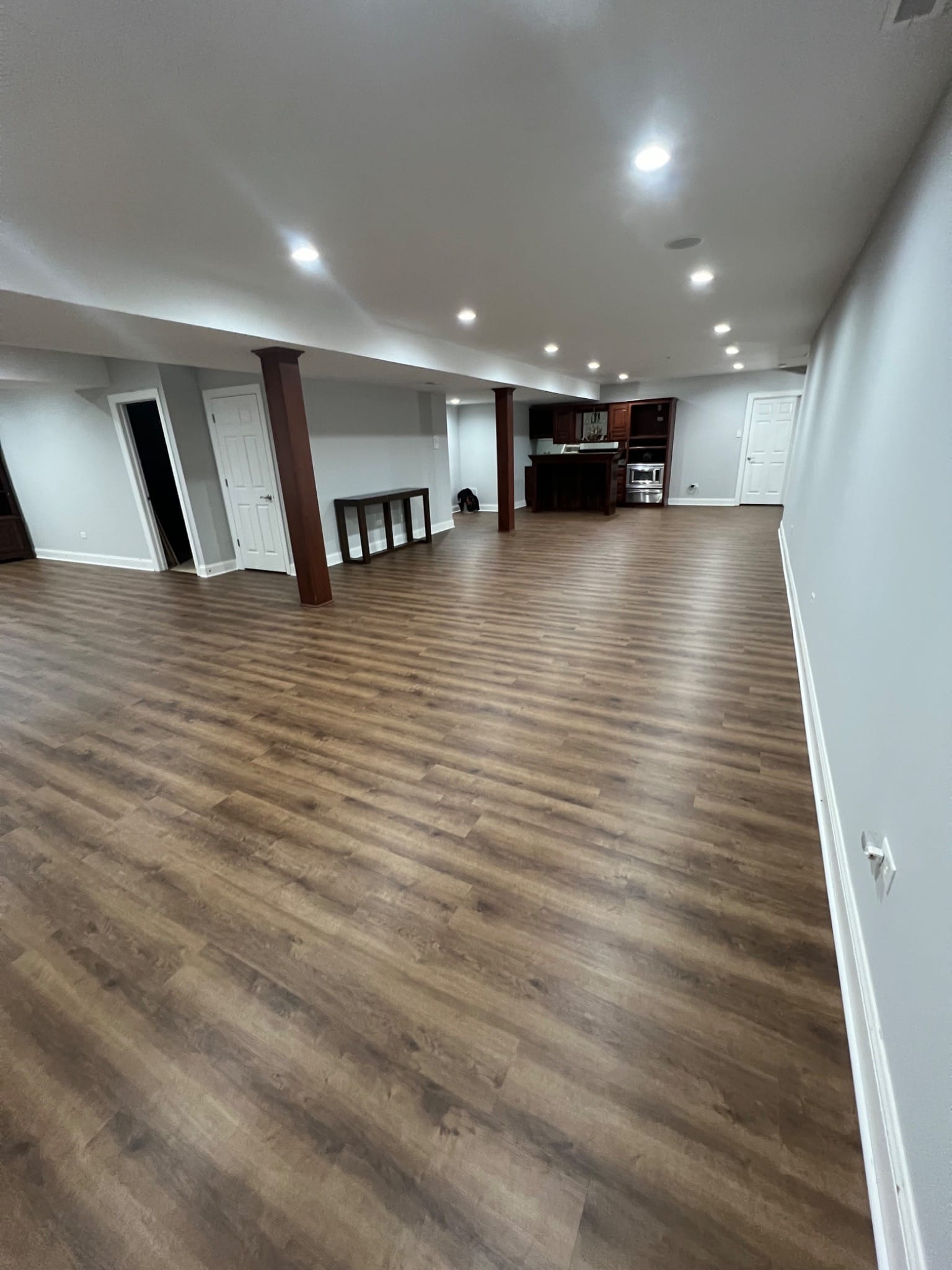
How to Choose Light Vinyl Plank Flooring for a Basement
Compare light vinyl plank samples under basement lighting, then check color, transitions, subfloor conditions, and the selected product’s installation guide....
October 22, 2026
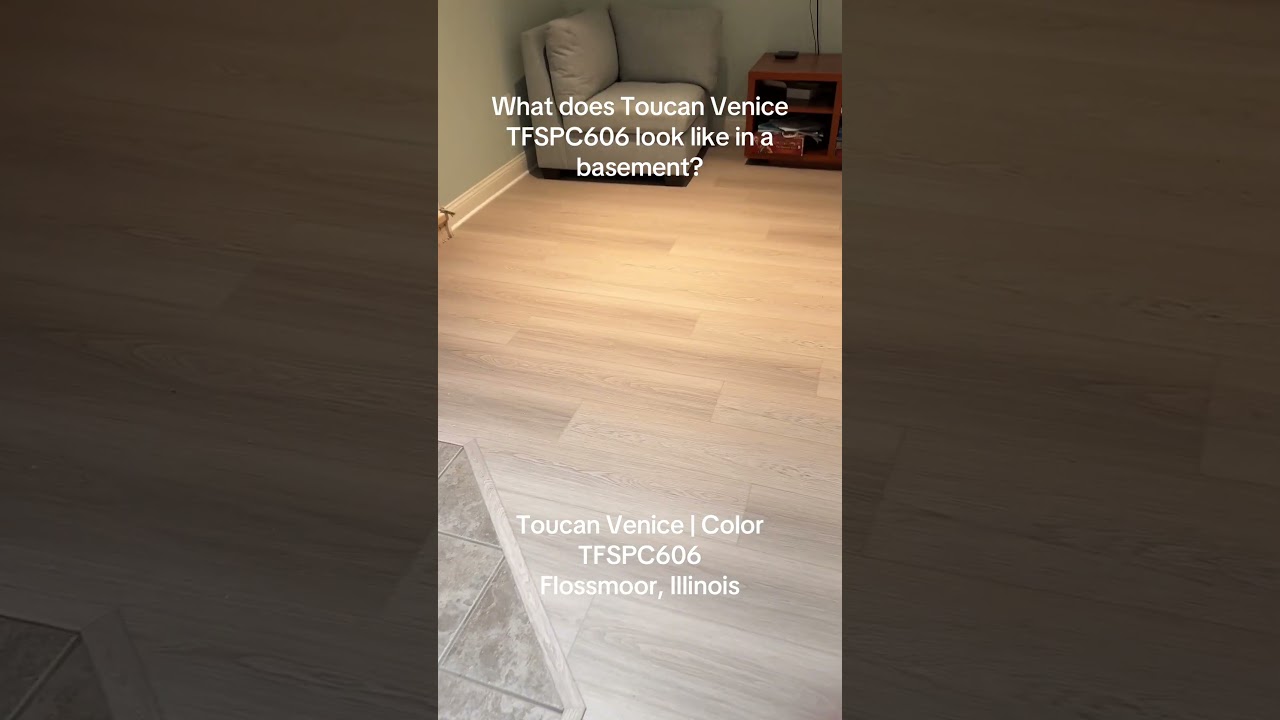
Toucan Venice TFSPC606 Basement Flooring in Flossmoor
Watch a finished Flossmoor basement floor featuring Toucan Venice color TFSPC606, installed by The Floor 4U....
October 22, 2026
Pine-Look Vinyl Plank Flooring: How to Choose the Right Look
Compare pine-look vinyl plank samples, grain variation, room finishes, and installation details using a completed Homewood project as a reference....