(708) 775-3648

Flooring Removal and Disposal in Mokena IL: Tear Out, Haul Away, and What Happens Before New Floors Go In
Matt Pehr
August 18, 2026
Request An Estimate
Every flooring project has a step nobody puts on the mood board. Before the new plank, tile or carpet goes anywhere, the old floor has to come up, leave the house, and legally go somewhere. That step makes the mess, sets the schedule, and produces most of the surprises, and homeowners in Mokena usually ask about it last.
Here is how removal and disposal actually work here: what a tear out includes, how each floor type comes up, where the debris is allowed to go in this village, which permit Mokena wants, the dust rules that govern the work, and what has to be true of the bare subfloor first.
Planning a floor replacement? Call (708) 775-3648 or book your free in-home tear out and installation estimate. We measure the rooms, look at what is already down, and list removal, disposal and installation separately so you can see what you are buying.
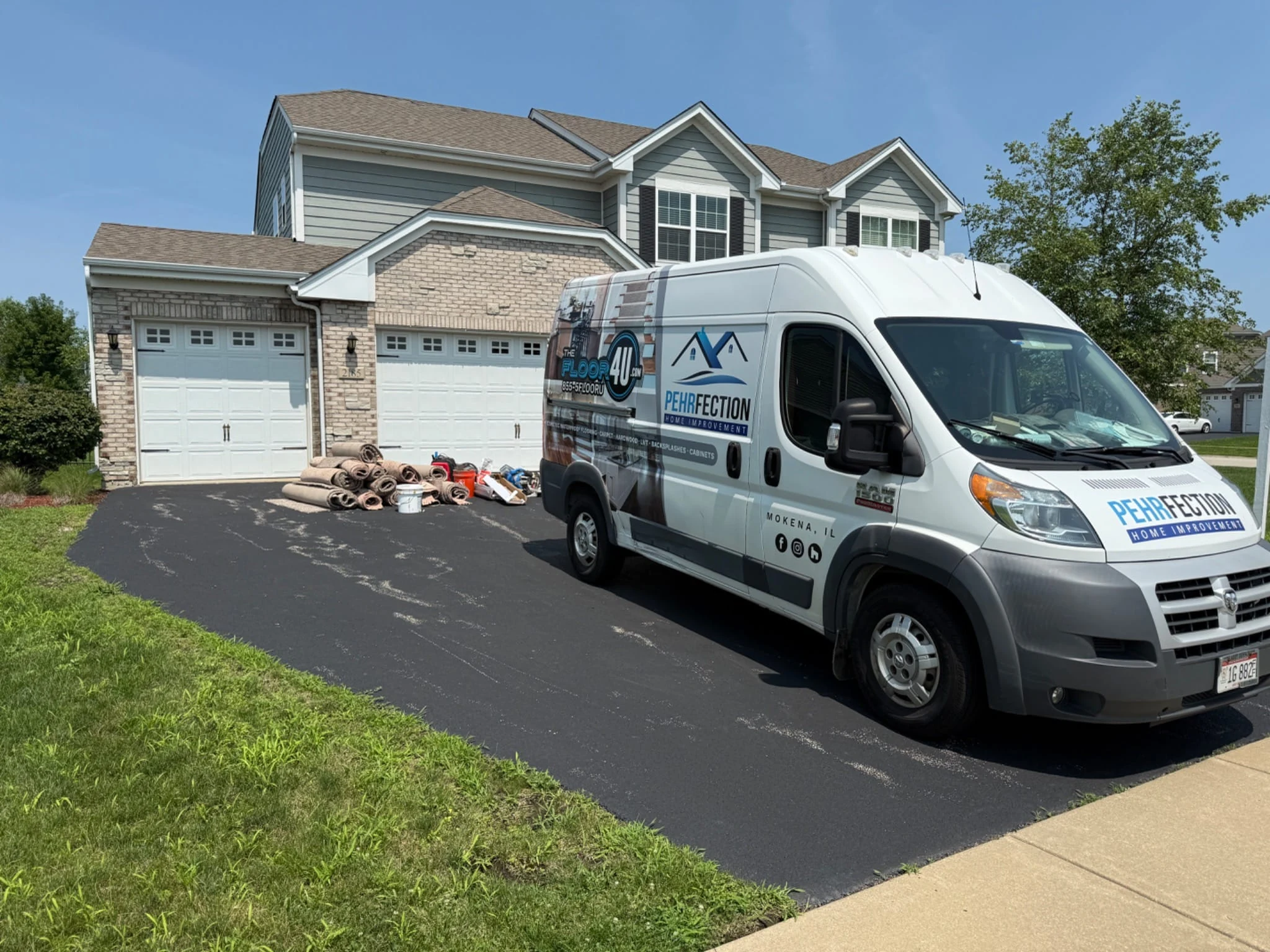
What a Flooring Tear Out Actually Includes
The phrase covers more than pulling up the visible floor, and the gap between what people picture and what the job requires is where disputes start. A complete removal is five distinct pieces of work.
- The wear layer. The carpet, plank, tile or board you can see, cut into pieces small enough to carry.
- What is under it. Pad and tack strip under carpet, underlayment under laminate, thinset and mortar bed under tile, adhesive residue under glued down goods.
- The fasteners. Staples, nails and cleats, which come out one at a time or the new floor telegraphs every one of them.
- Trim and transitions. Base shoe, thresholds, reducers and metal edges, some of which survive removal and some of which do not.
- The debris. Bundled or containered, moved off the property, and delivered somewhere allowed to receive it.
That last item becomes a phone call three days later. Removal and disposal are not the same service. A crew can tear a floor out and leave it in your garage, and if the proposal said ‘removal’ and said nothing about haul away, nobody technically misled you. Ask which one you are buying.
What Flooring Tear Out and Disposal Costs
HomeGuide’s carpet removal cost guide (checked October 2026) puts carpet removal at $140 to $320 per room on average, or $0.70 to $1.60 per square foot, and glued-down carpet at $0.75 to $1.80 per square foot. Its tile removal cost guide puts tile removal at $2 to $7 per square foot, or $200 to $1,400 total on average. These are published national ranges, not The Floor 4U pricing.
Disposal is often its own line. HomeGuide (checked October 2026) lists extra hauling and dump fees at $0.45 to $0.60 per square foot, or $50 to $100 on average depending on the driving distance, in its carpet removal cost guide, and notes that many companies include this fee in their total bid. Its tile removal cost guide puts junk removal at $150 to $350 per load on average, and its interior demolition cost guide puts renting a dumpster at $280 to $500 per week. These are published national ranges, not The Floor 4U pricing. Once the old floor is out, our guide to luxury vinyl plank cost in Mokena covers what the new floor costs.
How Each Kind of Floor Comes Up
Materials fail differently on the way out, and what is already on your floor drives the noise, the dust, the days and the volume of debris more than anything else about the job.
Carpet and Pad
The easiest removal, and the one that produces the most bulk. Carpet is cut into strips, rolled and tied. The pad comes up in sheets and is usually stapled, so the staples come next, individually. Tack strip is pried off the perimeter and takes a little subfloor with it in places. Almost no airborne dust, an enormous amount of volume, and volume is what disposal programs limit.
Sheet Vinyl and Glue Down Vinyl
Entirely about adhesive. Vinyl that is releasing comes up in long sheets. Vinyl still fully bonded comes up in fingernail sized pieces, and the felt or fiberglass backing often stays stuck to the floor after the top layer leaves. In older homes this is also the category the safety standards care about most.
Ceramic and Porcelain Tile
The slowest, loudest and dustiest removal, and the one most likely to need a container. Tile is half the problem. Under it sits thinset, often a mortar bed or backer board screwed to the subfloor, and all of that has to come off because the new floor needs a flat, clean substrate. Tile debris is also heavy out of proportion to its volume, which is the wrong combination for weight limited disposal.
Hardwood and Engineered Wood
Nailed solid hardwood comes up plank by plank with a pry bar, and the cleats stay in the subfloor until somebody pulls them. Glued down engineered wood behaves like glued down vinyl, so a strong bond means the veneer separates and leaves the backing behind. Before removing wood at all, ask whether the floor is a refinishing candidate, because solid hardwood with life left in it is not debris.
Laminate and Floating Floors
The fastest, because a floating floor is attached to nothing. It unclicks, the underlayment rolls up, and the subfloor is usually in the condition it was in the day the floating floor went down. Watch for one thing: if that floating floor was itself installed over an older floor, you are now removing two layers and the volume doubles.
Where the Old Floor Is Allowed to Go in Mokena
This part is genuinely local, and it changes village by village. In Mokena, residential refuse and recycling run under a village contract with NuWay Disposal, and the program is built around two carts, not around construction projects.
Each single family home and townhome unit is assigned a brown 95 gallon container for refuse and a green 64 gallon container for recyclables. Refuse is collected every Tuesday and recycling every other Tuesday, and containers may go out the night before or the morning of collection. New residents are issued a recycling cart within about four weeks of establishing water and sewer service.
Look at what the village accepts in that green cart and the problem is obvious. The curbside list is glass bottles and jars, metal cans, paper and junk mail, plastic bottles and jugs, chipboard and flattened corrugated cardboard. Flooring debris is not on it.
So flooring waste travels a different road. The hauler runs a bulk pickup program alongside the weekly route, and its published terms are specific: the weekly bulk pickup program includes two cans of construction debris per week as long as each weighs no more than 50 pounds, covering material such as wood, fencing and shingles. For larger projects, loads of construction debris can be brought to one of its transfer stations, where they are charged by the ton, and the hauler also rents dumpsters for project cleanup.
Two cans a week at 50 pounds each is a useful number to hold, because it tells you immediately which category your project is in. A small bathroom might squeeze through the weekly program over a couple of weeks. A main floor of tile will not, ever.
Carpet has its own instructions, and following them exactly matters because a rejected pile stays in the driveway until the next route day. The hauler asks that carpeting and padding be cut into three to four foot lengths, rolled and tied into bundles that one person can lift, publishes a weekly limit on rolls taken alongside regular garbage, and asks you to call and set up an arrangement past that limit.
For most whole room projects the practical answer is a container on site or a crew that hauls debris away in its own vehicle, and that choice leads straight to the permit that catches people out.
The Mokena Permit Rule That Catches Homeowners Out
This reads backwards until you see the logic. The new floor usually needs no building permit. The container the old floor leaves in does.
The Village of Mokena publishes a list of work exempt from a building permit, and that list explicitly names finish work: painting, papering, tiling, carpeting, cabinets, countertops and trim. It also exempts minor repairs of existing building elements that do not change walls or floors, within a stated size limit. Replacing the flooring in your own house is normally finish work and normally sits on the exempt side of the line.
Dumpster placement is its own permit type in the village permit table, and the village states it directly: a permit is required for placing a dumpster on private property, but no inspections and no fees are required. It is an administrative permission, not a revenue item and not an inspection trigger. It still has to exist before the container does.
The application asks for three things:
- A completed EZ Permit Application.
- A copy of the contract between the homeowner and the contractor.
- A signed copy of the Homeowners Declaration Rider if the property is part of a homeowners association.
And the placement rules attach to the permit:
- The dumpster shall be located on private property only. Dumpsters are not allowed on public streets or sidewalks.
- The dumpster shall be located on a paved surface only.
- The dumpster shall not obstruct vehicular or pedestrian traffic.
- A tarp or similar cover may be required on top to keep refuse from blowing around.
Read those together and the sequencing is clear. You need a signed contract before you can apply, the container needs a paved spot that is not the street, and somebody files with the village before demolition day rather than during it. On a job where the crew hauls debris away in its own vehicle instead of leaving a container, the question never arises, which is a legitimate reason to choose that route on a smaller project.
The village also registers contractors. Community Development, at 11004 Carpenter Street, requires registration supported by an original certificate of general liability insurance, original proof of workers compensation insurance and a surety bond. If one bid is unusually low, it is fair to ask whether that crew is registered and insured to the level the village requires.
Dust, Silica and Lead: The Rules That Govern Demolition
Flooring removal is one of the few parts of a residential remodel that is directly regulated, because the common hazards in old floors are invisible.
The Resilient Floor Covering Institute publishes recommended work practices for removing resilient floor coverings, and its warning is blunt. Do not sand, dry sweep, dry scrape, drill, saw, beadblast, or mechanically chip or pulverize existing resilient flooring, backing, lining felt, asphaltic cutback adhesive, or other adhesive. These products may contain asbestos fibers or crystalline silica. Avoid creating dust. Inhalation of such dust is a cancer and respiratory tract hazard.
The Floor 4U does not test for, handle, encapsulate, abate, or remove asbestos. If a floor is suspected to contain asbestos, that is work for a licensed abatement contractor, and testing comes before any decision rather than after somebody has started.
Silica is regulated separately and applies to tile and concrete work generally. OSHA covers respirable crystalline silica in construction under 29 CFR 1926.1153, setting a permissible exposure limit of 50 micrograms per cubic meter as an eight hour time weighted average and an action level of 25 micrograms per cubic meter on the same basis. Employers may follow the specified control methods in the standard Table 1 or measure exposures directly, and Table 1 names equipment that shows up in flooring demolition, including walk behind milling machines and floor grinders and handheld grinders.
Beyond the exposure limit, covered construction employers must:
- Establish and implement a written exposure control plan.
- Designate a competent person to implement it.
- Offer medical exams every three years to workers required to wear a respirator 30 or more days a year.
- Train workers on the operations that cause exposure and how to limit it.
Lead is the other regulated hazard, and it enters a flooring job through the trim rather than the floor, because pulling base shoe and casing disturbs painted surfaces. The federal government banned the sale of lead based paint for use in homes, childcare facilities and preschools in 1978. The EPA Renovation, Repair and Painting Rule requires anyone paid to perform work that disturbs painted surfaces in pre 1978 homes, childcare facilities and preschools to be certified, with employees trained in lead safe work practices. Plenty of Mokena housing stock predates 1978, so this is not hypothetical in the older parts of the village.
What Happens Between Demolition and Installation
The floor is out and the house is quiet. This gap separates good projects from the ones that come back as a complaint, because a new floor inherits every defect in the surface under it.
For concrete there is a written standard. ASTM F710, the standard practice for preparing concrete floors to receive resilient flooring, states that concrete floors should be permanently dry, clean, smooth, structurally sound, and free of substances that may prevent adhesive bonding. It also states that all concrete slabs should be tested for moisture regardless of age or grade level, and that all concrete floors should be tested for pH before resilient flooring is installed. The scope notes the practice does not supersede the manufacturer written instructions, and that the procedures may also be useful for carpet tile, carpet and wood flooring.
Two phrases there do a lot of work. Regardless of age means a forty year old slab still gets tested, which contradicts the assumption that old concrete must be dry by now. Regardless of grade level means a slab on grade in a Mokena ranch and a basement slab both get tested, not only the one that feels damp.
The moisture test has its own standard. ASTM F2170 is the standard test method for determining relative humidity in concrete floor slabs using in situ probes, and it exists because surface tests do not reveal what the slab is doing internally. It notes that manufacturers of moisture sensitive systems generally require testing before installation on concrete.
Alongside testing, physical prep after a tear out usually includes:
- Scraping and grinding residual adhesive to a bond compatible surface using dust controlled methods.
- Pulling every remaining staple, cleat and nail rather than driving them flush.
- Refastening loose subfloor panels and chasing squeaks while the subfloor is open and visible.
- Patching low spots and knocking down high spots to the flatness tolerance the new product specifies.
- Vacuuming rather than sweeping, so fine material leaves the room instead of resettling.
This stage is also the only time anyone sees your subfloor. Old water damage, a soft spot near a toilet flange, or a structural issue quietly worsening under a carpet becomes visible here, and this is the easiest hour in the project to deal with it. For what that repair involves, see subfloor repair and floor leveling in Mokena.
Do You Actually Need to Tear the Old Floor Out?
Worth asking honestly, because the cleanest tear out is the one that never happens. Some new floors install over the existing floor, which removes the demolition, the dust, the container, the permit and the disposal in one decision.
The old floor generally stays when it is well bonded with nothing loose, hollow, cracked or lifting; when it is flat enough to meet the new product tolerance without extensive patching; when it is a single layer rather than the top of a stack; and when the added height still works at doors, stairs, vents and appliances.
It has to come out when it is failing, whether that is loose tile, cupped boards or delaminating vinyl; when there is already more than one layer of resilient flooring down; when the new material has to bond directly to the substrate; when finished height would trap a dishwasher, foul a door swing or make a stair riser uneven; or when moisture, odor or damage underneath has to be found and corrected.
That last one gets underestimated. A tear out is also a diagnostic, and there is no way to inspect a subfloor through a floor. For how the replacement runs once the old floor is gone, see our guide to flooring installers in Mokena, IL.
Sequencing a Tear Out So You Are Not Camping on a Subfloor
Removal and installation are often not the same day, and the number of days between them is the most useful thing to pin down before agreeing to a schedule. Moisture testing takes time, patching compound has to cure, and material may need to acclimate, all while you live around a bare subfloor.
Before demolition day, the reliable causes of delay are:
- Furniture and appliances. Decide who moves what, and specifically who disconnects and reconnects a gas range or a refrigerator water line.
- Doors. If finished height changes, interior doors may need trimming, which is separate from laying floor.
- Transitions and vents. Every doorway into a room that is not being redone needs a plan, and floor vents that sat proud of carpet often do not suit a thinner floor.
- Container placement. Paved private surface, not blocking traffic, permitted in advance if there is a dumpster.
- Pets and people. Demolition is loud, dusty and sustained, and containment only reduces it.
What to Ask Before You Sign
Removal and disposal is where proposals differ most and get compared least. These questions make two bids actually comparable.
- Does the proposal include removal, disposal, or both, stated separately?
- Does removal cover pad, tack strip, staples, underlayment, thinset and adhesive residue, or only the visible floor?
- Does debris leave the property the same day, or sit until a container is collected?
- If there is a dumpster, who pulls the village permit and where will the container sit?
- Is the contractor registered with the Village of Mokena, and insured and bonded to the level the village requires?
- What dust control is used on tile or adhesive removal?
- How many days will fall between demolition and installation, and who covers subfloor repair if it is needed once exposed?
Frequently Asked Questions
Reviewed by Matt Pehr, owner of The Floor 4U in Mokena, IL.
Does a flooring installer haul away the old floor?
Most do, but confirm it in writing rather than assume. Removal and disposal are separate lines of work, and a proposal can quietly include one and not the other. Ask three things: does the crew remove the old flooring, does it also remove pad, tack strip, staples and adhesive residue, and does the debris leave the property the same day or sit until a container is picked up.
Can I put old carpet in my Mokena garbage cart?
No. Each single family home and townhome unit in Mokena is assigned a brown 95 gallon container for refuse and a green 64 gallon container for recyclables, and a room of carpet fits in neither. Carpet leaves through the hauler bulk program instead. The hauler asks that carpeting and padding be cut into three to four foot lengths, rolled and tied into bundles that one person can lift, and it publishes a weekly limit on how many rolls it will take alongside regular garbage. Past that limit, the instruction is to call and set up an arrangement.
Do I need a permit to put a dumpster in my driveway in Mokena?
Yes, and it surprises people. The Village of Mokena exempts finish work from building permits, naming painting, papering, tiling, carpeting, cabinets, countertops and trim, so the new floor itself usually needs no building permit. The container is a separate matter. The village states that a permit is required for placing a dumpster on private property, while no inspections and no fees are required. The application asks for a completed EZ Permit Application, a copy of the contract between the homeowner and the contractor, and a signed Homeowners Declaration Rider if the property sits in a homeowners association.
Is tearing out an old floor hazardous?
It can be, which is why the work follows published standards rather than feel. The Resilient Floor Covering Institute warns against sanding, dry sweeping, dry scraping, drilling, sawing, beadblasting, or mechanically chipping or pulverizing existing resilient flooring, backing, lining felt, asphaltic cutback adhesive, or other adhesive, because those products may contain asbestos fibers or crystalline silica. OSHA regulates respirable crystalline silica in construction under 29 CFR 1926.1153, with a permissible exposure limit of 50 micrograms per cubic meter as an eight hour time weighted average.
What about lead paint in an older home?
It matters on any tear out that disturbs painted surfaces, including base trim and casing that has to come off. The federal government banned the sale of lead based paint for use in homes, childcare facilities and preschools in 1978. The EPA Renovation, Repair and Painting Rule requires that anyone paid to perform work disturbing painted surfaces in pre 1978 homes, childcare facilities and preschools be certified, with employees trained in lead safe work practices. It generally does not apply to a homeowner working in their own pre 1978 home, but it does apply if you rent out all or part of it, run a childcare center in it, or buy, renovate and sell homes for profit.
How long does the tear out itself take?
Carpet is fastest, and a crew can strip carpet, pad and tack strip from several rooms in a morning. Well bonded ceramic or porcelain tile is slowest, because the thinset and any mortar bed under it also have to come off and the substrate has to finish flat and clean. Glued down sheet vinyl and glued down engineered wood sit in between and depend on how well the adhesive is still holding.
How much does flooring removal and disposal cost?
HomeGuide’s carpet removal cost guide (checked October 2026) puts carpet removal at $140 to $320 per room on average, or $0.70 to $1.60 per square foot, and its tile removal cost guide puts tile removal at $2 to $7 per square foot, or $200 to $1,400 total on average. The carpet removal guide lists extra hauling and dump fees at $0.45 to $0.60 per square foot, or $50 to $100 on average. These are published national ranges, not The Floor 4U pricing. Your written estimate lists removal and disposal as separate items.
Get the Old Floor Out and the New One In
We will walk the rooms, tell you what is under what you can see, work out whether the existing floor has to come out at all, and give you removal, disposal and installation as separate items you can read. If a container is the right call we will tell you where it has to sit and what the village needs first. Call (708) 775-3648 or start your free in-home flooring estimate in Mokena.
The Floor 4U is a flooring contractor serving Mokena, IL, with a showroom at 9614 Willow Lane. Our installation team also works throughout Frankfort, New Lenox, Homer Glen, Orland Park, Tinley Park, Lockport and Joliet.
Share
Recent Posts
October 22, 2026
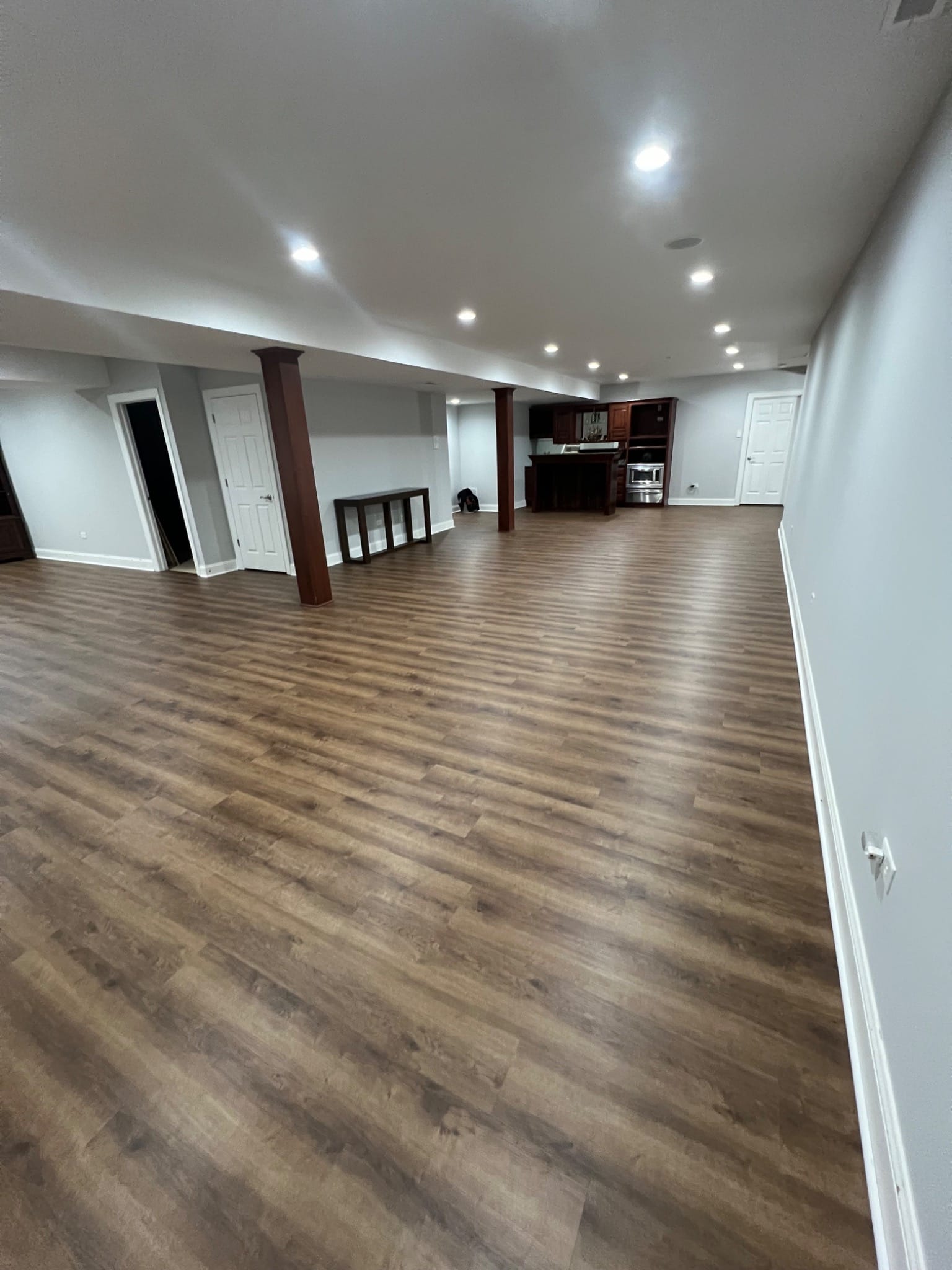
How to Choose Light Vinyl Plank Flooring for a Basement
Compare light vinyl plank samples under basement lighting, then check color, transitions, subfloor conditions, and the selected product’s installation guide....
October 22, 2026
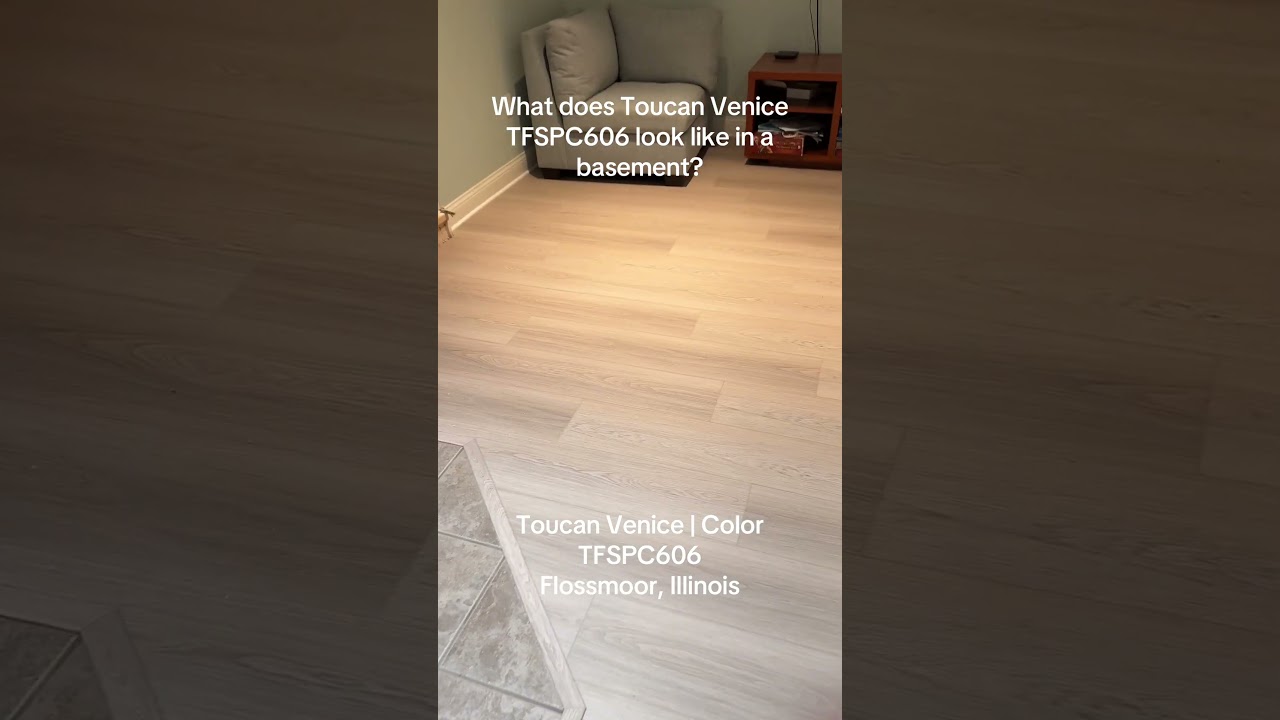
Toucan Venice TFSPC606 Basement Flooring in Flossmoor
Watch a finished Flossmoor basement floor featuring Toucan Venice color TFSPC606, installed by The Floor 4U....

October 22, 2026
Pine-Look Vinyl Plank Flooring: How to Choose the Right Look
Compare pine-look vinyl plank samples, grain variation, room finishes, and installation details using a completed Homewood project as a reference....