(708) 775-3648

Waterproof Basement Flooring Installation in Mokena, IL
Waterproof LVP and tile for wet Illinois basementsWaterproof vinyl plank (LVP/SPC) and porcelain tile are the best basement flooring options for Mokena and Will County homeowners dealing with moisture, humidity, or occasional water. Unlike hardwood, laminate, or standard carpet, which absorb moisture and fail below grade, 100% vinyl and tile construction survives the underground environment Illinois basements face. At The Floor 4U in Mokena, Matt Pehr and his team install waterproof basement flooring across Will County, including Frankfort, Orland Park, Homer Glen, Tinley Park, and New Lenox. Call (708) 775-3648 or request a free in-home moisture assessment today.
4.9 stars from 350+ Google reviews across our Mokena and Frankfort showrooms (Google Business Profile, September 2026) | Free Moisture Assessment Included | No Obligation
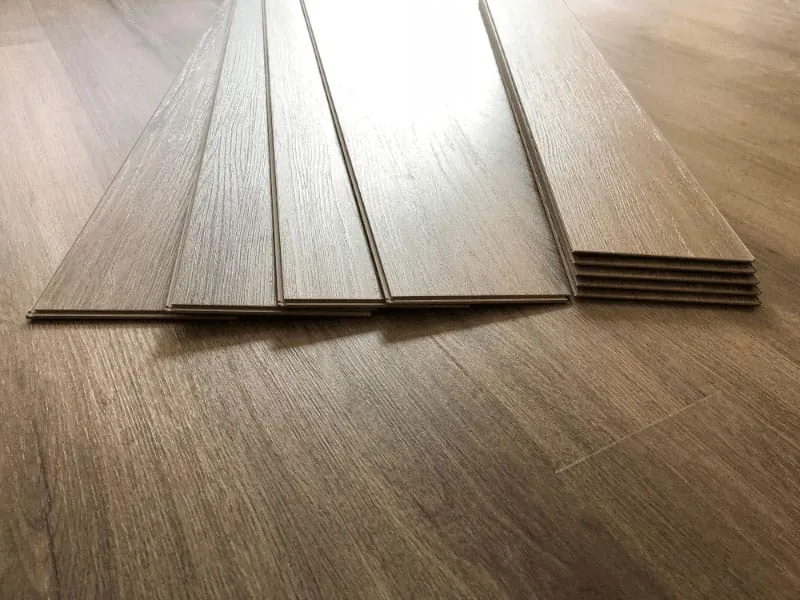
What Is the Best Waterproof Flooring for a Basement?
Waterproof LVP (luxury vinyl plank) and SPC (stone-plastic composite) are the best basement flooring options for most homeowners: they are 100% synthetic, completely waterproof, warmer underfoot than tile, and can be installed directly over concrete. Porcelain tile is the best choice when flooding or standing water is a real risk. For a side-by-side comparison of these two options, see our guide on LVP vs. tile for basement floors.
Illinois basements face a specific moisture challenge: clay-heavy soil around Will County retains water and creates hydrostatic pressure against slabs. The right floor material must handle not just visible leaks but continuous humidity and vapor transmission through concrete. The options below are the ones Matt Pehr's team installs and recommends for the basement conditions in this area. For the full background on choosing a material, see our deeper guide to basement flooring types.
Basement Flooring Types at a Glance: Comparison Table
Not all waterproof materials perform the same way in a basement. Use this table to match your basement's conditions, moisture level, use case, and budget, to the right material.
| Flooring Type | 100% Waterproof? | Installed Cost ($/sq ft) | Warmth/Comfort | Durability | Best For |
|---|---|---|---|---|---|
| Waterproof LVP/SPC | Yes | about $4.50 to $13.50 per sq ft* | Warm, soft underfoot | Excellent | Finished basements, rec rooms, bedrooms, home gyms |
| Porcelain Tile | Yes | By quote | Cold (add radiant heat) | Outstanding | Flood-risk areas, utility rooms, radiant heat, below-grade baths |
| Sheet Vinyl | Yes | By quote | Moderate | Good | Budget basements, laundry rooms, utility areas |
| Engineered Hardwood | No (moisture caution) | By quote | Warm | Moderate | NOT recommended below grade in Illinois |
| Solid Hardwood | No | N/A, avoid | Warm | Fails below grade | Avoid: warps and molds in basement conditions |
| Standard Laminate | No | N/A, avoid | Moderate | Fails when wet | Avoid: HDF core swells and separates in moisture |
| Wall-to-Wall Carpet | No | N/A, avoid | Very warm | Fails when wet | Avoid: traps moisture, harbors mold |
*LVP/SPC installed price: prices reflect Mokena, IL area rates as of 2026; actual quote depends on your project. Porcelain tile, sheet vinyl, and engineered hardwood are quoted per project. Contact The Floor 4U at (708) 775-3648 for a free in-home quote.
Waterproof LVP and SPC: The Best All-Around Basement Floor
Why Vinyl Plank Dominates Basement Installs
- 100% synthetic construction, no wood fiber, no swelling, no warping.
- SPC (stone-plastic composite) rigid core handles minor subfloor imperfections better than standard LVP.
- Click-lock floating install does not bond to the concrete slab, so it moves with normal seasonal shifts without cracking.
- Wide range of realistic wood and stone looks, does not look like "basement flooring."
- Comfortable and warm underfoot vs. tile (critical for finished living spaces, kids' play areas, home gyms).
What Wear Layer Thickness Means for Your Basement
Wear layer thickness drives durability: 6 mil is light duty, 12 mil is standard residential, and 20 mil or more is built for heavy traffic and pets. For basements used as living spaces, choose 12 mil minimum; step up to 20 mil for high-traffic rec rooms.
One Note on LVP in a Flooded Basement
LVP is waterproof, but if water sits under the planks for extended periods, it can wick into the click joints or compromise the adhesive on glue-down installations. A floating LVP install with a proper moisture barrier handles normal basement moisture; it is not engineered for repeated full flooding. For basements with active water intrusion, fix the source first, then install. Learn more about LVP waterproof ratings on our Mokena basement LVP FAQ page.
Porcelain and Ceramic Tile for Basements
When Tile Is the Right Call
- Flood-prone basements: tile has no organic content and no joints that wick water.
- Utility rooms, laundry areas, or below-grade bathrooms.
- Radiant heat floors: tile conducts heat efficiently from in-floor heating systems.
- Homeowners who want zero-maintenance, lifetime-durable floors.
What to Know About Tile in a Cold Illinois Basement
- Tile is cold underfoot without radiant heat, factor that into comfort decisions for playrooms or finished family rooms.
- Grout lines require sealing at installation and every few years to prevent moisture infiltration and staining.
- Professional installation is strongly recommended: concrete slabs in Will County basements can have voids or unevenness that causes tile to crack if not addressed in the substrate.
- Matt Pehr's tile installs include subfloor evaluation and crack-isolation membrane where needed.
What Flooring Should You Avoid in a Basement?
Avoid solid hardwood, standard laminate, and wall-to-wall carpet in any basement: all three absorb moisture, warp or swell below grade, and create ideal conditions for mold. No amount of sealing or moisture barrier makes hardwood basement-safe in Illinois.
Solid Hardwood: Beautiful Upstairs, a Failure Downstairs
Wood fiber absorbs ambient moisture. Below-grade environments in Illinois typically run 50 to 70% relative humidity in summer. Hardwood will cup, buckle, or warp, often within the first year. No professional installer recommends solid hardwood in a basement.
Standard Laminate: The Swell-and-Buckle Problem
Most laminate uses a high-density fiberboard (HDF) core. HDF absorbs water and swells irreversibly. Even "waterproof laminate" products protect the surface but leave the core exposed at cut edges and end joints. One basement leak and the floor is ruined.
Wall-to-Wall Carpet: The Mold Magnet
Carpet acts as a moisture sponge in basements. Once water penetrates, from a sump failure, pipe leak, or high humidity, carpet cannot be dried thoroughly and mold growth follows within 48 to 72 hours. Area rugs over waterproof basement flooring are fine; wall-to-wall carpet is not.
Illinois Basement Moisture: What Will County Homeowners Need to Know
Why Illinois Basements Have Moisture Problems
Will County sits on heavy clay soil that retains water and exerts hydrostatic pressure against foundation walls and slabs. Seasonal freeze-thaw cycles create foundation movement. Summer humidity in the Chicago suburbs runs high. The result: most Mokena, Frankfort, and Orland Park basements show vapor transmission through concrete even when there is no visible leak.
The Plastic-Sheet Moisture Test (Do This Before You Buy Flooring)
Before any basement floor installation, test your slab:
- Cut a 2x2 foot piece of plastic sheeting.
- Tape it to the concrete floor, sealing all four edges with duct tape.
- Wait 48 to 72 hours.
- Check the underside of the plastic for condensation or moisture.
Moisture present means your slab is transmitting vapor. That is normal for this area and does NOT mean you cannot install flooring. It means you need a proper vapor barrier or moisture-tolerant underlayment as part of the install, which The Floor 4U includes in every basement flooring project.
Do You Need a Moisture Barrier Under Basement Flooring?
Yes. A vapor barrier or moisture-rated underlayment is required under almost every basement floor installation in Will County. Floating LVP installations use a 6-mil or heavier poly vapor barrier directly on the concrete slab. Tile installations use a membrane or uncoupling mat. Skipping the vapor barrier is the most common reason basement floors fail prematurely.
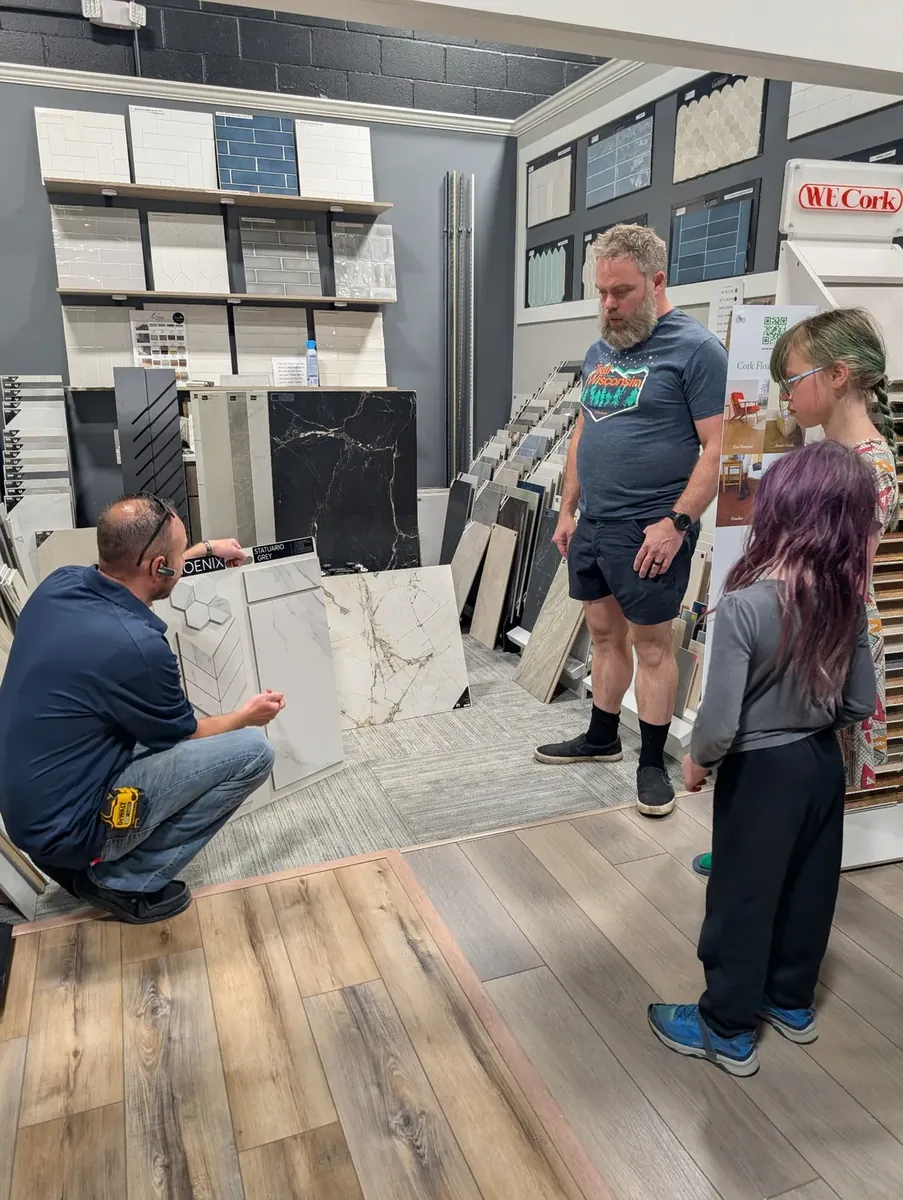
Why Will County Homeowners Trust The Floor 4U for Basement Flooring
- 4.9 stars from 350+ Google reviews across our Mokena and Frankfort showrooms (Google Business Profile, September 2026), with reviewers describing complete basement transformations
- Flooring contractor serving Will County, IL
- Warranty coverage identified in your written proposal
- Free in-home moisture assessment with no obligation
- Local to Will County, not a national chain
Basement Flooring Installation: What to Expect
Our process removes the guesswork and protects your floor against Illinois moisture from the slab up.
- Free in-home moisture assessment. Matt Pehr visits your home, evaluates the slab condition, checks for active moisture, measures the space, and recommends the right material for your basement and budget. No charge.
- Subfloor and slab prep. Concrete is swept, vacuumed, and checked for levelness. High spots are ground down; low spots are filled with floor leveling compound. Cracks wider than 1/8 inch are repaired. This step is non-negotiable for a long-lasting floor.
- Vapor barrier installation. 6-mil poly sheeting (or better) is laid over the concrete slab before floating floors. For tile, an uncoupling membrane (Schluter Ditra or equivalent) goes down instead. Seams are overlapped and taped; the barrier runs 2 to 3 inches up the wall and is trimmed under the baseboard.
- Flooring installation. LVP/SPC: click-lock floating installation, expansion gap maintained at all walls and obstacles. Tile: thinset mortar, layout planned from center of room, grout and sealing on completion.
- Trim, transitions, and final walk-through. Baseboards or quarter-round installed to cover expansion gaps. Transitions between basement floor and stairs or adjacent spaces.
Waterproof Basement Flooring Cost in Will County
Waterproof basement flooring cost depends on material, subfloor condition, and basement size. Installed waterproof LVP/SPC generally runs about $4.50 to $13.50 per square foot; prices reflect Mokena, IL area rates as of 2026; actual quote depends on your project. Porcelain tile and sheet vinyl are quoted per project after we see the slab.
Cost Factors That Affect Your Basement Floor Price
- Slab condition: significant cracks, uneven surfaces, or active moisture require more prep.
- Material tier: entry-level LVP vs. premium SPC (thicker wear layer, better acoustic underlay).
- Basement size: smaller jobs (under 400 sq ft) have higher per-square-foot costs due to setup time.
- Furniture or obstacle removal: open basements cost less to install than finished spaces.
- Stair nosing and transitions: each transition adds material and labor cost.
Want an accurate quote for your Mokena or Will County basement? Matt Pehr provides free in-home estimates with no obligation. Call (708) 775-3648 or use the get a free in-home estimate form.
Serving Mokena, Frankfort, Orland Park, and All of Will County
The Floor 4U installs waterproof basement flooring across Will County from our Mokena showroom at 9614 Willow Lane. Matt Pehr's team regularly serves homeowners in Frankfort, Orland Park, Homer Glen, Tinley Park, New Lenox, Lockport, and the surrounding southwest Chicago suburbs. If your basement is in Will County or the south suburbs, call (708) 775-3648 to schedule your free in-home moisture assessment and estimate.
Mokena | Frankfort | Orland Park | Homer Glen | Tinley Park | New Lenox | Lockport
Frequently Asked Questions About Waterproof Basement Flooring
Reviewed by Matt Pehr, owner of The Floor 4U.
Waterproof LVP or SPC (stone-plastic composite) vinyl plank is the best basement flooring for most homes because it is 100 percent synthetic, installs directly over concrete, and will not swell or warp from moisture. For basements with any flood history, porcelain tile is the better pick since it has no joints to wick water and holds up to standing water with no damage. Avoid solid hardwood, laminate, and carpet in any basement.
Your Will County Basement Deserves a Floor That Handles Illinois Moisture
Whether you are finishing a rec room, creating a home gym, or simply replacing a water-damaged floor, Matt Pehr and The Floor 4U are ready to help. Call (708) 775-3648 or request your free in-home estimate below. We serve Mokena, Frankfort, Orland Park, Homer Glen, Tinley Park, New Lenox, and all of Will County.