(708) 775-3648

Tile and luxury vinyl plank (LVP) are the two best basement floors for Mokena, IL homes, and the right pick comes down to one thing: how wet your basement actually gets. Porcelain tile is the safer choice for a basement that sees real moisture or the occasional standing water. LVP is the smarter, more comfortable choice for a basement that stays dry and has good drainage. This guide compares both materials on the things that matter below grade, then tells you what The Floor 4U recommends for a Will County basement. By “tile” we mean porcelain or ceramic floor tile, not luxury vinyl tile. If you already know you want to move forward, here is our waterproof basement flooring installation in Mokena.
The short answer: tile for wet basements, LVP for dry ones
The decision rule is simpler than most comparison guides make it. Choose porcelain tile when your basement has a history of water, sits below the water table, or has humidity you cannot fully control. Tile does not care if water shows up. Choose LVP when your basement stays dry, you have working drainage and a sump system, and you want a floor that is warmer and softer to stand on.
Both materials are sold as waterproof, and both can work in a basement. The difference is what happens on a bad day. A finished basement that floods after a sump failure or a spring thaw is a common trigger for Will County homeowners. When that day comes, the material under your feet decides whether you are drying a floor or replacing one. The only way to know which conditions you actually have is a moisture check, which is why we include a free in-home moisture assessment with every basement estimate.
Quick comparison: LVP vs. tile in a basement, side by side
| Decision factor | Luxury vinyl plank (LVP) | Porcelain or ceramic tile |
|---|---|---|
| Waterproof as a material | Yes, 100 percent waterproof core | Yes, porcelain absorbs almost no water |
| Standing water or a flood | Can be affected if moisture is trapped under a floating floor | Shrugs it off; the weak point is grout, which can be sealed |
| Comfort and warmth underfoot | Warmer and softer, especially with underlayment | Hard and cold without in-floor heat |
| Installed cost | From about $4.50 to $13.50 per sq ft installed in the Mokena area | HomeGuide publishes $12 to $40 per sq ft installed for ceramic and $15 to $50 for porcelain (page dated August 12, 2025, captured October 2026), published national ranges, not The Floor 4U pricing |
| Installation over a slab | Floating click-lock; faster, less prep in many cases | Thinset bond; needs a flat, sound slab |
| Lifespan below grade | Long, when the slab is dry and prepped | Very long; tile is one of the most durable floors made |
| Mold and mildew | Resists mold; depends on a dry slab underneath | Resists mold; grout needs sealing |
| Best fit | Dry, drained basements where comfort matters | Wet or moisture-prone basements |
The LVP figure is our current installed pricing. Prices reflect Mokena, IL area rates as of 2026; actual quote depends on your project. The tile figures are HomeGuide’s published national ranges, not The Floor 4U pricing; HomeGuide says porcelain cost depends on the tile size and pattern, so we price tile after we measure your space.
Waterproofing and moisture: the axis that decides it
This is the section that should drive your choice. Both floors hold up fine in a dry basement, so the real question is how each one behaves when moisture is part of the picture.
Why LVP can still fail in a truly wet basement
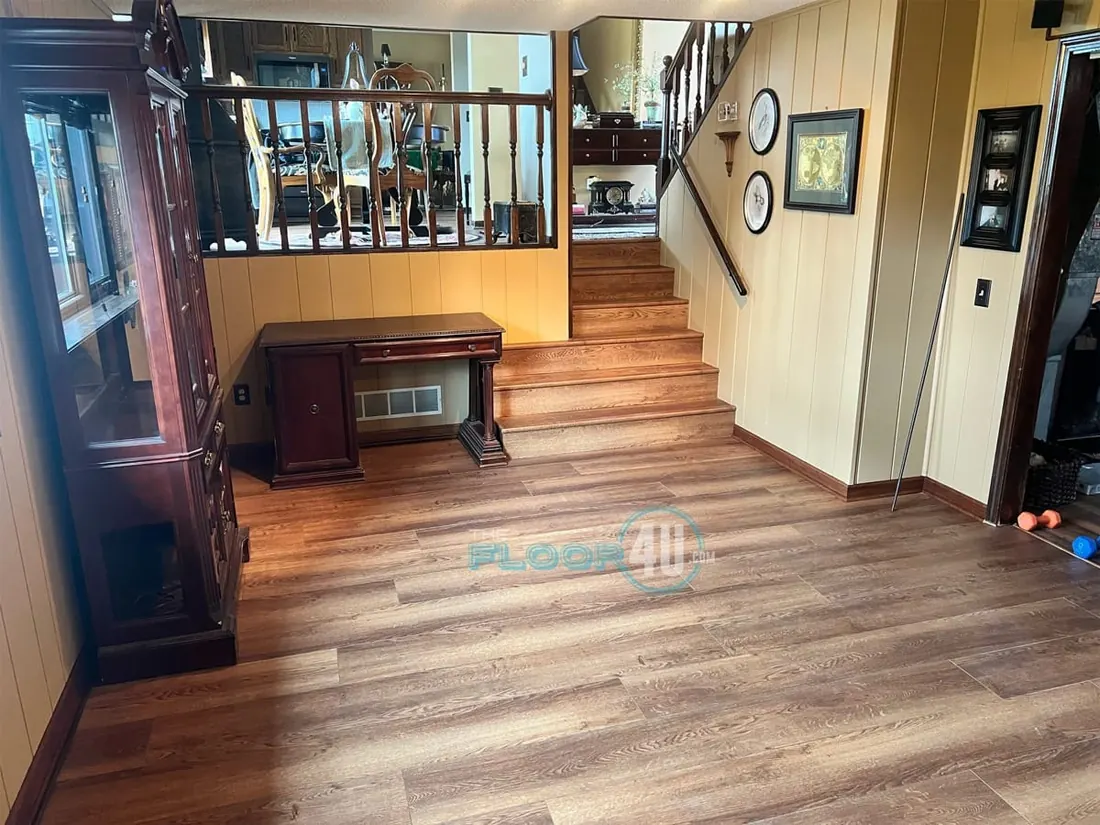
LVP has a rigid core that manufacturers rate as 100 percent waterproof, so the plank itself will not swell or rot the way old laminate or hardwood would. The catch is below grade. A concrete slab gives off water vapor, and a basement that takes on water can push moisture up under a floating floor. If that vapor or standing water has nowhere to go, it can lead to trapped humidity, odor, or mold on the slab under an otherwise waterproof floor. LVP is waterproof. A wet slab under it is still a problem. That is why the slab, not just the plank, has to be addressed first.
Why porcelain tile shrugs off water
Porcelain tile absorbs almost no water by definition. The industry standard, ANSI A137.1, only lets a tile be called porcelain if it absorbs 0.5 percent or less of its weight in water. It is also bonded directly to the slab with thinset rather than floating over it, so water can sit on a porcelain floor and do nothing. The one spot to watch is the grout between tiles, which is more porous than the tile itself. Sealed grout closes that gap. For a basement that has flooded before or runs humid, tile is the material that does not flinch. If you want the case for vinyl specifically, we cover is LVP waterproof in a basement in more depth.
Comfort, warmth, and cost: where LVP pulls ahead
Moisture favors tile, but comfort and budget favor LVP, and for a lot of Mokena basements those two things decide it.
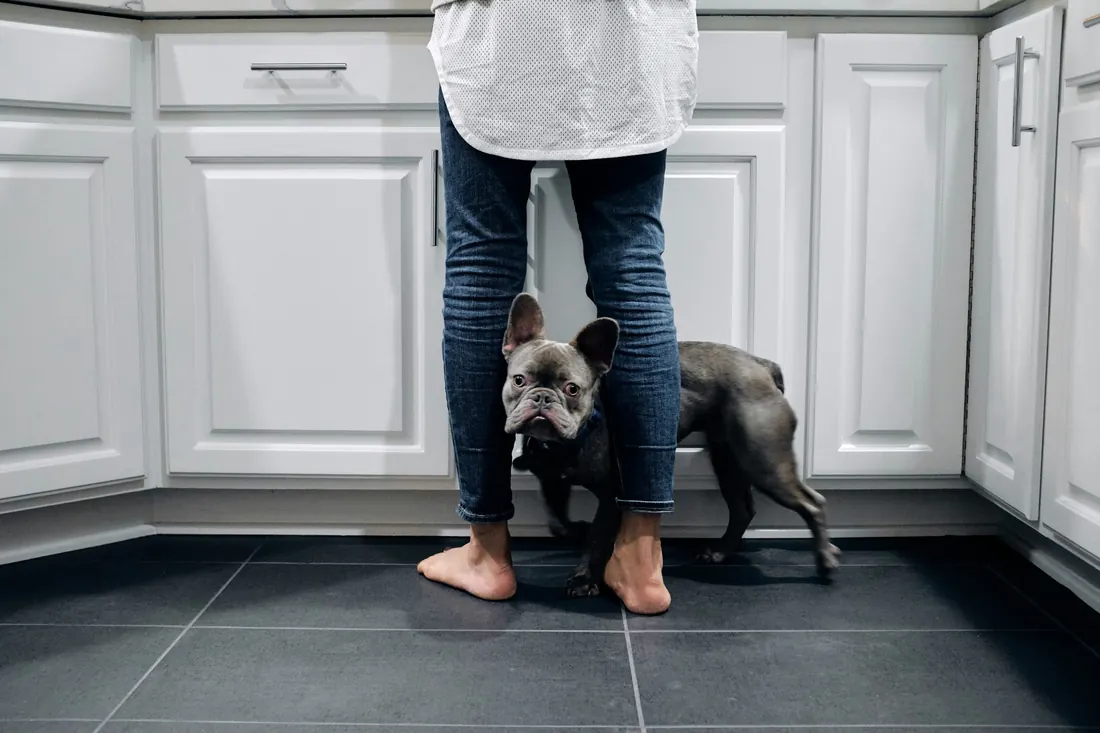
LVP is warmer and softer underfoot than tile, which matters in a basement that already runs cool. Pair it with a quality underlayment and you add cushioning and a bit of insulation against the cold slab. Tile, by contrast, is hard and cold unless you add in-floor heat, which raises the cost. Many homeowners pick LVP for a basement rec room or playroom for exactly this reason: it feels better to live on.
Cost usually points the same way. HomeGuide puts luxury vinyl plank and luxury vinyl tile flooring at $4 to $16 per square foot with installation (page dated June 3, 2025) and porcelain tile flooring at $15 to $50 per square foot total (page dated August 12, 2025), both captured October 2026. These are published national ranges, not The Floor 4U pricing.
LVP runs from about $3.50 to $6.00 per square foot for the material alone in the Mokena area, and about $4.50 to $13.50 per square foot installed, which is our current pricing for general budgeting. Prices reflect Mokena, IL area rates as of 2026; actual quote depends on your project. If brand matters to you, we carry COREtec on the vinyl side and stock porcelain from Daltile and MSI, so both options are in our Mokena showroom. For a full breakdown, see our LVP cost guide for Mokena.
Installation over a concrete slab: what actually happens
Below-grade installation is where a professional earns the difference, because the slab decides whether either floor lasts.
LVP usually goes down as a floating floor with a click-lock system over an underlayment, which is faster and often needs less prep. Tile is set in thinset and bonded to the slab, so the slab has to be flat, clean, and sound first. Either way, the step most do-it-yourself jobs skip is checking the slab for moisture and flatness before anything goes down. A slab that is out of level, cracked, or giving off vapor will undo a perfect-looking floor within a season.
This is the part of the job we handle directly. The Floor 4U sells and installs both materials, so the recommendation you get is based on your basement, not on what we are trying to move. If you are leaning vinyl, here is our professional LVP installation near Mokena. If you are leaning tile, here is our tile installation in Mokena.
What we recommend for a Mokena and Will County basement
For most Will County basements, Matt Pehr recommends starting with the moisture question, not the material. Many homes around Mokena, Frankfort, Orland Park, and Homer Glen sit on clay soil with older slabs, and Illinois freeze-thaw cycles work moisture into a basement over the years. If your basement has ever taken on water or runs humid in summer, porcelain tile is the floor that will not let you down. If it stays dry and you want comfort underfoot, LVP is the better daily floor.
The honest answer for any specific basement is to measure first. The Floor 4U includes a free in-home moisture assessment with every basement estimate, so you find out what your slab is doing before you spend a dollar on flooring. We are a locally owned, owner-operated shop rated 4.9 stars from 350+ Google reviews across our Mokena and Frankfort showrooms (Google Business Profile, September 2026). For the full hire path, see our waterproof basement flooring installation in Mokena.
Frequently asked questions: tile vs. LVP in a basement
Reviewed by Matt Pehr, owner of The Floor 4U.
Is tile or LVP better for a basement?
Tile is the better choice for a wet or moisture-prone basement, and LVP is the better choice for a dry, well-drained one. Porcelain tile absorbs almost no water and bonds directly to the slab, so it handles standing water and humidity without trouble; LVP is 100 percent waterproof as a material and is warmer underfoot, which makes it the more comfortable daily floor when the basement stays dry.
Is LVP really waterproof in a basement?
Yes, the LVP plank itself is 100 percent waterproof and will not swell or rot. The concrete slab underneath is the real thing to watch, since it can give off vapor or trap water after a flood; the floor stays waterproof, but a wet slab below it still needs to be assessed and prepped before installation.
Does tile or vinyl plank hold up better to a flood?
Tile holds up better to an actual flood. Porcelain absorbs almost no water and is bonded to the slab, so water can sit on it without doing damage. LVP is waterproof too, but trapped water under a floating floor can lead to humidity or mold on the slab underneath, which makes tile the safer choice after a basement has flooded before.
Which is warmer underfoot, tile or LVP?
LVP is warmer and softer underfoot than tile, which stays hard and cold in a basement unless in-floor heat is added. Many homeowners choose LVP with an attached underlayment for a basement rec room or playroom specifically because it’s more comfortable to stand and sit on for long stretches.
Is tile or LVP cheaper to install in a basement?
LVP’s published installed range is lower at both ends. HomeGuide puts luxury vinyl plank and luxury vinyl tile flooring at $4 to $16 per square foot with installation (page dated June 3, 2025) and porcelain tile flooring at $15 to $50 per square foot total (page dated August 12, 2025), both captured October 2026. These are published national ranges, not The Floor 4U pricing. Final pricing for either depends on basement size and slab condition.
Does tile really last longer than LVP long term?
Properly installed tile usually outlasts LVP, since it doesn’t wear through a top layer the way a floating floor eventually does.
Which holds up better to dog nails, tile or LVP?
Tile wins on scratch resistance since porcelain won’t dent or scuff from claws the way vinyl can. A rigid SPC-core LVP with a 20-mil wear layer closes most of that gap and stays warmer underfoot, so for most basement rec rooms the tradeoff favors LVP unless the household has unusually heavy pet traffic.
Ready to choose the right basement floor?
The fastest way to settle tile versus LVP for your basement is to have us measure the moisture and the space. Call Matt Pehr at (708) 775-3648 for a free in-home estimate and moisture assessment, or see our waterproof basement flooring installation in Mokena. You can also request your free estimate online. The Floor 4U serves Mokena, Frankfort, Tinley Park, New Lenox, Orland Park, Homer Glen, Plainfield, and throughout Will County, IL.
Share
Recent Posts
October 8, 2026
Can You Install Flooring Over Existing Tile? (Video)
Matt Pehr explains when flooring can go over existing tile and why flatness, lippage, appliance clearance, and door swing need a closer look....
October 6, 2026
Engineered vs Solid Hardwood: Which Lasts Longer?
Engineered vs solid hardwood, compared by a Mokena installer: wear layer, refinishing, lifespan, basements, radiant heat, plank width, and cost....
October 6, 2026
Subfloor Repair and Floor Leveling in Mokena, IL
What subfloor repair and floor leveling involve before new flooring goes down in Mokena, IL, what published guides say it costs, and how...