(708) 775-3648

Who Installs Luxury Vinyl Plank Flooring in Plainfield, IL?
Matt Pehr
September 6, 2026
Request An Estimate
Written by Matt Pehr, owner of The Floor 4U.
Yes. The Floor 4U installs luxury vinyl plank flooring in Plainfield, IL, working out of our Mokena showroom. We measure the rooms, bring samples to your house, prep the subfloor, and install click-lock or glue-down LVP. The in-home estimate is free, and Plainfield is on our published service-area list.
Ready to price your Plainfield floor? Call Matt Pehr at (708) 775-3648 or request a free in-home estimate. We bring the samples to you, measure every room, and look at your subfloor before anyone quotes a number. See what else we do in town on our Plainfield flooring page.
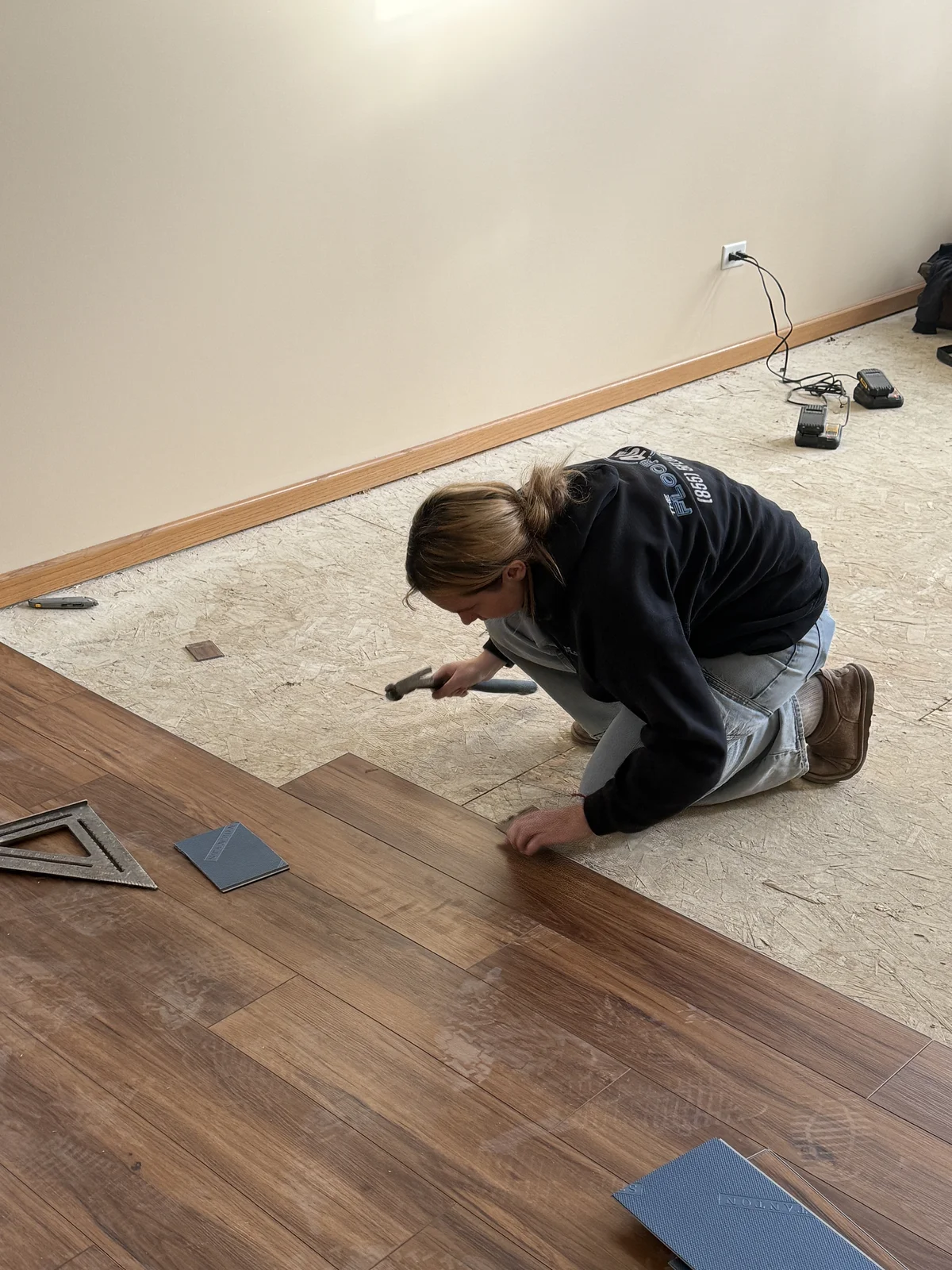
What a Plainfield LVP Installation Actually Includes
Most people asking who installs luxury vinyl plank in Plainfield are really asking a second question underneath it: what am I paying that person to do? Here is the honest list, in the order it happens.
Old floor removal and haul-away. Carpet and pad come up first, then tack strip and staples. Sheet vinyl usually peels but sometimes fights back. Ceramic tile is the slow one, and whether it comes out at all is a judgment call we make on site rather than over the phone. If the old floor stays down, it has to be sound, flat, and dry, and it changes the finished floor height at every doorway.
Subfloor flatness. This is the step that separates a floor that still looks right in year eight from one that clicks and flexes by the second winter. LVP is a thin, rigid product. It does not hide a dip. We check the deck with a straightedge, sand or grind the high spots, and fill the low ones with patch compound. On a plywood deck we also chase down squeaks and loose fasteners while the floor is open, because that is the only time it is free to do.
Moisture and the underlayment question. Over a concrete slab, moisture gets checked before anything goes down. Many rigid-core planks ship with an attached pad, and when they do, adding a second pad underneath is a mistake, not an upgrade: the extra cushion lets the locking joints work loose. When the plank has no attached pad, the pad we use is the one the manufacturer specifies for that product.
Layout and the first row. We snap a line off the longest sightline in the house, not off whichever wall happens to be closest, then dry-fit enough rows to make sure you do not end up with a two-inch sliver of plank against the most visible wall in the room. Planks get mixed across cartons so a single dark run does not land in the middle of the living room.
Expansion gap and trim. Vinyl moves with temperature. The perimeter gap is left open on purpose and then covered, either by pulling and resetting the base or by adding quarter round. Angi lists a gap of one quarter to one half inch at the room edges as the standard target, and lists a closed-up perimeter as one of the most common reasons a plank floor buckles.
Transitions, thresholds and returns. Every doorway between the new floor and a different material needs a transition sized to the height difference. Stair nosing, vent returns, and the cut around a floor register are the details a homeowner notices from the hallway for the next decade, so they get cut on site rather than ordered blind.
We wrote the full step-by-step version of this for anyone who wants it: see the flooring installation process, from the measure to the final walkthrough.
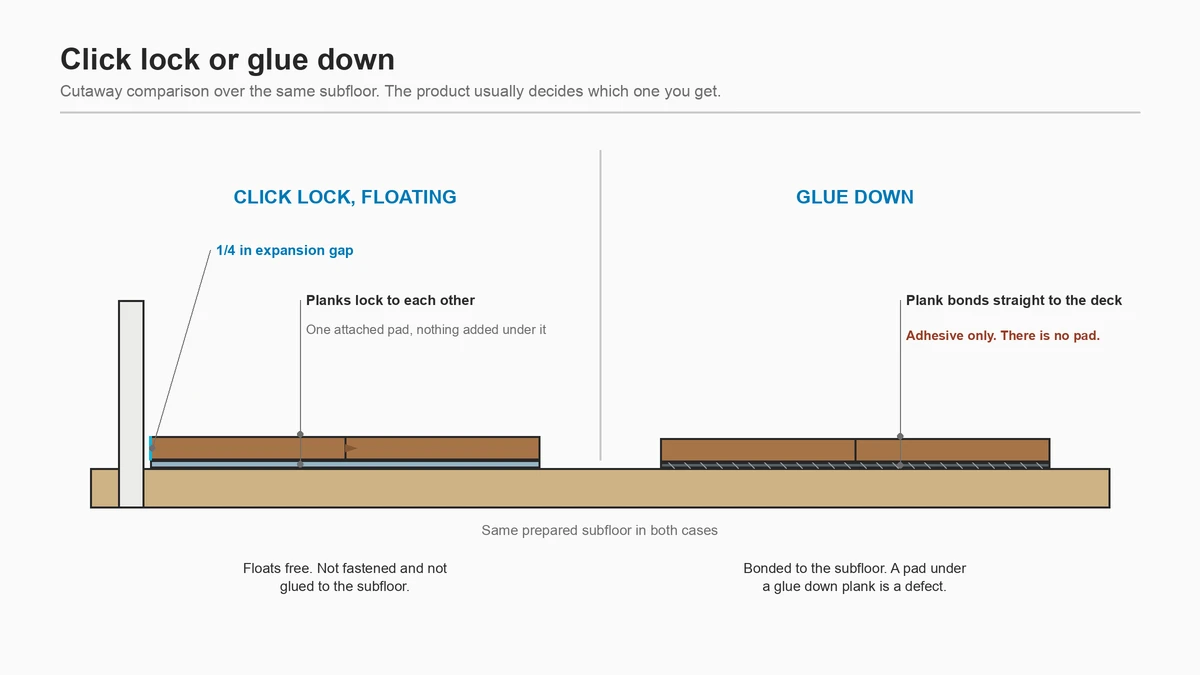
Click-Lock or Glue-Down for a Plainfield House?
Click-lock is a floating floor. The planks lock to each other and are not fastened to the deck, which means the whole field moves as one sheet and needs that perimeter gap. Glue-down bonds every plank to the subfloor, so it does not move, it feels more solid underfoot, and it tolerates a wider slab.
For a typical Plainfield house, click-lock is usually the pick for a finished basement once the slab has passed a moisture test and is flat enough, over an existing sound floor, and anywhere we want the option to lift a plank later. Glue-down wins in a room with a lot of rolling load, in a wide open-plan main level where a floating field would run very long in one direction, and in a room that gets strong afternoon sun through a big south-facing slider, because glued planks cannot creep at the seams as they warm.
Neither method is the premium one. The product you pick usually decides it for you, because most manufacturers rate a given plank for one method or the other and print the answer in the installation instructions. Ignoring that sheet is the single most expensive shortcut in this trade, and it is the one that ends a manufacturer warranty claim before it starts.
If your existing floor is ceramic, the tear-out question is worth its own read: can you install LVP over tile, and when to float over it instead.
Why LVP Fits the Way Plainfield Houses Are Built
Plainfield is a subdivision town. Plainfield’s subdivisions, Grande Park, Liberty Grove and Heritage Meadows among them, are where this page’s two build types show up: the full-basement two-story and the slab-on-grade or shallow-crawl ranch. Both of those are exactly where solid hardwood gets difficult and LVP gets easy.
Below grade. A finished basement is a moisture environment no matter how dry it has been. Rigid-core LVP is a waterproof product, which means standing water on the surface does not destroy the plank the way it destroys wood or laminate. That is a real advantage and also a limit worth stating plainly: waterproof describes the plank, not the room. Water that comes up through a slab or sits under a floating floor still has to be dealt with. We covered the whole question here: is luxury vinyl plank actually waterproof for a basement.
Slab ranches. On a slab there is no cavity, no give, and no easy nail-down. LVP either floats over the slab or glues to it, and either way it does not care that the concrete is cold. That is why it is the material we end up recommending on a slab.
Kids, dogs and the mudroom door. The wear layer on the surface of a plank is what takes the scratching, and it is a printed-and-coated surface rather than a finish you can sand. That trade is the whole product: you give up the ability to refinish and you get a floor that shrugs off the back door in February. For a house with two dogs and a soccer bag, that is usually the right side of the trade.
Open plans. The wide-plank, one-continuous-floor look is easier to deliver in LVP than in anything else, because the plank widths run large and the material is dimensionally stable enough to run from the front door through the kitchen without a break.
The LVP Lines We Carry and Install
We are a flooring store as well as an installer, so the plank we put down is a plank we sell. The luxury vinyl lines we carry include COREtec, Shaw, Happy Feet and Provenza. All four market luxury vinyl plank as a core product line, and all four publish their own installation instructions and their own product warranty terms, which is the paperwork that actually protects you after we leave.
What separates them, in practice, is core construction and wear-layer thickness rather than the picture on the plank. A thicker wear layer costs more per square foot and buys you more years before the print starts to show traffic. A denser core sits flatter over an imperfect subfloor and telegraphs less. Those two numbers are the ones worth comparing when you have three samples on the kitchen island, and they are the two numbers a big-box spec sheet is least likely to put in front of you.
We put our own head-to-head on the lines we stock here: the best COREtec and LVP brands for homes in our area.
Can a Handyman Install Vinyl Plank Flooring?
A handyman can lay vinyl plank, and plenty do it competently in a small, square, above-grade room. The question is not whether the planks will click together. They will. The question is who owns the parts of the job that are not clicking planks together.
Angi puts it the same way from the buyer’s side: experienced do-it-yourselfers can handle peel-and-stick tile or click-and-lock plank in small spaces, while larger areas need subfloor prep and precise cuts, and a flooring specialist is the one who inspects and prepares the deck before anything goes down. That is the split. Product handling is easy. Deck assessment, moisture, layout across multiple rooms, and transitions are not.
The failure modes are well documented. Angi’s own list of common vinyl plank installation mistakes runs to eleven items, and the ones that end in a torn-out floor rather than a cosmetic complaint are the first four: skipping acclimation, skipping subfloor prep, leaving baseboards down so the plank cannot reach the wall, and installing over a surface the product was never rated for. Every one of those is a decision made before the first plank goes down, which is exactly why it matters who makes it.
There is a second, quieter reason to use a flooring company for a Plainfield install. The manufacturer’s warranty on the plank is written against the manufacturer’s installation instructions. When the deck was never flattened, when the wrong pad went under a plank that already had one, or when the perimeter was closed up tight, the claim goes away. You are not only buying labor. You are buying the paperwork staying intact.
What LVP Installation Costs, and Where the Real Number Comes From
HomeGuide, captured 2026-09-05, puts luxury vinyl plank and tile at $4 to $16 per square foot installed, and splits that as $2 to $10 per square foot for materials and $2 to $6 per square foot for labor. Angi, captured the same day, reports installed prices ranging from $2 to $22 per square foot with a 2026 national average project cost of $2,562. These are published national ranges, not The Floor 4U pricing.
| Floor size | Published total installed range |
|---|---|
| 500 sq ft | $2,000 to $8,000 |
| 1,000 sq ft | $4,000 to $16,000 |
| 1,500 sq ft | $6,000 to $24,000 |
| 2,000 sq ft | $8,000 to $32,000 |
Those spreads are wide for a reason. A national range has to cover a bargain peel-and-stick plank in a spare bedroom and a premium rigid-core plank in a 2,400 square foot open plan, and it cannot know what is under your floor. HomeGuide, captured 2026-09-05, separately notes that removing old carpet runs $0.70 to $1.60 per square foot and that replacing a subfloor runs $2.20 to $4.75 per square foot, which is the part of a real quote that a square-foot number never captures. Angi, captured the same day, puts a further $150 to $700 on subfloor repair, old-floor removal and transition strips. These are published national ranges, not The Floor 4U pricing.
If you want to work a budget before you call anyone, we keep two pages for exactly that: our LVP cost guide and budgeting for luxury vinyl flooring. Then get a measured quote, because the honest answer to what your floor costs is a number nobody can produce from a keyboard.
How a Plainfield Job Starts
You call or fill out the form. We set a time and come to the house with samples, because a plank that looks warm under showroom light can read grey against your north-facing windows, and that is not a thing you can judge from a photo. We measure every room, look at the subfloor and the doorways, ask what is going where, and leave you with a free in-home estimate for a specific product rather than a per-foot guess.
If you would rather see the full floor before we come out, the Mokena showroom at 9614 Willow Lane is open Monday through Friday, 9:00 AM to 5:00 PM, with Saturday and Sunday by appointment. The Floor 4U has no showroom in Plainfield itself; Plainfield is a town we serve from Mokena, and a Plainfield job starts with the in-home visit.
Alongside luxury vinyl plank, we also handle carpet, hardwood, hardwood refinishing, laminate, and tile and stone for Plainfield homeowners. The full list is on our Plainfield flooring page, and the deeper technical write-up on the material itself lives on our luxury vinyl plank installation page.
Frequently Asked Questions
Who installs luxury vinyl plank flooring in Plainfield, IL?
The Floor 4U installs luxury vinyl plank in Plainfield, IL, working from our Mokena showroom. Plainfield is on our published service-area list along with the rest of Will County. We bring samples to the house, measure every room, prep the subfloor, and install click-lock or glue-down LVP. The in-home estimate is free.
How much will it cost to install 2,000 sq ft of vinyl planks?
HomeGuide, captured 2026-09-05, puts 2,000 square feet of luxury vinyl plank or tile at $8,000 to $32,000 installed, from an overall range of $4 to $16 per square foot. These are published national ranges, not The Floor 4U pricing. Old-floor removal and subfloor repair sit outside that figure, so use a measured quote to budget.
Can a handyman install vinyl flooring?
A handyman can install vinyl plank in a small, square, above-grade room. Angi’s guidance is that experienced do-it-yourselfers handle peel-and-stick tile and click-and-lock plank in small spaces, while larger areas need subfloor preparation and precise cuts. The risk is not the planks. It is moisture testing, deck flattening, layout across rooms, and keeping the manufacturer’s warranty intact.
What are the most common mistakes when installing vinyl plank flooring?
Angi’s list of common vinyl plank installation mistakes runs to eleven. Four that can force a tear-out are skipping the 48 to 72 hour acclimation, skipping subfloor preparation, leaving baseboards in place so the plank cannot reach the wall, and installing over a surface the product was never rated for. All four are decided before the first plank goes down.
Is click-lock or glue-down LVP better for a Plainfield basement?
Click-lock is the usual choice for a finished Plainfield basement, because a floating floor tolerates a slab that moves seasonally and individual planks can be lifted later. Glue-down suits wide open-plan main levels and rooms with heavy rolling load. The product decides more than the room does: most planks are rated for one method, and that rating is printed in the installation instructions.
Does luxury vinyl plank need underlayment?
Only if the plank has no attached pad. Many rigid-core products ship with an attached pad, and adding a second pad underneath one of those is a mistake: the extra cushion lets the locking joints work loose. Planks without an attached pad take the underlayment the manufacturer specifies. Over a concrete slab, moisture gets checked before either decision is made.
How long does an LVP installation take?
HomeGuide puts luxury vinyl plank or tile installation at 1 to 2 days depending on the size of the area, and notes that clearing furniture beforehand shortens it (captured 2026-09-05). That figure is a published national guide, not a schedule for your house. Old-floor removal, subfloor repair and acclimation time all sit on top of it, so ask for a day count in the written quote.
Get Your Plainfield LVP Quote
The Floor 4U supplies and installs luxury vinyl plank flooring in Plainfield, Mokena, Frankfort, New Lenox, Romeoville, Bolingbrook, Naperville, and throughout Will County, IL. Call Matt Pehr at (708) 775-3648 or request your free in-home estimate. We will bring the samples to your house, measure the rooms, check the subfloor, and put a real number on paper.
Share
Recent Posts
October 22, 2026
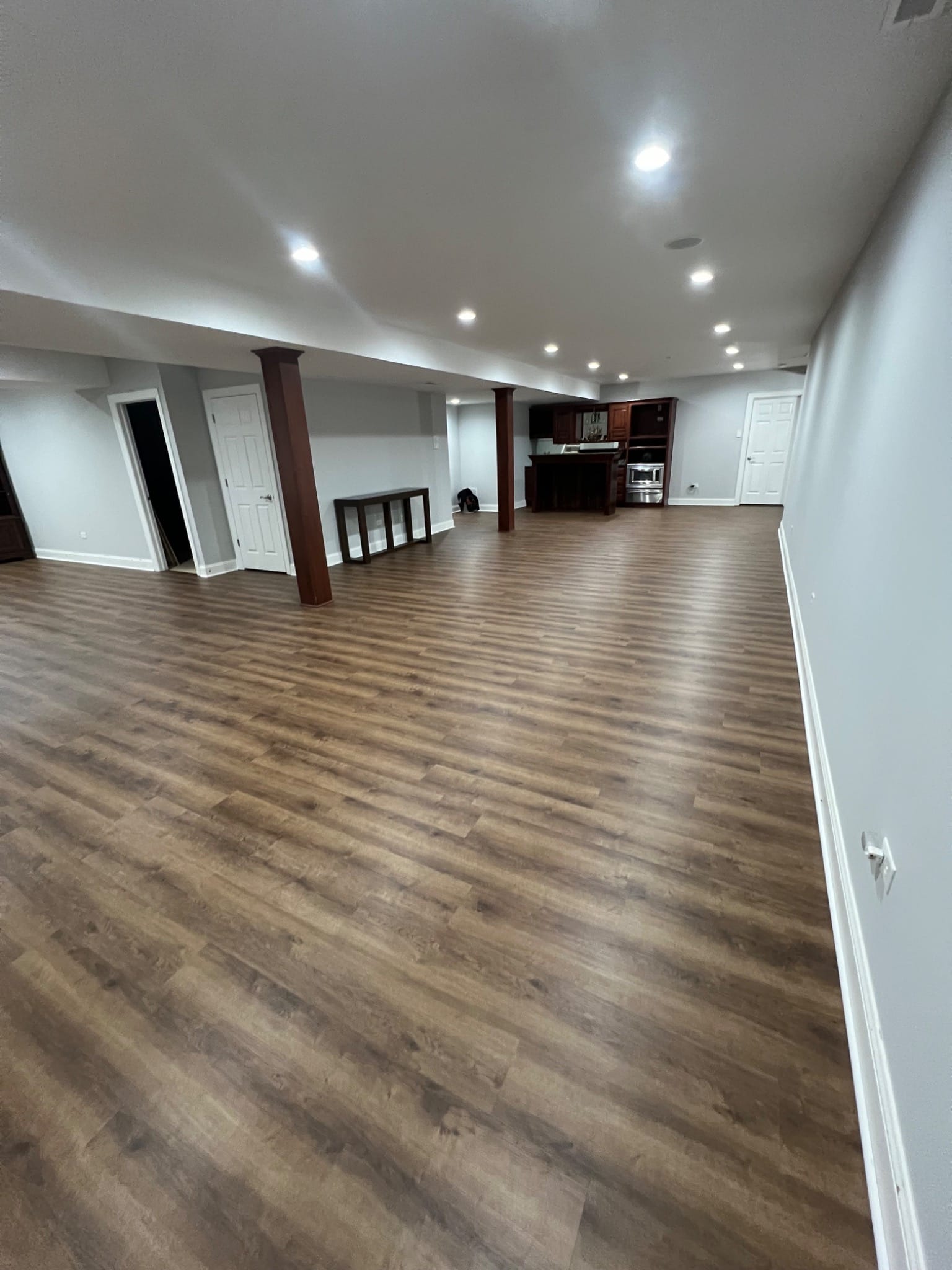
How to Choose Light Vinyl Plank Flooring for a Basement
Compare light vinyl plank samples under basement lighting, then check color, transitions, subfloor conditions, and the selected product’s installation guide....
October 22, 2026
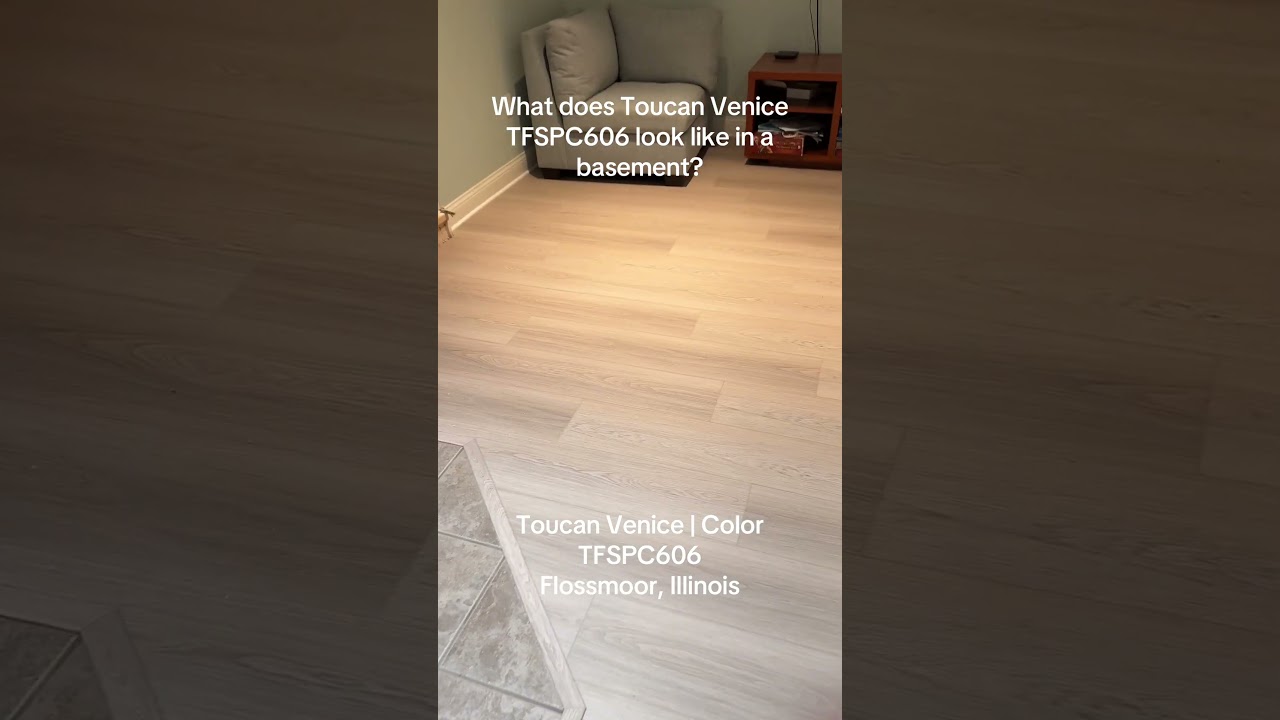
Toucan Venice TFSPC606 Basement Flooring in Flossmoor
Watch a finished Flossmoor basement floor featuring Toucan Venice color TFSPC606, installed by The Floor 4U....
October 22, 2026
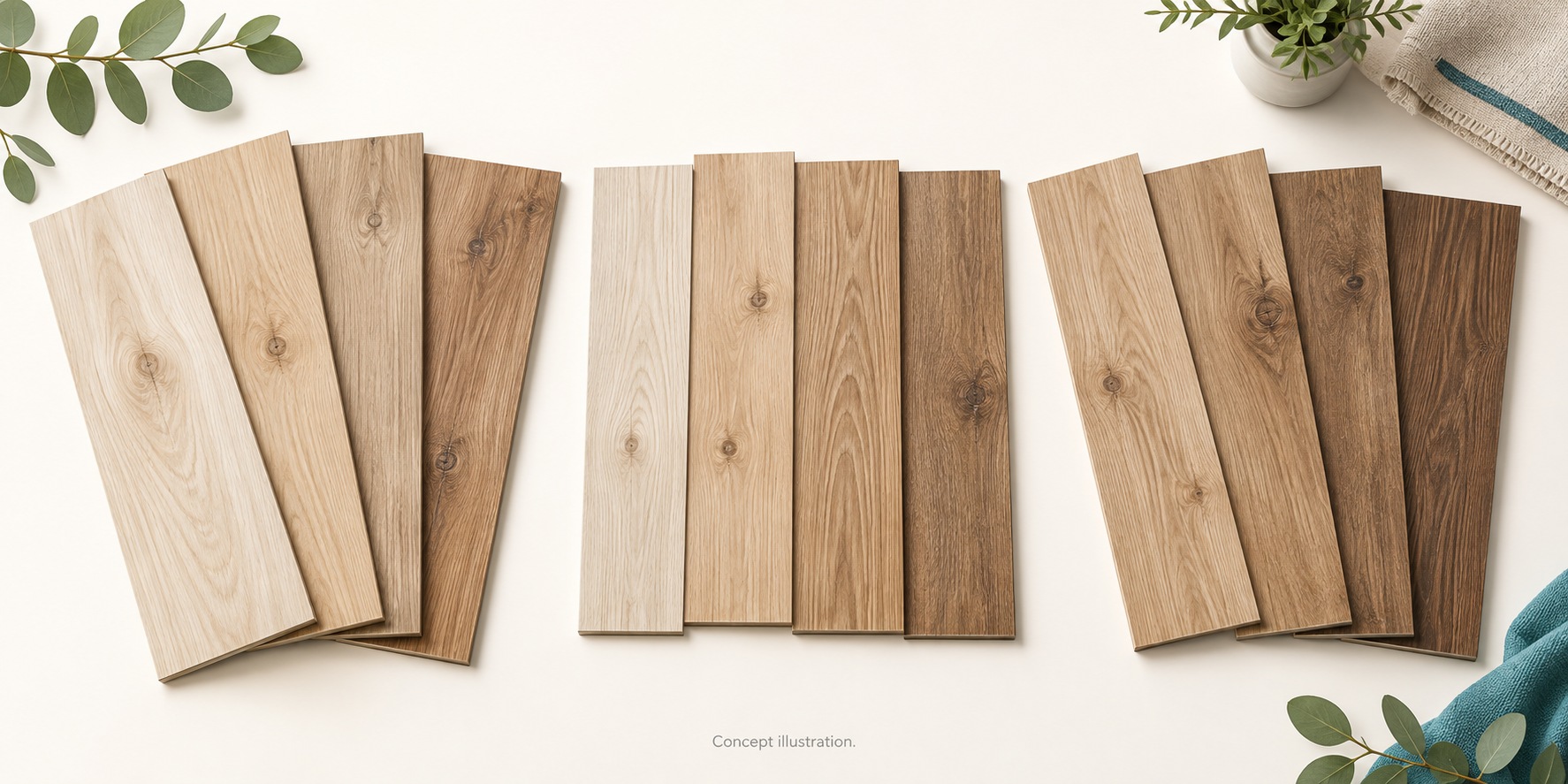
Pine-Look Vinyl Plank Flooring: How to Choose the Right Look
Compare pine-look vinyl plank samples, grain variation, room finishes, and installation details using a completed Homewood project as a reference....