(708) 775-3648

Can You Install Vinyl Plank Flooring on Stairs in Mokena, IL?
Matt Pehr
September 5, 2026
Request An Estimate
Written by Matt Pehr, owner of The Floor 4U.
Yes. Vinyl plank belongs on stairs when each tread gets a matching stair nose profile, a wear layer rated for stair traffic, and a glue-down or stair-system installation instead of a floating click-lock run. A floating click-lock run on a staircase is the failure mode: it goes hollow underfoot, it gets noisy, and the nosing works loose.
Thinking about running your vinyl plank up the stairs? Call Matt Pehr at (708) 775-3648 or request a free in-home estimate. We bring samples to your house, measure the flight, count the nosings, and tell you what the stairs will actually take. If you are still choosing the floor itself, start with our luxury vinyl flooring installation in Mokena, IL.

Why a Floating Click-Lock Floor Fails on Stairs
A floating floor is not fastened to anything. It is engineered to behave like one large sheet that expands and contracts as a unit, which is why every manufacturer asks for a gap around the perimeter. Angi puts the number at a quarter inch to a half inch around the edges of the room, and lists forgetting that gap among the most common vinyl plank installation mistakes.
Now look at a stair tread. It is about ten inches deep, it has two exposed edges, and there is no baseboard anywhere on it to hide a gap under. A staircase is not one field of flooring; it is fourteen or fifteen separate little floors stacked at an angle, each one too small to move the way a floating system needs to move. So the plank either binds against the nosing or slides a fraction under load, and you feel both. Hollow spots in the middle of the tread. A creak on the third step. A nosing that lifts at the front edge, which is the exact spot every single footfall lands on.
The published guidance points the same direction. HomeGuide states that glue-down tiles and planks tend to last longer than click-lock or peel-and-stick styles. Angi states that floating vinyl plank floors are easier and faster to install yourself in most residential settings, while glued-down vinyl offers a firmer feel underfoot and is better for high-traffic areas. Neither of those sentences is about stairs specifically, and that is the point: a staircase is the highest-traffic square footage in a two-story house. Every person who goes upstairs uses the same fifteen surfaces, in the same spot, several times a day. The method those guides reserve for heavy traffic is the method a staircase needs by default.
This is the same substrate-first logic we apply on flat floors when someone asks whether they can go over what is already there. If you want that version of the argument, read whether you can install LVP over tile. The question is never “will it physically sit there.” It is “what does it do in year three.”
Wear Layer Is the Number That Decides a Staircase
The wear layer is the clear protective skin on top of a vinyl plank, measured in mils, and it is the one spec that separates a staircase that still looks right in fifteen years from one that goes dull and grey at the front of every tread. HomeGuide, in its own guide to flooring for stairs, says it plainly: look for luxury vinyl with a thick wear layer of 20 mil or higher for maximum durability, and choose options with a textured surface for added slip resistance.
Products sort into rough tiers by that number. Fixr describes the market in terms of 12 mil planks at the budget end, 20 mil in the middle where most homeowners land, and 40 mil at the top. A 12 mil plank is a perfectly reasonable floor for a spare bedroom. On a staircase it is the wrong purchase, because the stair nosing takes the toe of every step in the house and the wear layer at that edge is doing all of the work.

Lifespan claims for luxury vinyl vary depending on which page you read, and it is worth being honest about that rather than quoting the flattering one. HomeGuide’s luxury vinyl cost guide puts the material at 20 to 50 years when it is cared for. HomeGuide’s stairs comparison puts luxury vinyl at 15 to 25 years. Both are that publisher’s own numbers, captured on 2026-09-05, and the gap between them is exactly the gap between a light-traffic bedroom and a working staircase. Buy for the staircase.
We carry COREtec among our luxury vinyl lines, and the wear layer is the first thing we look up on any plank a customer brings us for a stair job. If you want the longer version of how that number drives lifespan, we wrote it up in how long LVP flooring lasts, and if you are still comparing product lines, see our rundown of the best LVP brands for Mokena, IL homes.
What Makes Vinyl Plank Safe on a Staircase
Safety on stairs comes down to three things, and vinyl plank can deliver all three when it is specified correctly. HomeGuide describes luxury vinyl as waterproof and scratch resistant, and calls it well suited to stairs in high-traffic areas.
- Traction. A textured or embossed surface grips a sock foot. A high-gloss finish is the one thing you should not put on a staircase, no matter how good it looks in the showroom.
- A readable edge. A proper stair nose has an overhang and a defined profile, so the front of each tread is visible from above and findable underfoot. That is not decoration. It is how a person judges where the step ends.
- A tread that cannot move. Bonded down, the tread is dead solid. That is the safety argument for glue-down restated: a surface that shifts a sixteenth of an inch under a foot on a flat floor is a nuisance, and on a stair it is something else.
Here is the honest counterweight. Vinyl plank is a hard surface. Hard surfaces on stairs are louder than carpet, and they are less forgiving if somebody does slip. Households with small children, older adults, or a dog that takes the stairs at a run sometimes weigh that differently, and they are not wrong to. If that is your house, carpet is a legitimate answer: see our carpet installation in Mokena, IL, which covers staircase carpet directly.
Vinyl Plank Against the Other Stair Materials
Here is the comparison the way we walk through it at the kitchen table, with the published numbers in one place.

The installed cost and durability figures in the table below are published national ranges from HomeGuide, captured 2026-09-05. They are published national ranges, not The Floor 4U pricing.
| Stair material | Published installed cost per sq ft | Published durability | What it is good at on a stair | The catch |
|---|---|---|---|---|
| Luxury vinyl plank | $4 to $16 | 15 to 25 years | Waterproof, scratch resistant, matches an LVP main floor exactly | Needs a matching nosing and a 20 mil or better wear layer, and it is a hard, louder surface |
| Engineered wood | $7 to $20 | 20 to 30+ years | Real wood face, stable, can be stained on site to match an existing floor | Costs more and takes longer, and a thin veneer cannot be sanded later |
| Hardwood | $11 to $25 | 50+ years | Longest life of anything on this list, and the traditional stair material | Highest cost, and it can be slippery without a runner |
| Laminate | $4 to $14 | 10 to 25 years | Budget option that mimics wood | Not waterproof, and it is slippery when wet |
| Carpet | $2 to $8 | 5 to 15 years | Quietest and softest underfoot, best noise reduction | Shortest life on this list, and it shows traffic on the nosing first |
| Tile | $10 to $50 | 50+ years | Extremely durable, waterproof | Hard, cold, and rarely the right call on an interior residential flight |
What We Find Under Carpeted Stairs in Will County Homes
Most staircases in Mokena subdivisions built between the 1970s and the 2000s were carpeted from day one. That matters, because a builder who knows the stairs are going to be carpeted does not spend money on the treads underneath. They were never meant to be looked at.
So the first hour of a stair job is discovery. The carpet and pad come off, and what is left is a tread studded with staples, a tack strip at the back of each step, and usually a few spots where the tread has cupped or the riser has pulled loose from years of movement. Angi’s guidance on subfloors applies to a staircase word for word: dirty, uneven, or damp surfaces lead to warping, shifting planks, and soft spots, and existing fasteners such as old staples have to be removed or flattened before anything new goes down. On a stair there is no forgiveness for skipping that, because you cannot float a plank over a high spot and hope the field absorbs it.
Two local quirks come up often enough to plan for. First, a lot of houses in this area are split levels or have a finished basement, which means two short flights rather than one long one. Homeowners tend to price a stair job by the flight and are surprised that the nosing count, not the square footage, is what drives it. Second, open-stringer stairs, where you can see the end of each tread from the side of the staircase, need a returned or capped edge on every step. That is real extra work, and it is the single most common reason a stair estimate comes back higher than someone expected.
Matching the Stairs to the Floor You Already Have
The nosing is where a stair job is won or lost, visually. It has to match the plank, not approximate it, and the only reliable way to get that is to order the stair profile with the floor rather than go hunting for something close afterwards. Color lots move. A nosing sourced six months later from a different run will read as a stripe across the front of every tread, and once you see it you cannot stop seeing it.
Continuity is what people are actually buying when they take carpet off a staircase. They want the hallway, the flight, and the main level to read as one floor instead of three decisions. That is achievable with vinyl plank, and it is achievable with wood: our engineered hardwood stairs and hallway project in New Lenox put engineered oak on 14 stairs plus a 220 square foot hallway, custom stained on site so the stairs, hall and main level match. That was a wood job rather than a vinyl one, and we are naming it here for one reason only: staircases are work we do, on a real flight, in a Will County house.
What Install Day Looks Like and What It Costs
The sequence on a stair flight is not the sequence on a floor. Carpet, pad and tack strip come out first. Every tread and riser gets checked and made solid, and anything loose gets refastened before it is covered. The material sits in the house to acclimate before anything is cut, which is the step Angi names as the most commonly skipped and the one that causes buckling later. Then each tread and riser is cut individually and bonded down, the nosing is set last, and trim or quarter round goes wherever a cut edge would otherwise show.
That last detail is also a cost driver, and the published guides say so. Fixr notes that installing vinyl on stairs may require cutting a lot of material to fit, which means needing trim to hide the cut edges and increases the project cost. HomeGuide makes the same point from the labor side: installing flooring on stairs is more difficult and may increase labor costs. As of a capture on 2026-09-05, HomeGuide puts vinyl flooring labor at $1 to $5 per square foot and Fixr puts vinyl plank labor at $1 to $4 per square foot, with glue-down running at the higher end because the material has to be rolled after it is laid. These are published national ranges, not The Floor 4U pricing.
One straight answer about the per-step number people go looking for: none of the national cost guides publishes a per-step installed price for vinyl plank on stairs. They publish per-step figures for carpet and per square foot figures for vinyl, and the two do not combine into an honest stair number, because a staircase is mostly labor, waste and trim rather than square footage. Anyone quoting you a confident per-step vinyl figure off the internet is guessing. Ours comes from counting your actual steps. For the broader material picture, see our page on what luxury vinyl plank flooring costs in Mokena, IL, and for how a job runs start to finish, see our flooring installation process.
When the Answer Is No
Three situations change the answer, and one of them changes it outright.
If the treads themselves are cracked, soft, or moving, the stairs get repaired before they get surfaced. A new tread covering telegraphs a bad substrate within a season, and on a staircase that is a safety issue and not just a cosmetic one. That is a floor repair conversation first and a flooring conversation second.
If the staircase has winders, curved treads, or open risers, vinyl plank is still possible, but the labor stops being proportional to the material. On that kind of flight the honest recommendation is sometimes a different material, and it is always a measured estimate rather than a phone quote.
And if the plan is to do it yourself with the leftover click-lock boxes from the living room, the answer is no. That is the version of this project that most often ends in a repair call, and by then the nosing is off, the treads have glue and staples in them, and the repair costs more than the job would have.
Vinyl Plank Stairs: Common Questions
Can vinyl plank flooring be used on stairs?
Yes, vinyl plank can be used on stairs when it is installed as a stair system: a matching stair nose profile on every tread, a wear layer rated for stair traffic, and a glue-down installation rather than a floating click-lock run. Installed that way it is a durable, waterproof staircase surface that matches your main floor.
Are there cons to LVP on stairs?
Yes. Vinyl plank is a hard surface, so a staircase in it is louder and less forgiving underfoot than carpet. Fixr also notes that vinyl on stairs takes a lot of cutting and needs trim to hide the cut edges, which raises the cost. And the nosing has to be ordered with the floor, or the color will not match.
Is it safe to put LVP on stairs?
It is safe when three things are true: the plank has a textured rather than high-gloss surface, every tread carries a stair nose with a real overhang so the edge is visible and findable, and the tread is bonded down so it cannot shift under a foot. HomeGuide specifically recommends a textured surface on stairs for added slip resistance.
Can you use click-lock vinyl plank on stairs?
No, not as a floating click-lock run. A floating floor needs an expansion gap around every edge, and a stair tread has two exposed edges with no baseboard to hide one under. The result is hollow spots, creaking, and a nosing that lifts. Many click-lock products can be glued down instead, so check the manufacturer’s instructions for your specific plank.
How much does it cost to install vinyl plank flooring on stairs?
No national cost guide publishes a per-step price for vinyl plank stairs. HomeGuide puts luxury vinyl at $4 to $16 per square foot installed and vinyl labor at $1 to $5 per square foot, and states that stairs are more difficult and may increase labor costs (captured 2026-09-05). These are published national ranges, not The Floor 4U pricing. Stairs price by the step, so get them counted.
What type of flooring is best on stairs?
Carpet is quietest, luxury vinyl is the best waterproof choice, and hardwood lasts longest, per HomeGuide’s published installed ranges (captured 2026-09-05): carpet at $2 to $8 per square foot, luxury vinyl at $4 to $16, hardwood at $11 to $25. These are published national ranges, not The Floor 4U pricing. Most Mokena homeowners match the stairs to the main floor.
Do you install vinyl plank stairs in Mokena, IL?
Yes. The Floor 4U installs vinyl plank and other flooring on staircases across Mokena and the surrounding Will County towns, working out of our showroom at 9614 Willow Lane. Call Matt Pehr at (708) 775-3648 and we will come measure the flight, count the nosings, and bring samples to the house at no charge.
Get Your Stairs Measured
The Floor 4U is owned and operated by Matt Pehr and has been selling and installing flooring since 2018. We install flooring in Mokena, Frankfort, Tinley Park, New Lenox, Orland Park, Homer Glen, Plainfield and throughout Will County, IL, from our showroom at 9614 Willow Lane, Mokena, IL 60448, open Monday through Friday from 9:00 AM to 5:00 PM, with Saturday and Sunday by appointment. Call Matt Pehr at (708) 775-3648, request a free in-home estimate, or see everything we do for homeowners in Mokena, IL. We will count your steps, look at what is under the carpet, and give you a straight answer on the stairs.
Share
Recent Posts
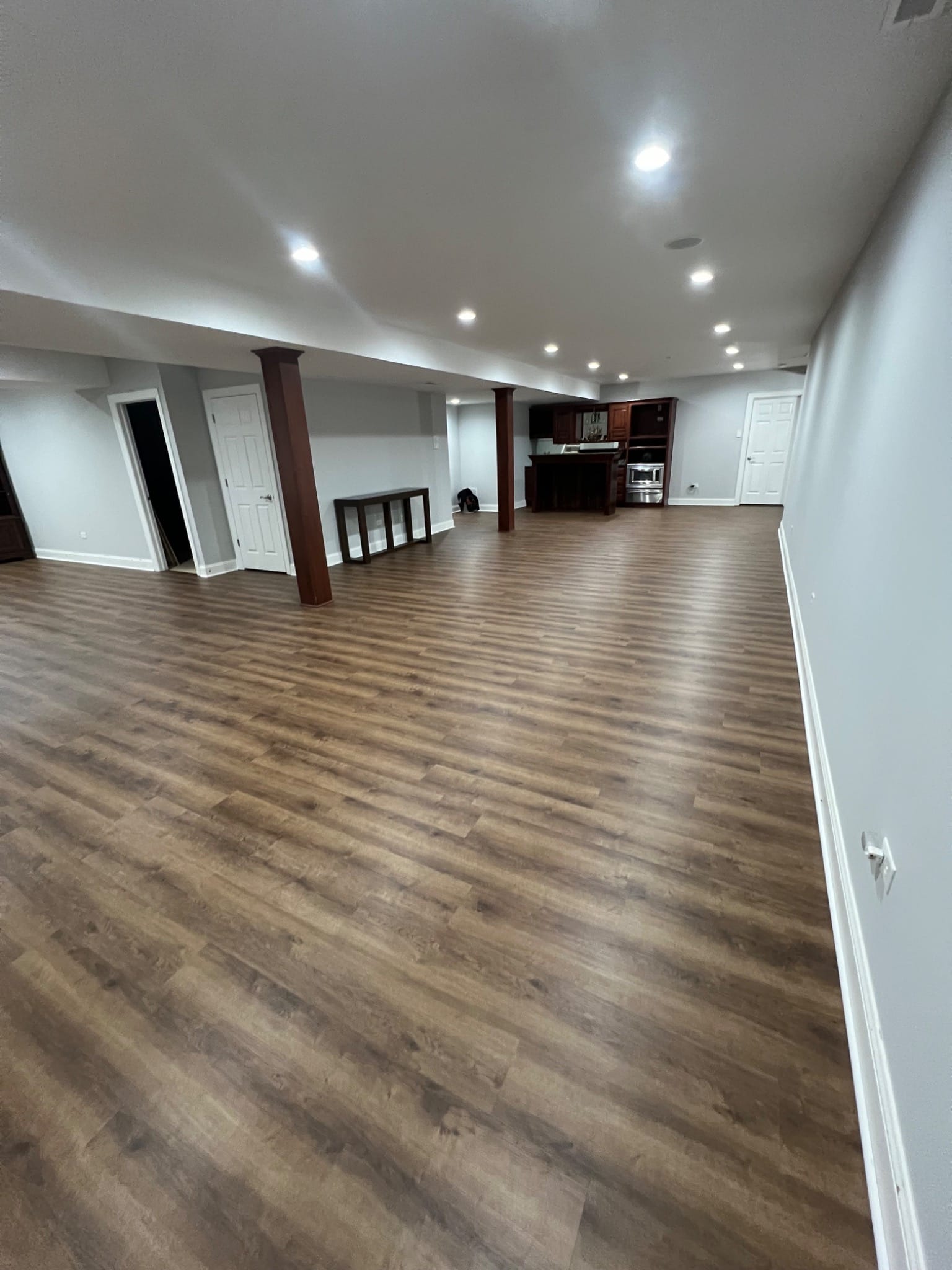
October 22, 2026
How to Choose Light Vinyl Plank Flooring for a Basement
Compare light vinyl plank samples under basement lighting, then check color, transitions, subfloor conditions, and the selected product’s installation guide....
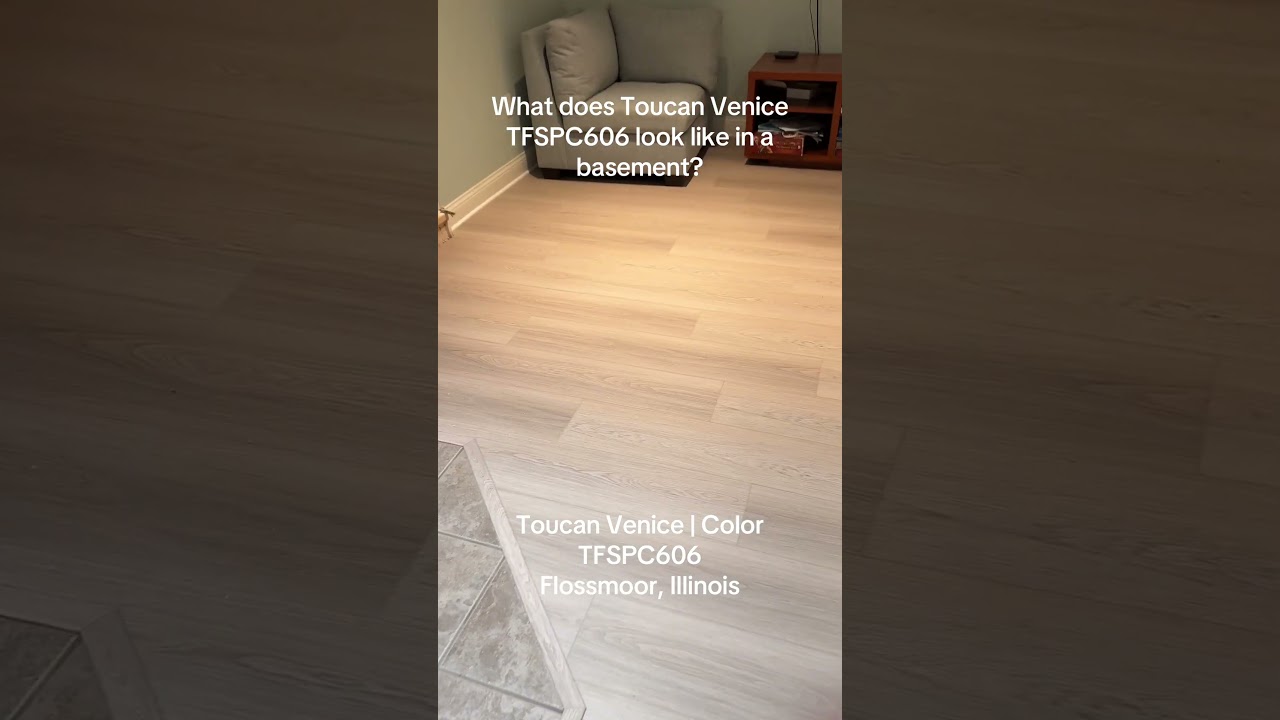
October 22, 2026
Toucan Venice TFSPC606 Basement Flooring in Flossmoor
Watch a finished Flossmoor basement floor featuring Toucan Venice color TFSPC606, installed by The Floor 4U....
October 22, 2026
Pine-Look Vinyl Plank Flooring: How to Choose the Right Look
Compare pine-look vinyl plank samples, grain variation, room finishes, and installation details using a completed Homewood project as a reference....