(708) 775-3648

Written by Matt Pehr, owner of The Floor 4U.
Engineered hardwood vs solid hardwood comes down to what sits under the top layer of wood. Solid hardwood is one solid piece of wood from top to bottom. Engineered hardwood is a real hardwood top layer over several layers of plywood or fiberboard. That one structural difference decides how many times the floor can be sanded, which levels of the house it can go on, and how it does over radiant heat. The Floor 4U sells and installs both across Mokena, IL and Will County, and this guide names the source for every figure in it.
Trying to decide between solid and engineered? Call us at (708) 775-3648 or request an in-home estimate. We bring samples to your home, check your subfloor, and help you match the floor to your rooms, with no pressure.
Which Lasts Longer, Engineered or Solid Hardwood?
Solid hardwood lasts longer in the rooms where it can be installed. HomeGuide’s comparison of the two (Engineered Hardwood vs. Hardwood Cost, page dated September 17, 2025, captured October 2026) lists a lifespan of 50 to 100+ years for solid hardwood and 20 to 40 years for engineered hardwood. Angi’s engineered hardwood guide (How Much Does It Cost to Install Engineered Hardwood Floors?, updated Jul 31, 2026, captured October 2026) puts engineered floors at 20 to 30 years.
Sanding is a big part of that gap. HomeGuide ties solid hardwood’s long life to its ability to be refinished multiple times, and its refinishing guide (Cost to Refinish Hardwood Floors, page dated July 14, 2025) says solid hardwood floors can be refinished 4 to 10 times, depending on their thickness and previous refinishing jobs, while most engineered floors allow 1 to 3 refinishes when the wear layer is at least 2 millimeters. HomeGuide’s comparison page is more cautious for engineered floors, at 1 to 2 times, based on the veneer. Writing in Hardwood Floors magazine (posted April 1, 2025), Brett Miller of the National Wood Flooring Association (NWFA) says most solid wood floors can be sanded six to eight times during their overall service life.
The answer flips below grade. The NWFA’s Wood Flooring Installation Guidelines (Revised 2025) say engineered wood floors can be installed above grade, on grade, and below grade, while solid flooring should not be installed below grade unless the flooring manufacturer recommends it. For a basement, that makes engineered hardwood the wood floor to consider first.
Engineered vs Solid Hardwood, Side by Side
| Feature | Solid hardwood | Engineered hardwood | Source |
|---|---|---|---|
| Construction | A single, solid piece of wood throughout | A real hardwood top layer over several layers of plywood or fiberboard | HomeGuide comparison |
| Common thickness | 3/4 in | 3/8 in to 3/4 in | HomeGuide comparison |
| Wear layer | Typically around 1/4 in or more | 1/16 in to 1/4 in | Hardwood Floors magazine |
| Times it can be refinished | 4 to 10 | Most allow 1 to 3, with a wear layer of at least 2 mm | HomeGuide refinishing guide |
| Published lifespan | 50 to 100+ years | 20 to 40 years | HomeGuide comparison |
| Moisture resistance | Low | High | HomeGuide comparison |
| Below grade (basement) | Should not be installed below grade unless the flooring manufacturer recommends it | Can be installed above, on, and below grade | NWFA Installation Guidelines |
| Installation methods | Nail-down to a wood subfloor; glue-down for certain types of solid floors | Floating, glue-down, or nail-down | HomeGuide comparison and hardwood cost guide |
| Installed cost per sq ft | $11 to $25 | $9 to $20 | HomeGuide comparison |
Wear Layer: The Number That Sets How Many Times You Can Sand
The wear layer is the sandable wood on top of the plank; on engineered hardwood it is the real wood layer over the core. In the Hardwood Floors article, the NWFA’s Brett Miller calls the thickness of the wear layer the primary determinant of how many times a wood floor can be sanded. He writes that solid hardwood floors typically have a wear layer of around 1/4 inch or more, that engineered wood floors can have wear layers ranging from 1/16 inch to 1/4 inch, and that where the wear layer is less than 3/32 inch (2.38 mm), sanding is not recommended.
Each sanding uses up some of that layer. The same article says a traditional sand job will remove 1/32 inch to 1/16 inch of actual material from the surface of the floor, and that the number of times a floor can be sanded depends on several factors, including the type of wood, the thickness of the wear layer, the skill of the contractor, the flatness of the floor, and the equipment used to sand the floor.
Engineered products vary widely. Angi’s engineered hardwood guide says basic engineered wood has a veneer 1/16 to 1/12 inch thick, and high-end engineered wood has a veneer at least 1/6 inch thick. Converted at 25.4 mm to the inch (our own arithmetic, not a figure Angi prints), that is about 1.6 to 2.1 mm for a basic veneer, under the 2.38 mm line, and about 4.2 mm for a high-end veneer, over it. HomeGuide’s refinishing guide adds that floors with very thin layers or acrylic finishes cannot be sanded at all.
The NWFA also administers an Engineered Wood Flooring Refinishable Program, designed to identify engineered wood flooring products with wear layers thick enough to be refinished. Its program document (dated 8.2023) sets a minimum wear layer thickness of 2.5 mm for factory-finished products and 3.2 mm for unfinished products. Before you buy an engineered floor you may want to sand someday, ask for the wear layer thickness in millimeters and check the manufacturer’s guidelines. For the process and what it costs, see our pages on hardwood floor refinishing and hardwood floor refinishing costs.
Basements, Concrete Slabs, and Radiant Heat
Moisture is where engineered hardwood has the edge. The NWFA installation guidelines describe engineered wood flooring as, in general, more dimensionally stable than solid wood flooring, and HomeGuide’s comparison rates engineered hardwood’s moisture resistance high and solid hardwood’s low. HomeGuide calls engineered hardwood the better choice for moisture-prone spaces like kitchens or basements, and it keeps solid hardwood to dry, above-grade rooms to prevent warping or cupping from humidity.
On a concrete slab, engineered hardwood is the more flexible product. HomeGuide’s hardwood cost guide (Hardwood Flooring Cost, page dated August 4, 2025) says engineered hardwood can be installed over different subfloors, including concrete, while solid hardwood is not installed directly over concrete due to moisture issues. The NWFA guidelines do allow solid flooring on grade and above grade, and for any wood floor they say concrete subfloors must be moisture tested and adequate moisture control systems should be in place before installation. If your basement has a known moisture problem, look at waterproof basement flooring instead, because the NWFA guidelines also say never to install a wood floor over a known moisture condition.
Radiant heat works with conditions. The NWFA guidelines say most wood flooring can be installed over radiant heat, providing all of the necessary conditions are met, and that not all engineered wood flooring is recommended or appropriate for use over radiant heating systems, so confirm that the specific product is approved for it. Unless the wood flooring manufacturer specifies otherwise, the guidelines say the radiant system’s operating temperature should be restricted so that the surface of the installed wood floor never exceeds 80 degrees F. They add that on a radiant heat project a supplemental humidity control system is often necessary to support ambient air conditions between 30 and 50 percent relative humidity, or as otherwise required by the wood flooring manufacturer. If you are weighing vinyl over a heated slab instead, see LVP over radiant heat.
Plank Width and Species
Width, cut, and species change how much any wood floor moves. The NWFA guidelines say wood changes dimension in proportion to the width of the plank, so narrow boards expand and contract less than wider boards of the same species and cut, and that quartersawn and riftsawn flooring is more dimensionally stable in width than plainsawn or end-grain flooring. On species, they name American chestnut, black cherry, and black walnut among the species known for inherent dimensional stability, in both solid and engineered flooring, and call hickory, beech, and maple less stable species that are less suitable for use over radiant heat.
Angi’s engineered hardwood guide says most engineered hardwood planks measure 5 inches wide or less, with specialty planks from 6 to 12 inches wide. If you want wide boards, ask how the specific product handles seasonal movement, and look at the cut of the wood as well as the width. We install both constructions: see engineered wood installation in Mokena or our hardwood flooring store and installation page.
What Each One Costs
HomeGuide (Engineered Hardwood vs. Hardwood Cost, page dated September 17, 2025, captured October 2026) puts engineered hardwood at $9 to $20 per square foot installed and solid hardwood at $11 to $25 per square foot installed. It breaks that into $6 to $12 for materials and $3 to $8 for labor on engineered hardwood, and $6 to $15 for materials and $5 to $10 for labor on solid hardwood, and it says solid hardwood’s higher price comes from being 100% lumber. Angi (How Much Does It Cost to Install Engineered Hardwood Floors?, updated Jul 31, 2026, captured October 2026) gives a wider engineered range of $7 to $20 per square foot, fully installed. These are published national ranges, not The Floor 4U pricing.
Labor is part of the difference. HomeGuide says labor costs are higher for solid hardwood because pros have to nail down solid wood flooring, which requires more time, skill, and detailed finishing work, while labor is often more affordable for engineered wood because those floors install faster, especially with floating or click-lock systems. Here is how HomeGuide’s ranges scale with the size of the project.
| Square footage | Engineered hardwood average cost | Solid hardwood average cost |
|---|---|---|
| 150 | $1,350 to $3,000 | $1,650 to $3,750 |
| 250 | $2,250 to $5,000 | $2,750 to $6,250 |
| 500 | $4,500 to $10,000 | $5,500 to $12,500 |
| 1,000 | $9,000 to $20,000 | $11,000 to $25,000 |
| 1,500 | $13,500 to $30,000 | $16,500 to $37,500 |
| 2,000 | $18,000 to $40,000 | $22,000 to $50,000 |
The Floor 4U’s own published starting prices
Separate from those national guides, these are The Floor 4U’s own starting prices, published on our Mokena Google Business Profile (as captured September 3, 2026): Solid Hardwood Floor Installation is listed from $399.00, and Engineered Wood Floor Installation from $250.00. They are per-job starting minimums, not per square foot rates and not a project estimate. Prices reflect Mokena, IL area rates as of 2026; actual quote depends on your project.
For a fuller breakdown of what drives the total, see our hardwood flooring installation cost guide, or call for a number on your own floors.
Where LVP Fits in This Comparison
If a room sees standing water, or a basement has a history of moisture, a waterproof floor may suit it better than either hardwood. HomeGuide’s luxury vinyl guide (page dated June 3, 2025, captured October 2026) says LVT and LVP work well in basements because they are waterproof, and Angi’s engineered hardwood guide notes that engineered hardwood is prone to moisture damage. If you want real wood, neither LVP nor laminate is a substitute. For those comparisons, see hardwood vs laminate and LVP vs laminate.
Mistakes to Avoid
- Solid hardwood below grade. The NWFA guidelines say solid flooring should not be installed below grade unless the flooring manufacturer recommends it.
- A thin engineered veneer bought to refinish later. Where the wear layer is less than 3/32 inch (2.38 mm), sanding is not recommended. Ask for the number in millimeters before you buy, not after.
- Skipping the moisture test on a slab. The NWFA guidelines say concrete subfloors must be moisture tested and adequate moisture control systems should be in place before any wood floor is installed.
- Choosing wide planks on looks alone. Wider boards expand and contract more than narrow boards of the same species and cut, so ask how the product handles seasonal movement.
- Buying on the picture instead of the spec sheet. Two samples that look alike can carry very different wear layers; Angi’s basic and high-end grades run from a 1/16 inch veneer to one at least 1/6 inch thick.
Matt Pehr’s Recommendation
If the room is above grade over a wood subfloor, you plan to stay a long time, and you want the option to sand and refinish the floor several times, choose solid hardwood. If the floor is going below grade, onto a concrete slab, or over radiant heat, start with engineered hardwood and confirm that the product is approved for that use. If you buy engineered, buy the wear layer, not the picture: ask for the thickness in millimeters, and remember that under 3/32 inch (2.38 mm), sanding is not recommended.
We carry both, including engineered and hardwood lines from Shaw and Provenza, and we will bring samples to your home so you can compare them in your own rooms before you decide. For help narrowing down the product itself, see choosing hardwood flooring in Mokena.
Frequently Asked Questions
Which is better, engineered wood or solid wood?
Neither is better everywhere. Solid hardwood suits dry, above-grade rooms over a wood subfloor when you want to refinish it many times; HomeGuide’s refinishing guide says solid hardwood floors can be refinished 4 to 10 times. Engineered hardwood suits basements and concrete slabs, because the NWFA installation guidelines allow it above, on, and below grade and describe it as, in general, more dimensionally stable than solid wood flooring. Over radiant heat, confirm that the specific engineered product is approved for it.
What is the disadvantage of engineered hardwood?
Its real wood layer is limited, so it can be refinished fewer times than solid hardwood. HomeGuide’s refinishing guide says most engineered floors allow 1 to 3 refinishes when the wear layer is at least 2 millimeters, and that floors with very thin layers cannot be sanded at all. Angi adds that engineered hardwood is prone to moisture damage and fading. A thicker wear layer leaves more room to refinish.
Can engineered hardwood be refinished?
Yes, if the wear layer is thick enough. HomeGuide’s refinishing guide puts the minimum at 2 millimeters and says most engineered floors allow 1 to 3 refinishes. The NWFA’s Brett Miller sets a stricter line in Hardwood Floors magazine (posted April 1, 2025): where the wear layer is less than 3/32 inch (2.38 mm), sanding is not recommended. Check the manufacturer’s guidelines before sanding.
Is engineered hardwood cheaper than hardwood?
In the published national ranges, yes. HomeGuide (Engineered Hardwood vs. Hardwood Cost, page dated September 17, 2025, captured October 2026) puts engineered hardwood at $9 to $20 per square foot installed against $11 to $25 for solid hardwood, and says solid hardwood’s higher price comes from being 100% lumber. Published national ranges, not The Floor 4U pricing.
How much does it cost to install 1,000 square feet of engineered hardwood flooring?
HomeGuide (Engineered Hardwood vs. Hardwood Cost, page dated September 17, 2025, captured October 2026) puts 1,000 square feet of engineered hardwood at $9,000 to $20,000, against $11,000 to $25,000 for solid hardwood. Published national ranges, not The Floor 4U pricing. For a number on your own rooms, request an in-home estimate.
Can you install solid hardwood in a basement?
Generally no. The NWFA installation guidelines say solid flooring should not be installed below grade unless the flooring manufacturer recommends it, and HomeGuide says homeowners should not install solid hardwood in basements or damp rooms. Under the same guidelines, engineered wood floors can be installed above, on, or below grade, and concrete subfloors must be moisture tested first. In a basement with a history of water, a waterproof floor may be a safer choice than any wood.
Get a Straight Answer for Your Floors
The Floor 4U is locally owned and operated by Matt Pehr, independent and not a franchise, with 4.9 stars from 350+ Google reviews across our Mokena and Frankfort showrooms (Google Business Profile, September 2026). Our in-house installers handle hardwood and engineered flooring in Mokena, Frankfort, Tinley Park, New Lenox, Orland Park, Homer Glen, Plainfield, and all of Will County. Call us at (708) 775-3648, request your in-home estimate online, or visit our Mokena showroom at 9614 Willow Lane (Monday to Friday, 9:00 am to 5:00 pm; weekends by appointment). We will measure the rooms, check the subfloor, and tell you whether solid or engineered fits your house.
Share
Recent Posts

October 8, 2026
Can You Install Flooring Over Existing Tile? (Video)
Matt Pehr explains when flooring can go over existing tile and why flatness, lippage, appliance clearance, and door swing need a closer look....
October 6, 2026
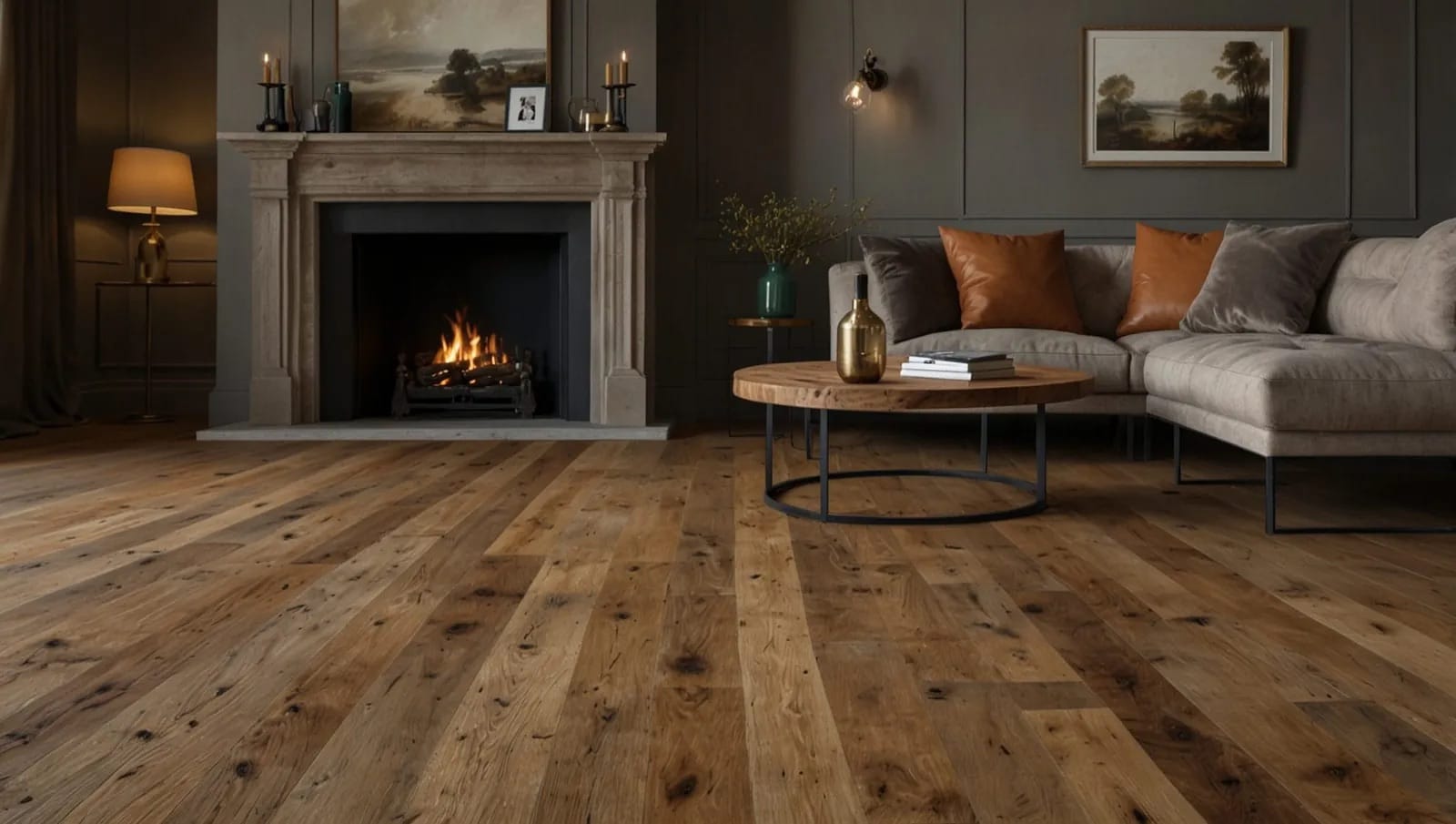
Engineered vs Solid Hardwood: Which Lasts Longer?
Engineered vs solid hardwood, compared by a Mokena installer: wear layer, refinishing, lifespan, basements, radiant heat, plank width, and cost....
October 6, 2026
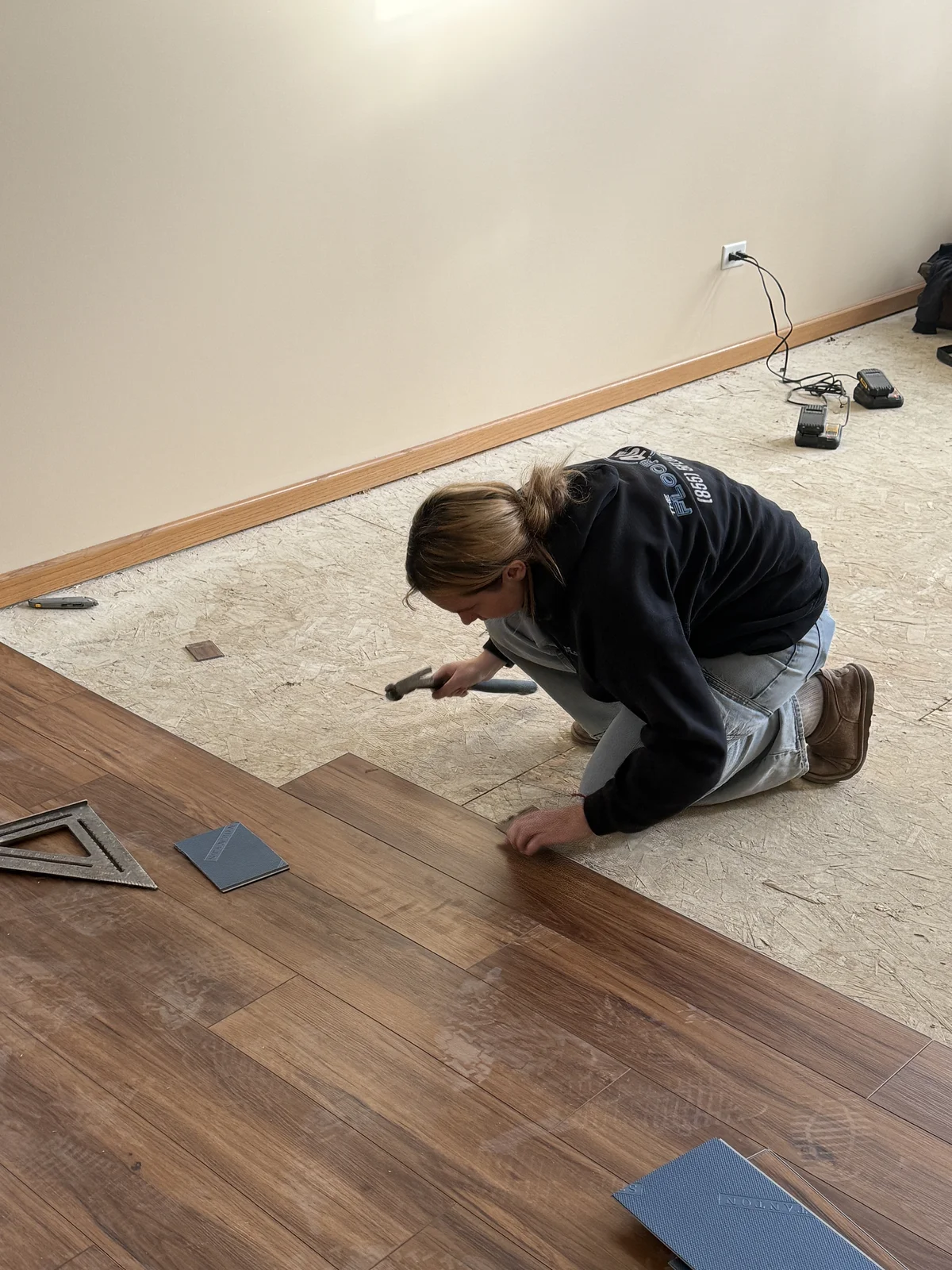
Subfloor Repair and Floor Leveling in Mokena, IL
What subfloor repair and floor leveling involve before new flooring goes down in Mokena, IL, what published guides say it costs, and how...